
Scaling Quantum Memory: Ultra-High-Rate Codes Meet Neutral Atom Arrays
Towards Ultra-High-Rate Quantum Error Correction with Reconfigurable Atom Arrays
The paper introduces a hardware-co-designed family of ultra-high-rate Quantum Low-Density Parity-Check (qLDPC) codes based on Affine Permutation Matrices (APMs). These codes achieve encoding rates exceeding 1/2 (e.g., ) and are optimized for execution on reconfigurable neutral atom arrays, reaching logical error rates near the "teraquop" regime ().
TL;DR
Researchers have developed a new family of quantum error correction (QEC) codes that achieve an encoding rate of over 50%—a massive leap from the typical 1-10% seen in previous qLDPC implementations. By co-designing these codes with the physical movement constraints of neutral atom arrays, they reached logical error rates as low as , bringing us arguably closer to the "teraquop" (one trillion operations) regime required for useful quantum algorithms.
The Overhead Problem: Why High Rate Matters
The "holy grail" of quantum computing is fault tolerance, but the cost is steep. The standard Surface Code is a "low-rate" code; it typically uses hundreds of physical qubits to protect a single logical qubit. Quantum Low-Density Parity-Check (qLDPC) codes offer a way out by sharing physical qubits among many logical ones within a single block.
However, most high-performance qLDPC codes are hard to build. They require complex, spider-web-like wiring between qubits. In a world of fixed-wiring chips, this is a nightmare. But in reconfigurable neutral atom arrays, qubits are atoms trapped in light that can be moved. The challenge then becomes: How do we move them fast enough and simply enough to correct errors before they decohere?
Methodology: The Geometry of Commuting Orbits
The authors built upon the APM-based construction recently proposed by Kasai. In this framework, the parity-check matrices are made of blocks of Affine Permutation Matrices (APMs), defined by the map .
The genius of this paper lies in the Hardware-Code Co-design. A generic movement (permutation) of atoms might take steps. To speed this up, the authors enforced a commutation condition: they designed the code so that the "jump" between different stages of error checking commutes with a reference movement.
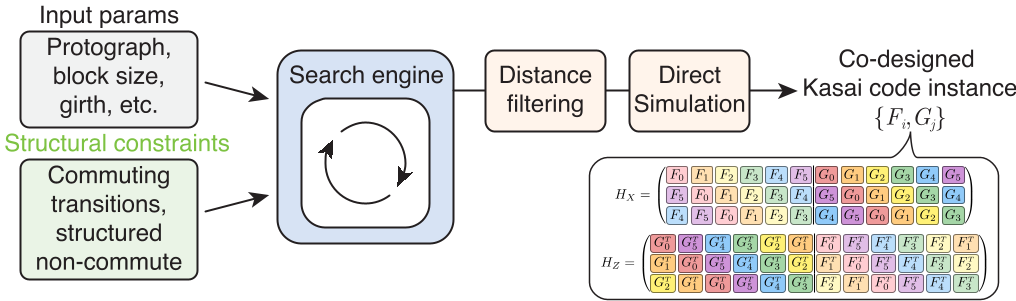
Figure 1: The architecture leverages a block-circulant structure compatible with 2D grid layouts.
The Orbit Insight
By aligning the code structure with the "orbits" of the atom movement, the complex global permutations become simple cyclic shifts. Imagine a group of people dancing; if everyone moves in the same circle (orbit), you only need one command to shift everyone. This allows the system to use Acousto-Optic Deflectors (AODs) to move entire rows or columns of atoms simultaneously, drastically reducing the time spent on "syndrome extraction."
Results: Breaking the Barrier
The team tested two primary codes under a realistic circuit-level noise model (where physical gates have a error rate):
- [[1152, 580, ≤12]]: Protects 580 logical qubits using only 1152 physical data qubits. It achieved a noise floor of .
- [[2304, 1156, ≤14]]: Doubling the size dropped the error rate to a staggering .
To decode these complex syndromes quickly, they used a Hierarchical Decoder:
- Tier 1 (Belief Propagation): Very fast, handles most cases.
- Tier 2 (Relay-BP): A slightly smarter fallback.
- Tier 3 (Integer Programming): The "heavy lifter" used only for the hardest cases.
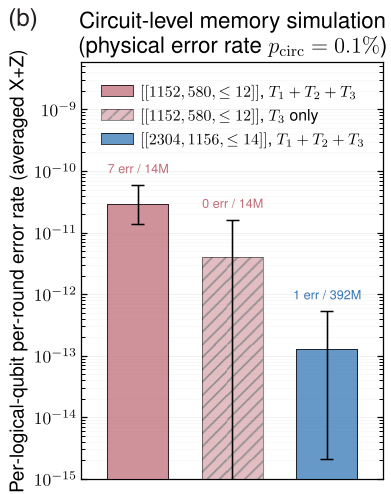
Figure 2: Performance of the hierarchical decoder across different noise levels.
Deep Insight: Is This the End of the Surface Code?
While the Surface Code is robust and simple to decode, its efficiency is its Achilles' heel. This paper shows that Ultra-High-Rate codes are not just theoretical curiosities. With a 1:2 ratio of logical to data qubits, we can achieve memory fidelities that allow for billions of gate operations.
The "teraquop" regime is the benchmark for running algorithms like Shor’s algorithm or complex chemistry simulations. This work moves the needle by proving that we can reach those fidelities while keeping the hardware footprint significantly smaller than previously thought possible.
Future Outlook
The next frontier is logical computation. While this paper perfects "memory" (keeping qubits alive), we still need to perform gates between these 580 logical qubits efficiently. The authors suggest that "Lattice Surgery" or "Gauging" techniques could be the next area of optimization for these specific APM-based codes.
Takeaway: The synergy between abstract algebra (APMs) and atomic physics (AOD movement) has yielded a QEC strategy that is nearly as efficient as the best classical error-correcting codes used in 5G and Wi-Fi.