
Beyond the First Click: How Uncertainty Reduction Drives Persistent Fan Page Engagement
How do uncertainty reduction strategies influence social networking site fan page visiting? Examining the role of uncertainty reduction strategies, loyalty and satisfaction in continuous visiting behavior q
This study investigates the continuous visiting behavior of Facebook fan page followers by applying Uncertainty Reduction Theory (URT). Using a survey of 189 Facebook users, the authors demonstrate how interactive and passive strategies reduce information uncertainty, thereby driving user satisfaction, loyalty, and long-term engagement with corporate fan pages.
TL;DR
In the crowded ecosystem of Facebook, why do some users return to a brand’s fan page daily while others hit the "Unfollow" button? This study reveals that the secret lies in Uncertainty Reduction Strategies (URS). By effectively using interactive and passive information-seeking behaviors, users reduce their cognitive risk, perceiving the content as more useful and ultimately establishing a habit of continuous visiting.
The "Dormant Page" Crisis: Why Motivation Isn't Enough
For years, marketers believed that "Likes" were the ultimate currency. However, a fan page with 200,000 followers is useless if it becomes a ghost town. The authors of this study identify a critical research gap: we know why people join a page (incentives, brand love), but we don't fully understand the cognitive process that keeps them coming back.
The root problem is Information Asymmetry. Online, users cannot touch or feel products; they rely on verbal and visual cues. If a user feels uncertain about the information provided, they perceive a "transaction risk," leading to page abandonment.
Methodology: The URT Framework in SNS
The researchers applied Uncertainty Reduction Theory (URT), traditionally a face-to-face communication theory, to the Facebook environment. They categorized user behavior into two main strategies:
- Passive Strategy: Observing without intruding (reading posts, looking at photos, watching videos).
- Interactive Strategy: Direct engagement (commenting, asking questions, feedback).
They hypothesized that these strategies lead to a "Low Level of Uncertainty," which acts as the gateway to perceived usefulness and repeated visits.
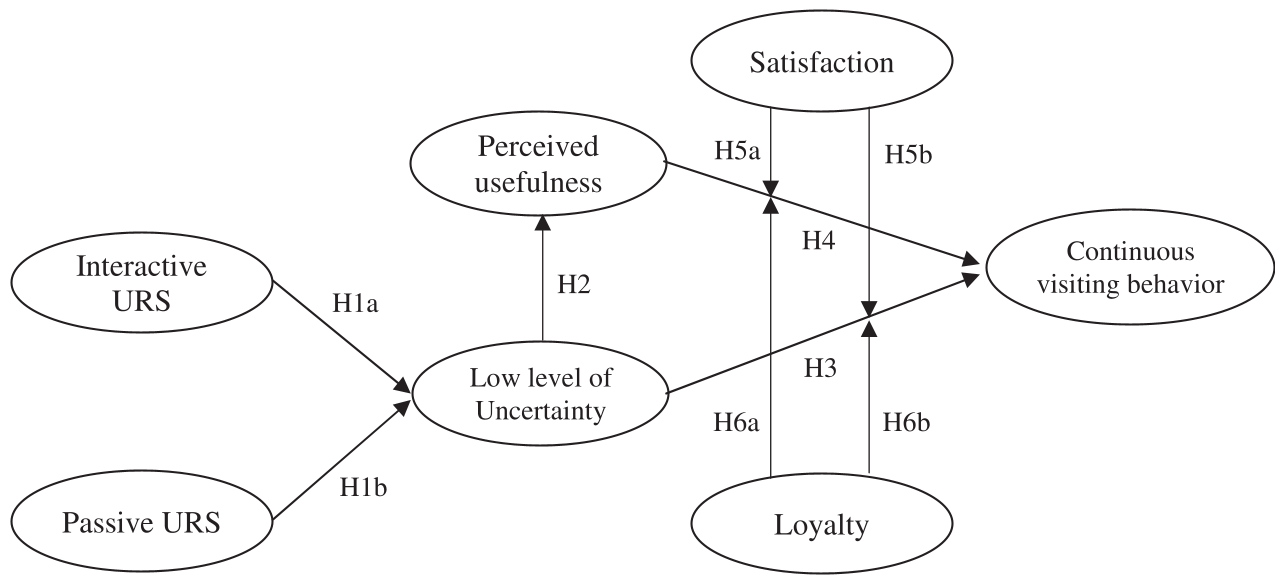 Figure 1: The research model illustrating the path from URS to Continuous Visiting Behavior.
Key Insights from the Data
Using a sample of 189 active Facebook users and analyzing the data via Partial Least Squares (PLS), the study yielded three major findings:
1. The Power of Interaction
While both strategies work, Interactive strategies () were significantly more powerful than Passive ones () in reducing uncertainty. Direct reciprocation with page managers provides higher-quality informational cues that "lurking" simply cannot match.
2. The Satisfaction Multiplier
The study found that SNS Satisfaction acts as a moderator. If a user is already happy with Facebook as a platform, the relationship between "Perceived Usefulness" and "Continuous Visiting" becomes even stronger. Essentially, platform satisfaction provides a "halo effect" for the brand's content.
3. The Loyalty Paradox
Interestsingly, SNS Loyalty was found to weaken the link between low uncertainty and visiting. Loyal users of Facebook might visit a fan page regardless of how certain they are about the product, simply because they are committed to the medium itself.
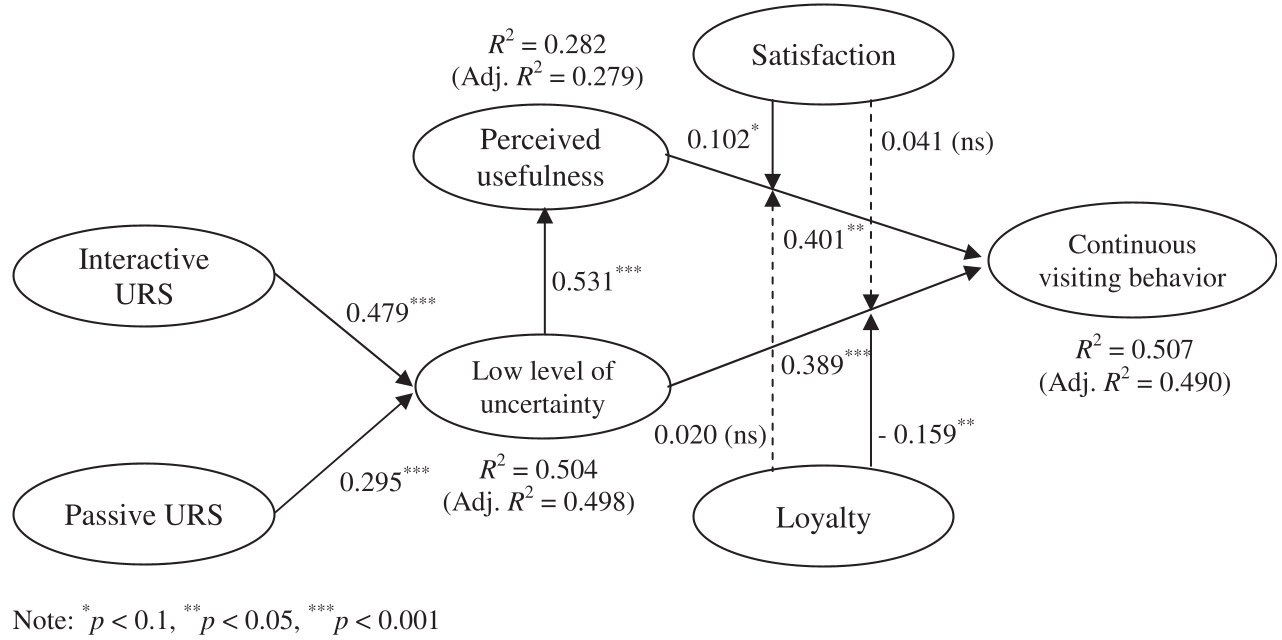 Figure 2: Structural model results showing Path Coefficients and R-squared values.
Critical Analysis & Business Implications
This research moves beyond simple "usage" metrics and enters the realm of cognitive psychology. The primary takeaway for digital strategists is that uncertainty is the enemy of retention.
- Practical Recommendation: Don't just post; respond. Since interactive strategies are the most effective at reducing uncertainty, managers should prioritize quick, detailed responses to comments.
- Content Richness: Because passive strategies still count, using "cue-rich" media (live broadcasts, 360-degree videos) is non-negotiable for reducing the "lurker's" uncertainty.
Limitations: The study is cross-sectional (a "snapshot" in time). Future research should look at longitudinal data to see how uncertainty evolves as a user transitions from a "newbie" to a "veteran" fan.
Conclusion
Retention on social media isn't just about entertainment; it's about information clarity. By providing tools for users to investigate and interact, brands can lower the cognitive barrier to entry, turning a one-time visitor into a loyal, continuous fan.