
Unmasking the Risks: Why Crowd Workers Accept Malicious Tasks
Uncovering the predictors of unsafe computing behaviors in online crowdsourcing contexts
This paper presents an empirical investigation into the determinants of self-protective behaviors among crowd workers using the Technology Threat Avoidance Theory (TTAT). Analyzing 882 responses from global workers, the study identifies perceived threat and self-efficacy as the primary drivers of security-related decisions, marking one of the first comprehensive behavioral models for worker safety in crowdsourcing marketplaces.
TL;DR
Crowdsourcing platforms like Amazon Mechanical Turk and Clickworker are not just for training AI; they are becoming frontiers for cyberattacks. This study uncovers the psychological and economic levers that determine whether a worker avoids a phishing task or falls for it. By applying the Technology Threat Avoidance Theory (TTAT) to 882 workers, the authors prove that "Financial Greed" and "Lack of Confidence" are just as dangerous as the malware itself.
The "Voluntary Risk" Dilemma
In traditional corporate environments, security is mandated. In the "gig" world of crowdsourcing, it is volitional. Requesters (task providers) are often anonymous, and the platforms themselves rarely screen for malicious intent. Workers face a recurring conflict: Is this 50-cent task a legitimate survey, or a trap to steal my identity?
Prior work has focused on detecting "bad workers" (spammers), but this paper pivots to a more critical question: What drives workers to protect themselves—or fail to do so?
Methodology: The TTAT Framework
The researchers grounded their study in TTAT, which suggests that a person’s intent to avoid a threat is a balance between how much they fear the threat (Appraisal) and how well they think they can handle it (Coping).
Key Hypotheses:
- Severity (H1) & Susceptibility (H2): If it looks dangerous and "it could happen to me," workers avoid it.
- Safeguard Costs (H3): If being safe means losing out on high-paying tasks, workers take the risk.
- Self-Efficacy (H5): Workers who trust their ability to spot a scam are actually more likely to engage in protective behaviors.
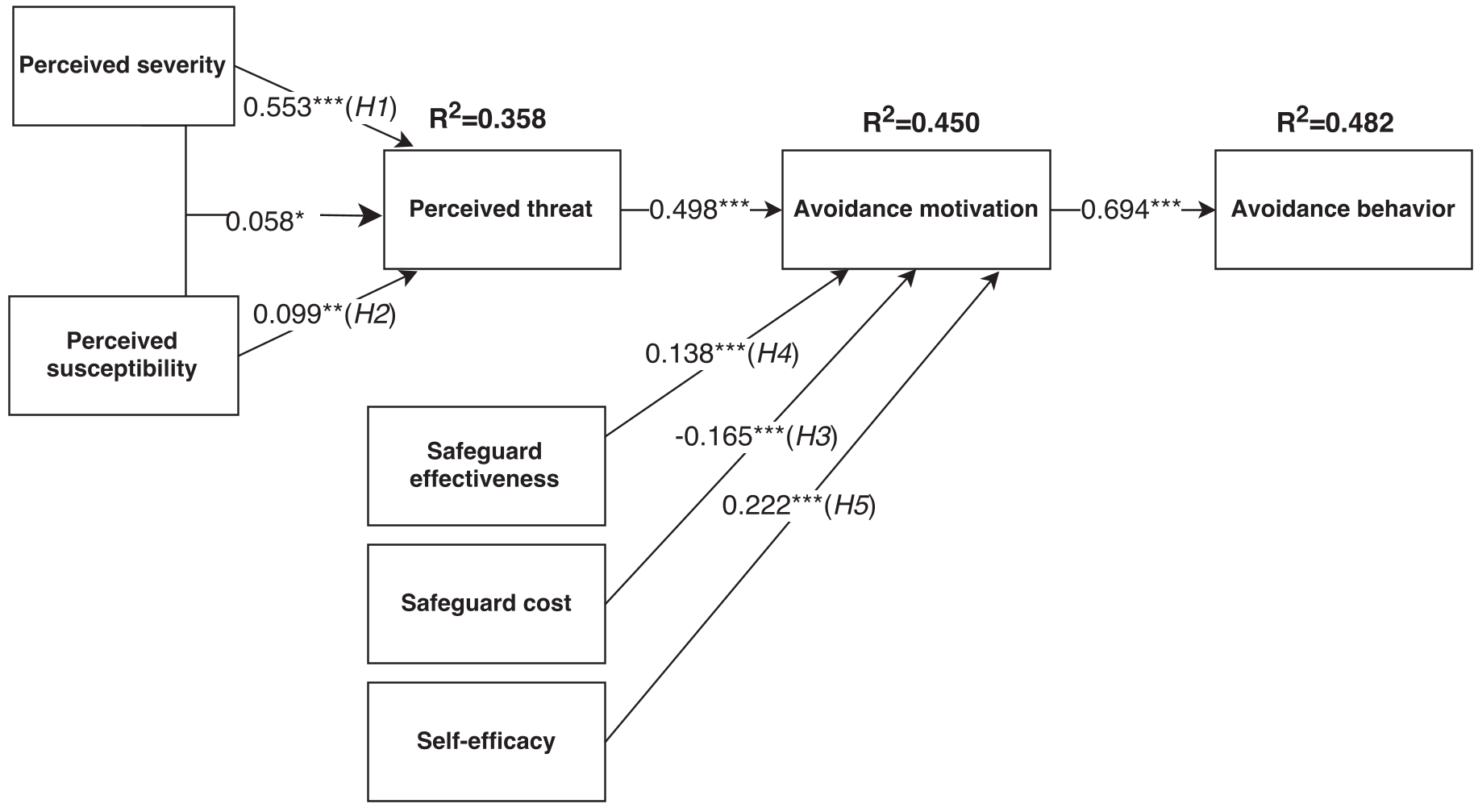 Figure 1: The TTAT-based behavioral model showing the paths from perceptions to actual avoidance behavior.
Critical Findings: Money vs. Safety
The results from the SmartPLS analysis provide a sobering look at the digital labor market:
- Perceived Severity is King: Workers are much more sensitive to the magnitude of harm (e.g., a virus killing their PC) than the probability of it happening.
- The Cost of Caution: 31% of participants admitted they would disclose personal information if the payment was high enough. This confirms that monetary incentives negatively impact threat avoidance.
- The Experience Paradox: Interestingly, the study suggests that as workers gain more experience, their motivation to stay protective actually decreases. They become "desensitized" to the risks or more focused on reputation scores.
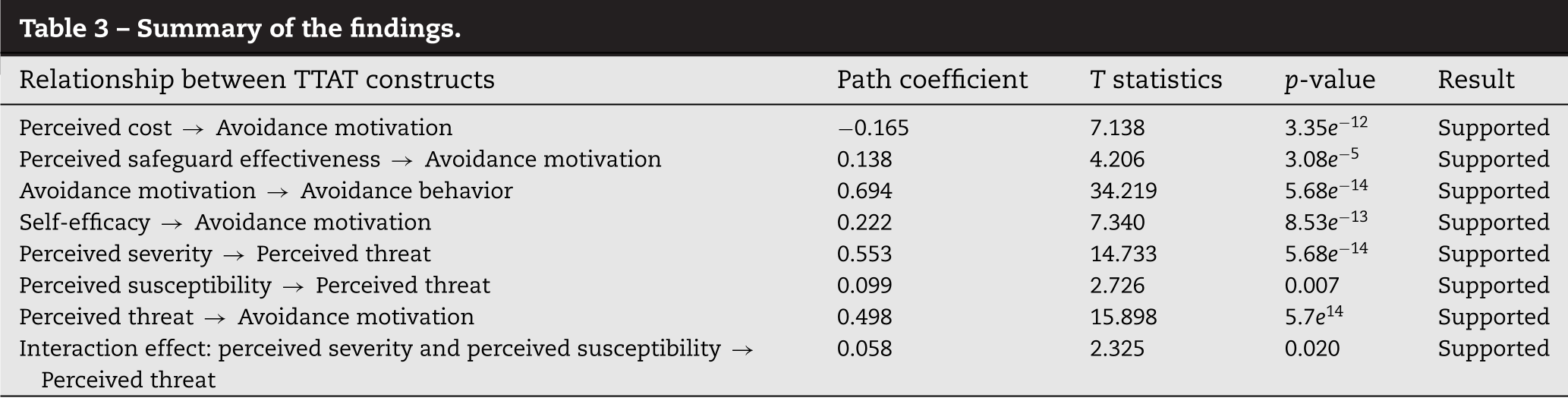 Table 1: Path coefficients showing that every hypothesis was supported, with Perceived Threat being the strongest influencer.
Qualitative Insights: From the Workers' Mouths
The survey included open-ended responses that revealed the "survival tactics" of the crowd:
- Masking: "I have fake email addresses and contact details I use." (P149)
- Victimization: "I downloaded a software program and got a virus... computer shut down randomly." (P490)
- Platform Trust: Many workers blindly trust the platform's administrators to screen tasks—a dangerous assumption given that platforms often prioritize volume over safety.
Deep Insight: How to Design Safer Marketplaces
The authors don't just point out problems; they offer a roadmap for platform designers:
- Transparency Scores: Platforms should implement an "Aggregate Maliciousness Rating" where workers can flag suspicious requests.
- Awareness Nudges: Instead of generic terms of service, show workers real-world incidents of security breaches they might face.
- Reputation Balance: Currently, only worker reputation matters. The authors argue for a Reciprocal Rating System where workers' collective feedback can shut down predatory task providers.
Conclusion & Future Outlook
This study is a wake-up call for the "Human-in-the-loop" industry. As crowdsourcing scales to include more complex tasks like software development and data labeling for AI, the surface area for "Weaponized Crowdsourcing" grows. The takeaway is clear: Worker safety is not just a technical issue; it is a behavioral and economic one. Missing this nuance means leaving the global workforce vulnerable to the very systems they are helping to build.