ULTC: A 55-Million Word Paradigm Shift for Arabic Translation Research
The undergraduate learner translator corpus: a new resource for translation studies and computational linguistics
This paper introduces the Undergraduate Learner Translator Corpus (ULTC), a massive, multi-component resource consisting of over 55 million tokens focused on Arabic translation and interpreting. It provides a unique, error-tagged, and sentence-aligned parallel structure integrating English, Arabic, and French to support translation pedagogy and computational linguistics.
TL;DR
The Undergraduate Learner Translator Corpus (ULTC) is a groundbreaking multilingual resource designed to bridge the gap in Arabic translation studies. By collecting over 55 million tokens of student translations, interpretations, and professional references, it provides the "big data" necessary to analyze how learners navigate the linguistic hurdles between English, French, and Arabic.
Beyond the Final Product: The Motivation
In traditional translation studies, researchers often look only at the final text. However, this "Black Box" approach ignores the process: the revisions, the hesitations, and the specific pedagogical triggers that lead to errors. The ULTC was born out of a desperate need for a standardized, large-scale resource for Arabic, which has historically been underrepresented in learner corpus research (LCR).
The author's insight was to move beyond a simple list of sentences. By creating a composite corpus, the research captures:
- The Translation Product: What the student ultimately submitted.
- The Translation Process: Drafts vs. final versions (and eventually keystroke logs).
- The Meta-Context: Student backgrounds, instructor grades, and reflective essays.
Methodology: The Architecture of ULTC
The ULTC isn't just one database; it is a modular ecosystem. The architecture allows researchers to "triangulate" data—comparing student work against professional benchmarks (the Reference Corpus) and non-translation writing tasks (the Comparable Corpus).
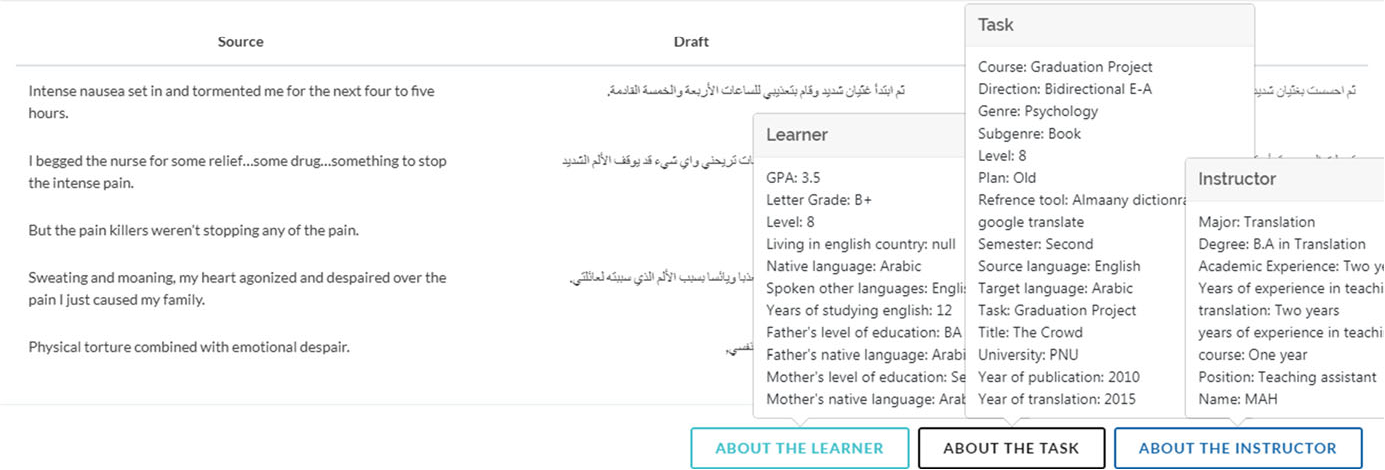
Core Components:
- EALTC (English-Arabic Learner Translator Corpus): The powerhouse of the project, accounting for 60% of the data.
- ULIC (Learner Interpreter Corpus): A rare resource featuring audio recordings and time-aligned transcripts of consecutive and sight interpretation.
- MumLTC (Multimodal Corpus): Specifically for subtitling and audiovisual translation, aligning video takes with text.
Insightful Analysis: The SVO vs. VSO Conflict
The paper’s preliminary findings offer a masterclass in Contrastive Analysis. Standard Arabic is a VSO (Verb-Subject-Object) language, while English is SVO.
The results show a massive "interference" effect. In written tasks (MutLTC), learners managed to use the correct VSO order more frequently, but in the high-pressure environment of interpreting (EALIC), the error rate skyrocketed.
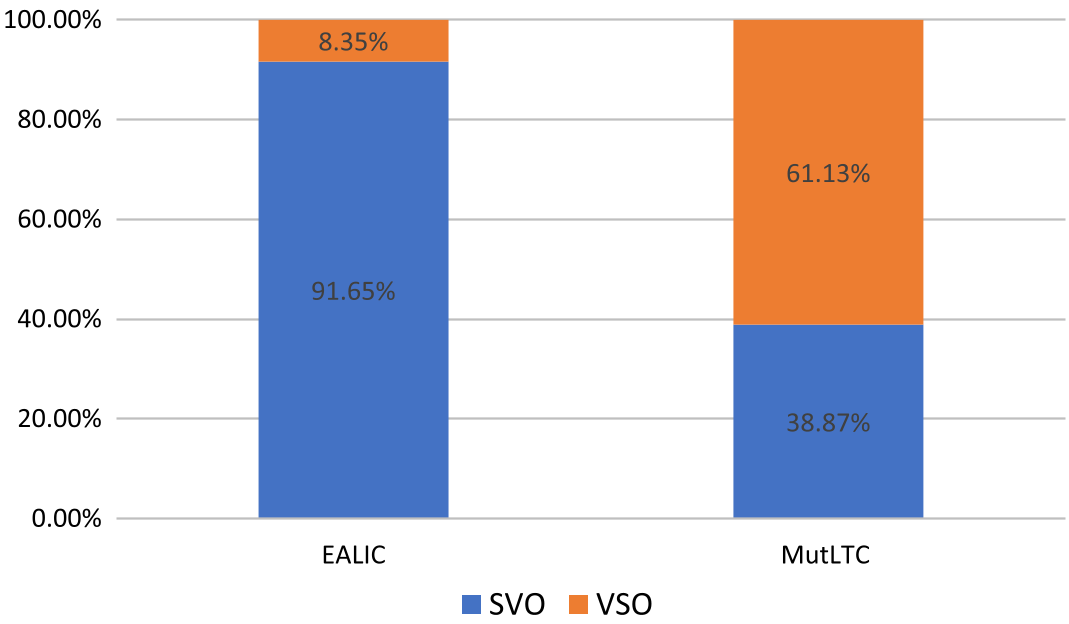
- Finding: 91.65% of interpreting segments followed the English SVO structure.
- Why?: This suggests that high cognitive load causes learners to "default" to the source language structure, a vital insight for trainers who need to emphasize structural switching under pressure.
Experimental Potential
The ULTC provides advanced query interfaces that allow for N-gram analysis, collocation tracking, and error-tagging searches. This makes it a goldmine for:
- MT Developers: Identifying where current models fail to replicate "human-like" learner errors.
- Pedagogues: Designing textbooks that specifically target the "SVO interference" found in the study.
- Linguists: Studying "Interpretese"—the unique linguistic fingerprint of interpreted speech.
Critical Perspective & Future Work
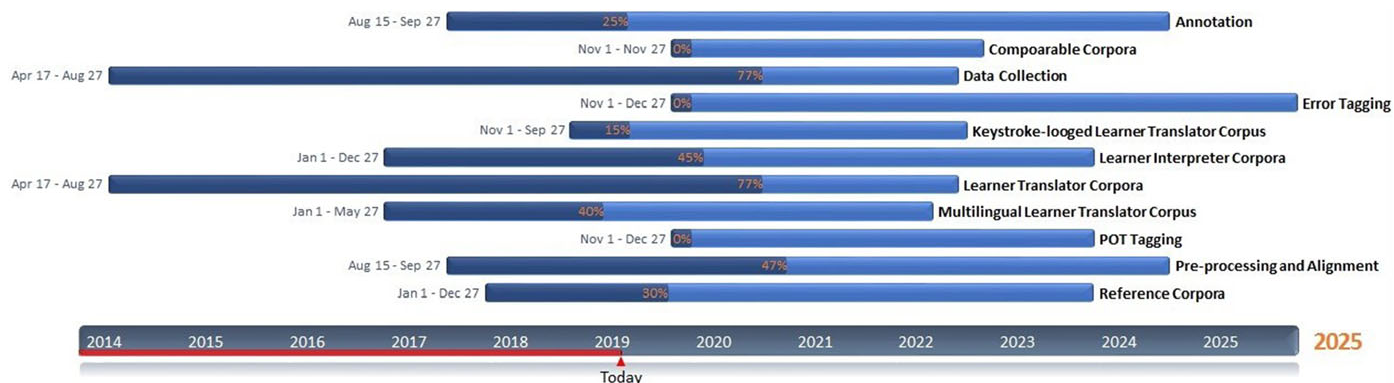
While the ULTC is a monumental achievement, the current version is limited by a gender bias, as the data currently represents female learners from a single university (PNU). However, the author’s roadmap to 2025 includes expanding to male learners and other institutions.
The integration of Translog-II for keystroke logging is the next "frontier." This will allow us to see not just that a student changed a word, but how long they paused before doing so—unlocking the cognitive effort of translation in real-time.
Conclusion
The ULTC is more than just a list of words; it’s a high-resolution map of the learner's mind. For anyone working in Arabic NLP or translation pedagogy, this is the new gold standard for empirical research.