
Social-D2D: Breaking the Multicast Bottleneck with Human Connections
Underlaid-D2D-assisted cooperative multicast based on social networks
This paper proposes an underlaid-D2D-assisted cooperative multicast scheme that integrates social network theory with Device-to-Device (D2D) communication. This approach optimizes multicast transmission rates by using idle users as relays to forward data from the Base Station (BS) to other users, achieving up to 85% rate improvement over traditional methods.
TL;DR
Researchers have developed a novel cooperative multicast framework that uses underlaid Device-to-Device (D2D) communication to eliminate the "timeslot-splitting" penalty of traditional relays. By integrating Social Network Analysis, the model ensures relaying is not just technically feasible but socially incentivized, leading to throughput gains of up to 85% over existing industry standards.
The "Selfless Relay" Fallacy and the 50% Time Penalty
In the world of wireless multicasting, the Base Station (BS) is often limited by the user with the weakest signal—the "weakest link" problem. Traditional cooperative multicast tries to solve this by using users with better signals as relays. However, it faces two massive hurdles:
- The Resource Bisection: Most relay protocols are TDD-based, meaning they spend 50% of the time receiving and 50% forwarding. This is a massive overhead.
- The Incentive Gap: Why would a random stranger use their phone's battery to help you download a video? Previous research often ignored this "human" element.
Methodology: Fusing Physics with Social Tiers
The authors propose an Underlaid-D2D approach. Instead of splitting time, the relay node forwards the data on the Uplink (UL) cellular band while simultaneously receiving new data on the Downlink. This "full-duplex" logic effectively doubles the resource efficiency.
1. Social-Aware Relay Selection
The system doesn't just look for the best signal; it looks for "friends." By calculating a Social Tier Coefficient () based on interaction frequency and duration, the BS selects relays who are socially connected to the recipients. These users have a higher Willingness To Pay (WTP)—a power budget they are willing to sacrifice for the group.
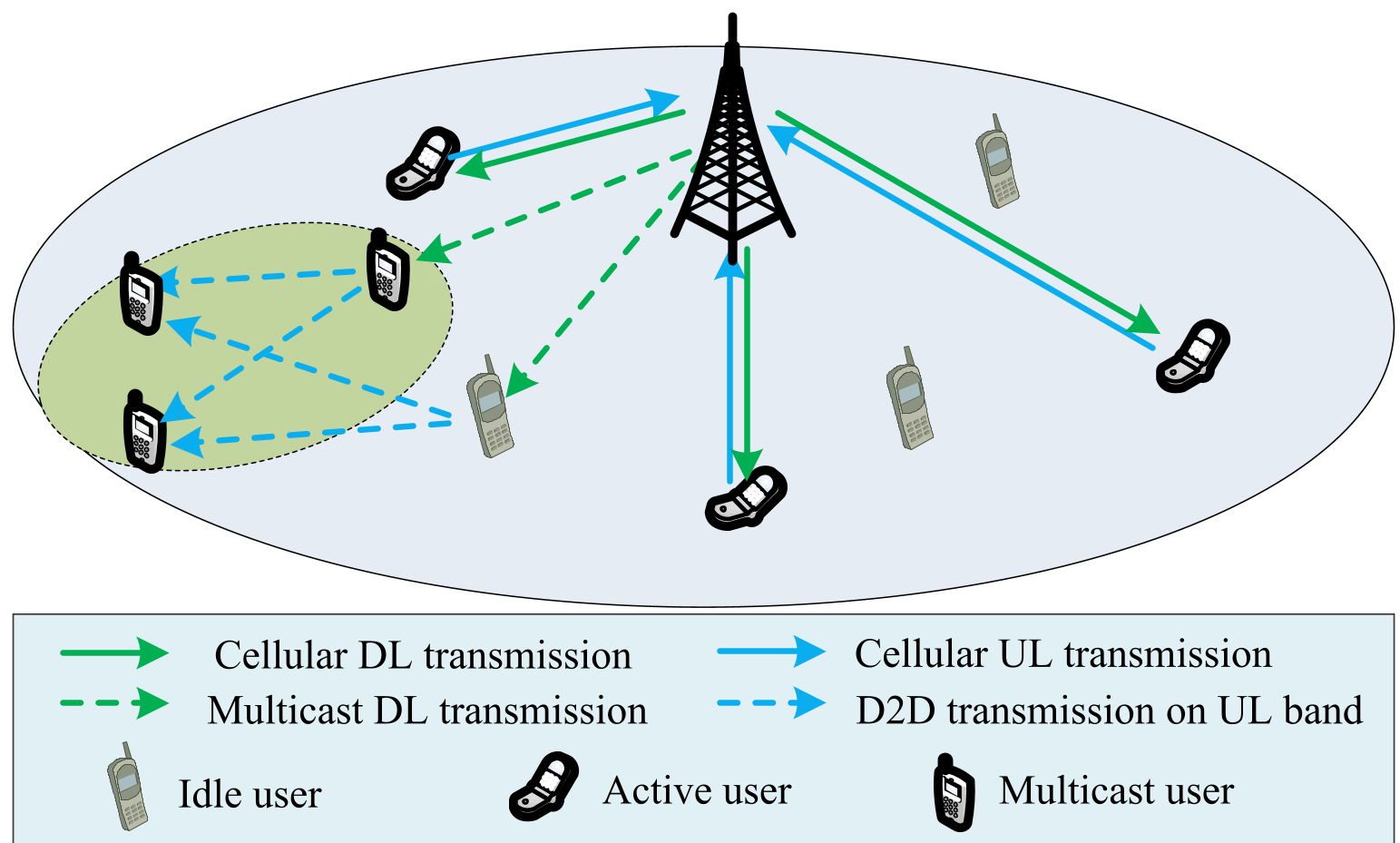 Fig 1: The two-phase D2D-assisted cooperative multicast scenario.
2. QPSO Power Allocation
The resulting optimization problem is non-convex and mathematically "messy." The authors employ Quantum-behaved Particle Swarm Optimization (QPSO). Unlike standard PSO, QPSO uses quantum mechanics principles (like delta potential wells) to ensure the "particles" (potential power solutions) can search the entire space more effectively, avoiding the trap of local optima.
Experimental Performance: Near-Optimal Results
The study evaluated the scheme against "Direct Multicast" and "Traditional Cooperative Multicast."
- Rate Gains: The proposed scheme outperformed traditional relaying by 82% at a maximum UE power of 1.5W.
- Social Impact: As social connection strength increased, the achievable rate climbed significantly, proving that social incentives are a viable "currency" for network optimization.
- Efficiency: The QPSO algorithm proved robust, staying within a 5% margin of the theoretical performance ceiling.
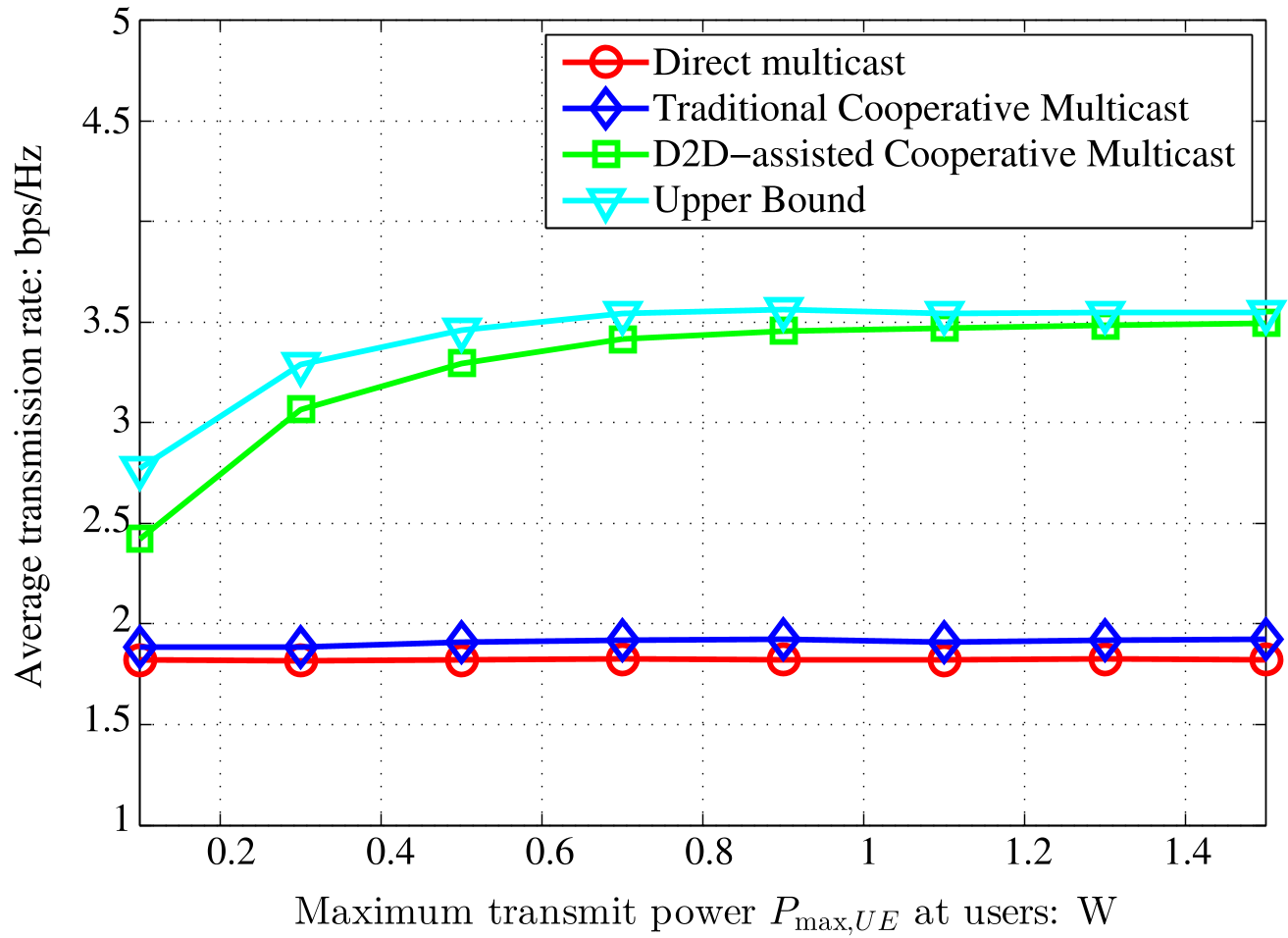 Fig 2: Transmission rate comparison across different transmit power levels.
Critical Insight & Conclusion
The genius of this paper lies in its realization that interference is manageable, but human behavior is the real constraint. By moving relay traffic to the underlaid uplink band, they treated D2D not as a separate service, but as a "helper" layer for the cellular network.
Limitations: The model assumes the BS has perfect knowledge of social ties (privacy concerns) and ignores the potential for high-mobility users to break social clusters. However, as an architectural shift toward Social-Aware Networking (SAN), it provides a compelling blueprint for 5G and beyond.