
The Computing Gap: A Life Course Analysis of Why Women Leave the Field
5679_The Underrepresentation of Women in Computing Fields A Synthesis of Literature Using a Life Course Perspective.
This paper provides a comprehensive synthesis of literature on women's underrepresentation in computing fields using a Life Course Perspective. It tracks the decline of female participation (from 28% in 2001 to 18% in 2012 for Bachelor's degrees) across four distinct stages: pre-high school, high school, college, and the professional workforce.
TL;DR
While most STEM fields have seen a steady or increasing share of female participants, computing is a stark outlier, moving backward from 28% to 18% representation in formal education. This paper argues that we cannot fix this "leaky pipeline" by looking at college alone; instead, we must address a cumulative series of hurdles spanning from preschool play habits to professional networking exclusions.
Background: The Shrinking Minority
In an era where tech is ubiquitous, the shrinking footprint of women in computer science is an institutional crisis. The authors, Joyce B. Main and Corey Schimpf, position this study as a "synthesis of literature," using the Life Course Perspective to move beyond a "snapshot" view of the problem. They argue that a woman's decision to enter or exit computing is the result of experiences that accumulate over decades.
1. The Early Seeds: The Multi-Dimensional Digital Divide
The research identifies that the "Digital Divide" is no longer just about who owns a computer. It is categorized into four distinct access types:
- Psychological Access: Boys gravitate toward gaming (a gateway to CS), while girls are often steered toward communication-based media.
- Skills Access: In mixed-gender teams, boys are frequently observed taking on "complex tasks" like programming, while girls are relegated to note-taking—a pattern that begins as early as the 5th grade.
2. The High School Hurdle: Course-Taking & Stereotypes
The gap widens significantly in adolescence. Data from the CSTA shows a worrying trend: the proportion of introductory CS classes with very low female enrollment (0–20%) is actually increasing.
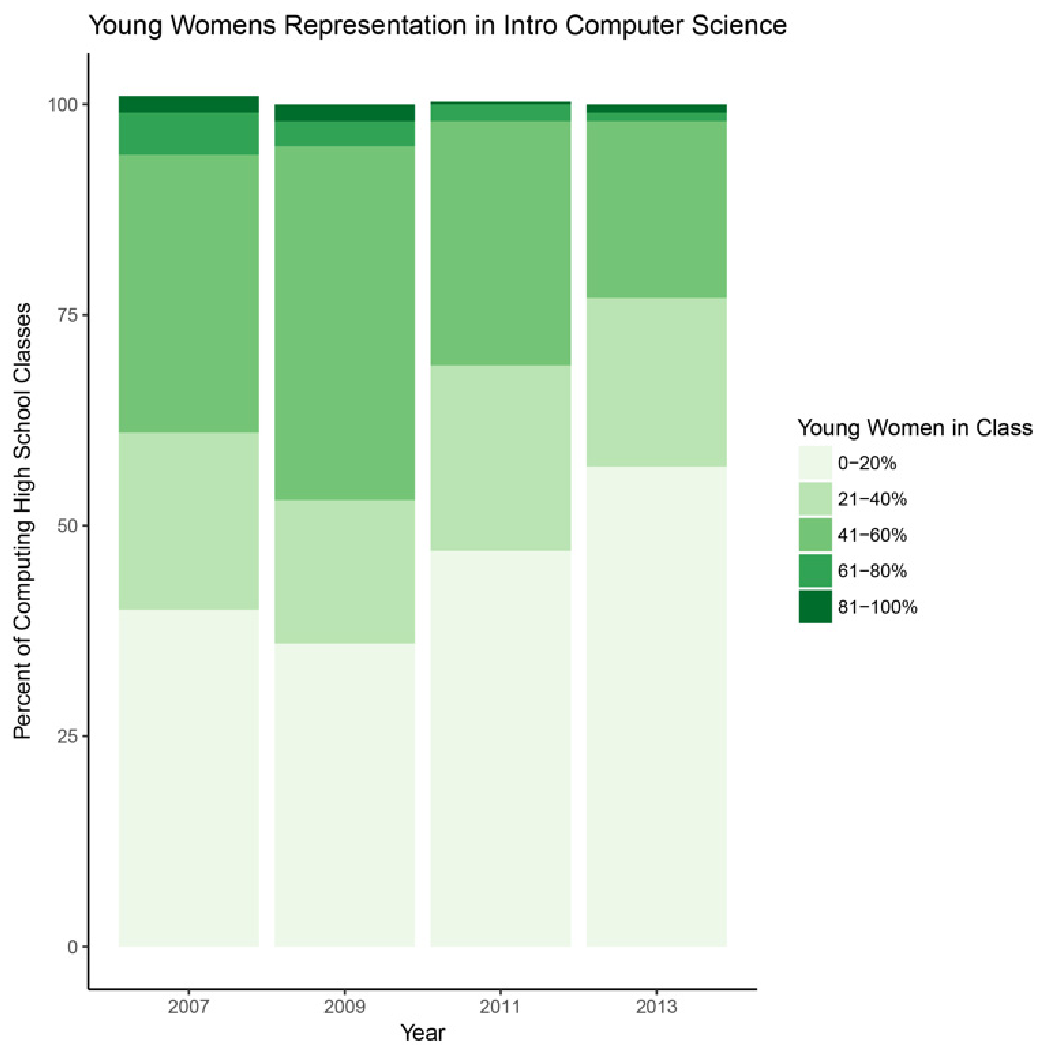 Figure 1: The intensifying color gradient reveals that the vast majority of high school CS courses remain heavily male-dominated.
3. The University Wall: Belonging & Self-Efficacy
Once in college, the barrier shifts from "access" to "culture." The research highlights several psychosocial factors:
- Ambient Belonging: Studies by Cheryan et al. show that "geeky" stereotypical classroom décor (Star Trek posters, video games) actively discourages women, whereas "neutral" environments (nature, art) equalize interest.
- The Defensive Climate: CS departments often foster a "hierarchical" and competitive communication style that marginalizes those outside the dominant group.
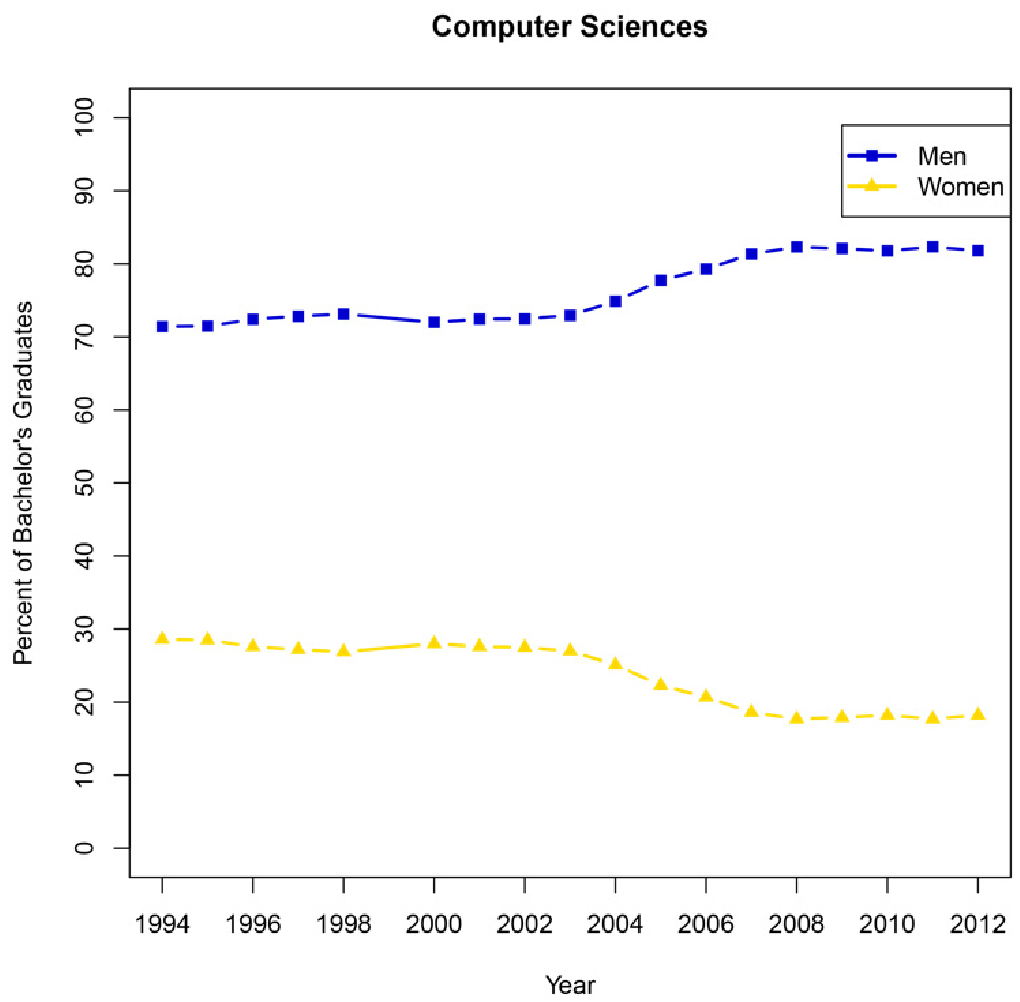 Figure 2: The steady decline of women's share of CS degrees since the mid-1990s highlights the "Persistence" crisis.
4. The Exit Ramp: The Professional Workforce
For those who survive the educational gauntlet, the workforce presents new challenges. Women are 2.5 times more likely to leave the industry than men. The primary culprits are:
- Work-Life Conflict: The "always-on" nature of IT, requiring constant self-re-education outside of work hours, conflicts heavily with family responsibilities.
- The "Pervasiveness" Score: Men are more likely to integrate IT into their leisure time (hobbyist coding), which is often used as an informal metric for professional commitment.
- Excluded Networks: Important career advancements often happen in "gendered" social settings (e.g., golfing or late-night gaming sessions) where women feel unwelcome.
Critical Insight: Why Interventions Fail
The paper’s most vital contribution is the realization that interventions must be longitudinal. A middle-school summer camp is a great start, but its impact is erased if the student enters a high school with no CS courses or a college with a "defensive" classroom culture.
SOTA (State of the Art) Interventions:
- Georgia Computes!: A state-wide six-year intervention that led to a 237% increase in women taking the AP CS exam.
- Carnegie Mellon University: By redesigning introductory courses and strengthening mentoring, they increased their female incoming class to 40% in 2014.
Conclusion: A Call for Synchronized Action
The underrepresentation of women in computing is not a "choice" made at eighteen; it is a trajectory set at five and reinforced at twenty-five. To fix the diversity crisis, the industry and academia must stop looking for a "silver bullet" and start building a continuous support structure that spans the entire life course.
Takeaway for Tech Leaders: Retaining women in your workforce isn't just about HR policies—it's about dismantling an occupational culture that equates "passion" with "having no life outside of code."