
Understand My World: Transforming the Environment into an Arabic Classroom via Mobile AI
Understand My World: An Interactive App for Children Learning Arabic Vocabulary
The paper introduces "Understand My World," an interactive mobile application (iOS) designed for independent Arabic vocabulary acquisition in children. It leverages AI-based image recognition (Clarifai) and speech processing (Houndify) to provide a multimodal learning environment where real-world objects are labeled and defined in both written and spoken Arabic.
TL;DR
"Understand My World" is an innovative iOS app designed to help children learn Arabic vocabulary independently by interacting with their physical surroundings. By combining computer vision for object labeling and speech synthesis for pronunciation, it bridges the gap between spoken experience and written literacy, particularly addressing the educational challenges posed by the COVID-19 pandemic.
The Cognitive Motivation: Literacy without Formal Instruction
The traditional view of education separates spoken language acquisition (natural) from reading/writing (formal). However, the authors argue—grounded in the Fuzzy Logical Model of Perception—that reading can be acquired shifts-naturally if children are sufficiently immersed in written language early on.
The pandemic-induced shift to remote learning highlighted a critical need: tools that allow children to explore and label their unique environments without a teacher present. While "Smart Rooms" were once the proposed solution, they were prohibitively expensive. This research pivots that ambition into the pocket of every child via smartphones.
Methodology: The "Camera-Statement-Question" Triad
The app's architecture relies on three primary interaction modes that facilitate what the authors call "embodied learning":
- Camera Function (The "What"): Uses the Clarifai API to recognize scenes and objects. For every photo taken, the app displays five incremental labels in Arabic.
- Statement Function (The "Repeat"): Implements a feedback loop where children speak words, and the app transcribes them using Houndify, presenting the text back to the child to correlate sounds with orthography.
- Question Function (The "Why"): Acts as a voice assistant where children can ask "What is a garden?" and receive a definition derived from large knowledge domains.
Bridging the Arabic Resource Gap
A significant technical hurdle was the lack of native Arabic AI resources compared to English. The system architecture (illustrated below) uses an English backend with an automated translation bridge:
- Speech/Image Input -> Translation to English -> AI Analysis (Clarifai/Houndify) -> Translation to Arabic -> Arabic Text-to-Speech (Apple AV API).
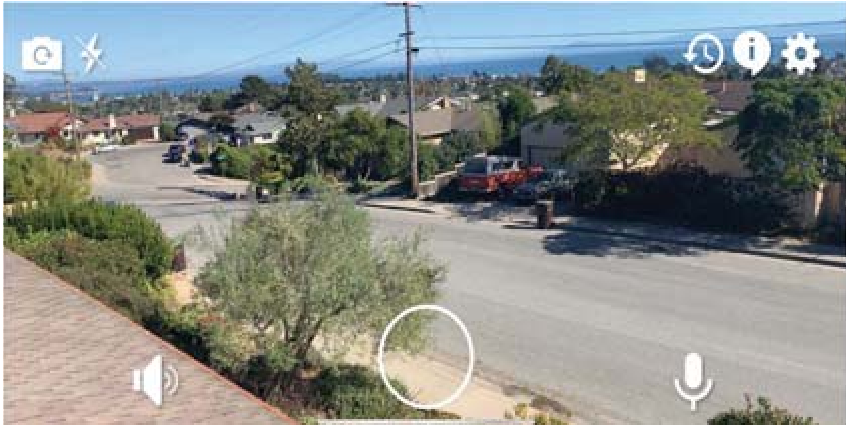 Fig 1: The intuitive home screen designed for horizontal child-friendly interaction.
From General Labels to Specific Detection
In preliminary experiments with five subjects, the application proved engaging but revealed a technical limitation in current mobile vision APIs.
The Insight: When a child took a photo of an apple, the system might return general tags like "healthy" or "food." User feedback specifically requested the ability to "touch" an object in the image and receive a localized definition.
 Fig 2: A snapshot of a fruit bowl where the user suggested the need for specific object highlighting (e.g., differentiating between a banana and a grape).
To solve this, the authors propose integrating R-CNN (Region-based Convolutional Neural Networks) or YOLO (You Only Look Once) to provide bounding boxes around specific items, allowing for a more granular "interactive dictionary" experience.
Critical Analysis & Outlook
The value of "Understand My World" lies in its Inductive Bias toward natural exploration rather than rote memorization. However, two main challenges remain:
- Dependency on English APIs: The "Double Translation" layer introduces potential semantic errors and latency. Developing a native Arabic State-Space Model or fine-tuned Transformer for this task would be the natural next step.
- Content Safety: As the app connects to the "open world," verifying that AI-generated definitions are age-appropriate is paramount.
Conclusion
"Understand My World" demonstrates that mobile devices can serve as more than just consumption tools; they can be proactive "translators" of reality. By turning a child's living room into a labeled, interactive textbook, we can bypass the high cost of specialized smart environments and bring literacy to children regardless of their proximity to a physical classroom.