
Beyond the "Like" Button: Decoding the Hidden Dynamics of Government Social Media
Understanding Behaviors, Experiences and Perspectives of Government Social Media Users
This study investigates how and why citizens interact with government social media by analyzing Twitter and Facebook accounts of Immigration, Refugees and Citizenship Canada (IRCC). Using a mixed-methods case study approach, it reveals significant disparities in user behavior and government responsiveness across platforms, highlighting that IRCC currently operates primarily in a "push" information-sharing stage.
TL;DR
The promise of "Government 2.0" suggests a collaborative, interactive digital democracy. However, this study of Canada’s immigration agency (IRCC) reveals a stark reality: governments are still mostly "pushing" info, responsiveness is wildly inconsistent across platforms (30% on Twitter vs. 3% on Facebook), and a lack of moderation is allowing scammers to operate in the comments of official pages.
The "Service State" Mirage
For years, public administration scholars have touted social media as the bridge to a more "client-oriented" government. The intuition was simple: move where the people are. But as Maria Gintova’s research highlights, being present on a platform is not the same as serving on a platform. Prior work focused on what the government "intended" to do; this study pivots to what the users actually experience.
The pain point is clear: users treat social media as a 24/7 customer service desk, while government agencies often treat it as a digital bulletin board.
Methodology: A Dual-Lens Approach
To capture the full picture, the study utilized a massive dataset from IRCC (September 2015 – August 2016):
- Quantitative Content Analysis: Analyzing 42,489 tweets and 22,083 Facebook posts.
- Qualitative Interviews: 22 deep-dives with actual users to understand the "Why" behind the data.
The researcher categorized interactions into stages: "Push" (sharing info), "Pull" (seeking feedback), "Networking," and "Transactional" (delivering services).
The Great Platform Divide: Twitter vs. Facebook
The findings reveal a fascinating "digital migration." Despite Facebook being a preferred platform for many, IRCC’s behavior forced a shift in user habits.
1. The Responsiveness Gap
Twitter emerged as the "functional" channel. If a user asked a question on Twitter, they had a 30% chance of a reply. On Facebook? That plummeted to 3%. This creates a "hierarchy of access" where those uncomfortable with Twitter's format are effectively ignored.
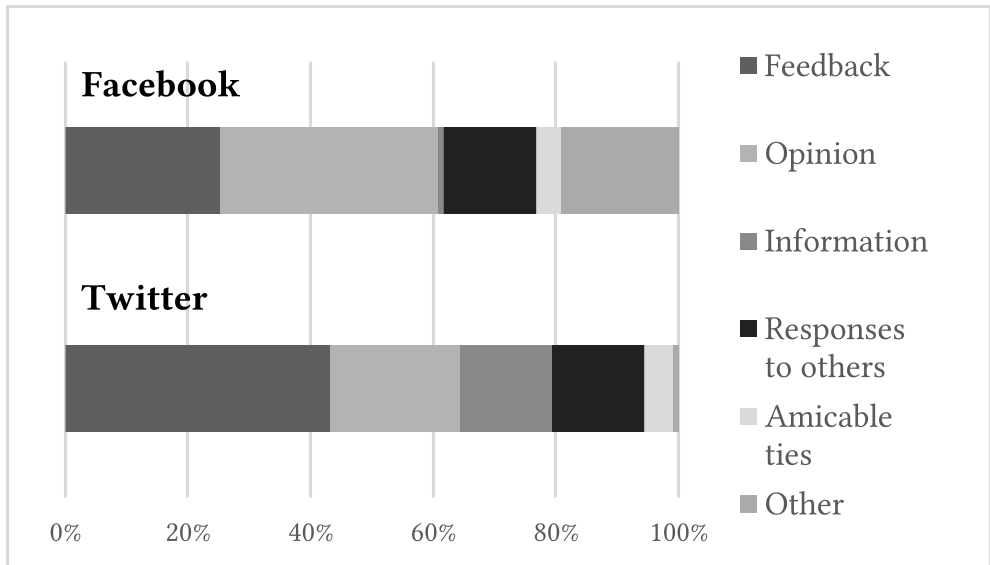 Figure 1: While Twitter is used for technical questions and application updates, Facebook has become an "opinion dump" due to low agency engagement.
2. The Danger of the "Unmonitored" Feed
Perhaps the most alarming finding was the state of the Facebook comments. Because IRCC failed to actively monitor Facebook, the comments became a breeding ground for:
- Fraud: Scammers advertising fake passports and ID cards.
- Privacy Risks: Users openly posting phone numbers and case IDs, making them easy targets for "social engineering" attacks.
- Invisibility: Interviewees often forgot they even posted on the IRCC page because the experience was so non-interactive.
User Psychodynamics: "Venting" and "Anxiety"
Through interviews, the study found that users compare government social media to commercial brands. If a customer tweets at an airline, they expect a reply in minutes. When the government takes ten days—or ignores them entirely—it triggers "case anxiety," where users fear the silence indicates a problem with their legal status.
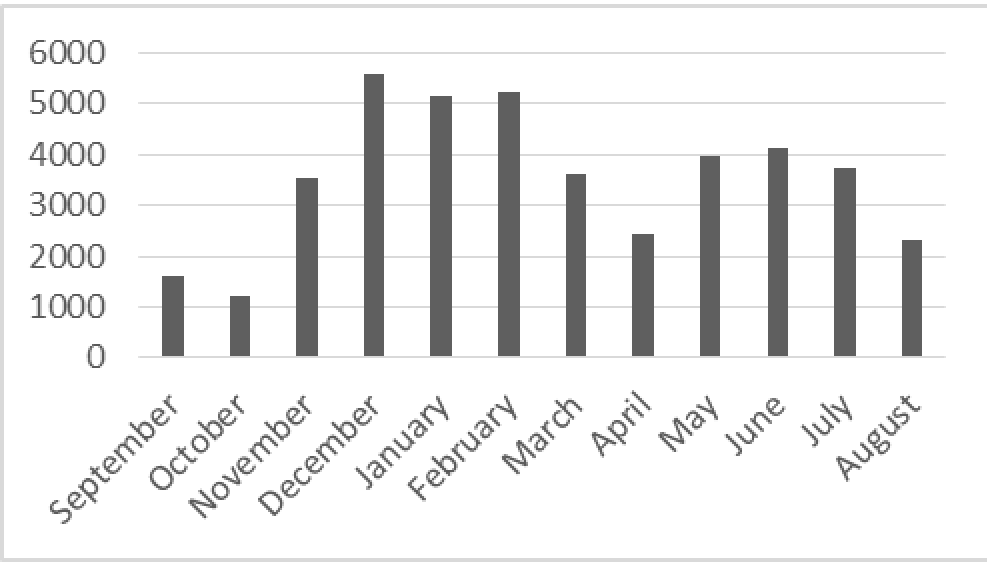 Figure 2: Peaks in user activity often correspond to promotional campaigns, yet the infrastructure to handle the resulting influx of questions remains stagnant.
Critical Insight & Recommendations
The IRCC is stuck in the "Push" stage. They provided information, but they failed the "Transactional" and "Networking" stages. For a government agency to truly succeed in the Web 2.0 era, the study proposes:
- Platform Neutrality: Resources must be allocated equally. A Facebook user's query is as valid as a Twitter user's.
- Active Moderation: Official pages shouldn't host ads for illegal services. This delegitimizes the state's authority.
- Humanizing the Response: Users want to talk to "real people," not generic auto-links. Even a simple "we've received your query" can drastically reduce citizen anxiety.
Conclusion
This paper serves as a wake-up call for digital governance. Social media is not a "low-cost" shouting tool; it is a high-responsibility service channel. As the line between digital and physical residency blurs, the way a government handles a comment thread may be just as important as how it handles a paper application.
Future Outlook: The next frontier of research must look at how AI and LLM-driven chatbots might fill this responsiveness gap without losing the "human touch" that migrants so clearly crave.