
Turning Likes into Insights: How Start-ups can Mine Facebook Comments for Competitive Intelligence
Understanding customers using Facebook Pages: Data mining users feedback using text analysis
This paper introduces an analytical framework for start-ups to mine customer feedback from Facebook Pages using Natural Language Processing (NLP) and clustering. By integrating CKIP (Chinese Knowledge and Information Processing) for segmentation with K-means clustering, the study successfully extracts key sentiment drivers and competitor benchmarks from unstructured Chinese social media comments.
TL;DR
Start-ups often operate in a "data-rich but insight-poor" environment. This paper presents a robust technical pipeline to solve this by applying Chinese natural language processing (CKIP) and K-means clustering to Facebook comments. It turns unstructured social chatter into a clear map of market competitors and customer priorities, specifically demonstrated through the lens of Taiwan’s street food industry.
The "One-Way Street" Problem in Social Marketing
Most small businesses treat Facebook Pages as digital billboards—posting content and hoping for "Likes." However, the real value lies in the comments section. For Chinese-speaking markets, analyzing this data is notoriously difficult because, unlike English, Chinese has no spaces between words. Traditional start-ups don't have the "Deep Learning" budget to parse this, often resulting in a misalignment between what the company offers and what the customer actually values.
Methodology: From Raw Text to Strategic Clusters
The authors suggest a transition from manual observation to an automated Data Analysis Process.
1. Linguistic Parsing with CKIP
The core of the system relies on the CKIP (Chinese Knowledge and Information Processing) system. This is crucial because a single Chinese character's meaning shifts based on its context and part-of-speech (POS). The pipeline identifies whether a word is a General Noun (Na), a Proper Noun (Nb), or an Adjective (A), effectively cleaning the "noise" from the data.
2. The Clustering Engine
Once keywords are extracted, they are transformed into a frequency matrix and fed into a K-means clustering algorithm within the WEKA environment. To ensure the clusters are actually meaningful, the authors use a mathematical validation of Cohesion (how similar items are within a group) vs. Separation (how distinct groups are from each other).
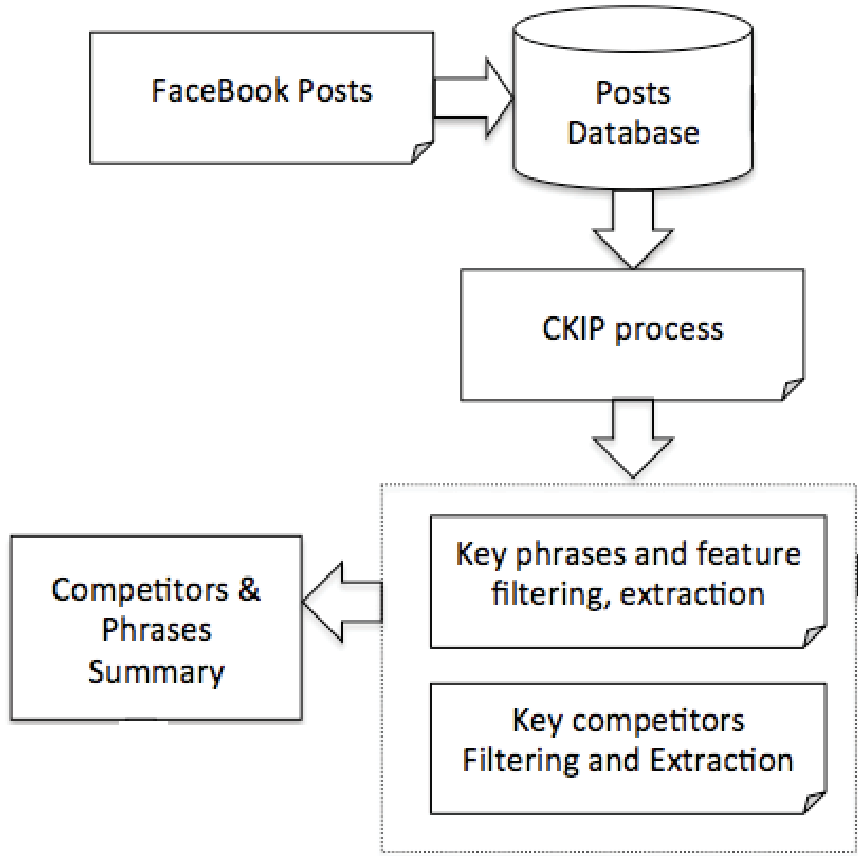 Figure 1: The architecture of the proposed feedback mining pipeline.
Case Study: The "Spicy Duck Blood Cake" Market
To prove the method, the authors analyzed the "Kaohsiung Food Map" page. By processing 99 comments regarding a popular local delicacy (Spicy Duck Blood Cake), the system was able to:
- Identify the Market Leader: "A-Wang" appeared most frequently as a favorite.
- Detect Critical Features: Beyond the main dish, "Tofu" and "Soup" were identified as the primary reasons for customer satisfaction.
- Map Comparative Advantages: The system highlighted that "Jian-Hau Gi" was associated with "Cheap" and "Large" portions, providing an immediate competitive benchmark for new entrants.
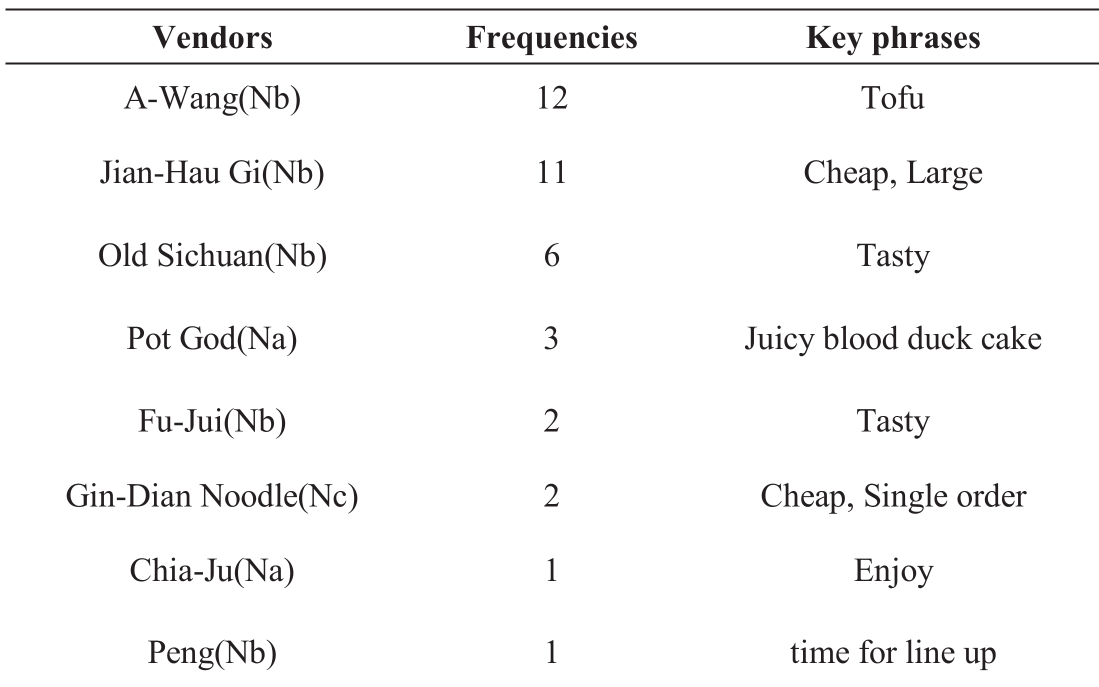 Table 1: Competitive intelligence extracted from raw FB comments.
Critical Insights & Takeaways
This research is a textbook example of using Inductive Bias—applying the structure of the Chinese language to make sense of "Critical Incidents" in customer service.
The Takeaway for Researchers and Entrepreneurs:
- Stop Guessing, Start Mining: You don't need expensive surveys; your customers are already telling you what they want on your Wall.
- Linguistic Context Matters: In non-English markets, simple "keyword counting" fails. Using a POS-aware system like CKIP is essential for accuracy.
- Scalability: While this study looked at 99 comments, the batch-processing PERL scripts used can easily scale to thousands of responses, making it a viable tool for growing start-ups.
Limitations: The study currently ignores user demographics due to privacy constraints and relies on a traditional clustering model (K-means). Future iterations could benefit from Transformer-based embeddings (like BERT) to capture deeper semantic nuances beyond simple frequency.