
Unmasking Digital Echo Chambers: How YouTubeTracker Exposes Information Operations
Understanding Information Operations using YouTubeTracker
This paper introduces YouTubeTracker, a comprehensive analytical tool designed to monitor and analyze information operations on YouTube. It enables researchers to identify leading actors, detect robotic behaviors (bots), and visualize spheres of influence through both qualitative and quantitative data mining.
TL;DR
While Facebook and Twitter are often the focus of disinformation studies, YouTube remains a massive, under-analyzed frontier for information operations. This paper presents YouTubeTracker, a tool specifically designed to pivot from simple view-counts to deep behavioral forensics. By analyzing NATO-related discourse, the researchers prove that "hostile" narratives often use robotic tactics to hijack the YouTube algorithm.
The "Video Blind Spot" in Social Media Analysis
YouTube accounts for 20% of all web traffic, yet researchers have historically struggled to analyze it due to the complexity of video data compared to text. The authors argue that existing tools (like Socialbakers or Quintly) are designed for influencers and marketers, not security analysts. They ignore the underlying networks of "inorganic" behavior—trolling, botting, and coordinated manipulation—that turn videos into weapons of disinformation.
Methodology: The "Tracker" Concept
The core innovation of YouTubeTracker is its ability to create thematic silos for comparative analysis.
- Tracker Feature: Users aggregate disparate channels and videos into a single "topic" (e.g., a specific military exercise).
- Social Footprint: It analyzes where these videos are shared across other platforms (Twitter, Facebook), identifying the cross-platform reach of a campaign.
- Content Engagement Forensics: Instead of just looking at total likes, the tool examines the rate of engagement. A sudden spike in engagement for a brand-new channel is a "red flag" for bot-assisted growth.
 Figure 1: The YouTubeTracker interface provides a high-level view of social media footprints and engagement metrics.
Case Study: The 2018 NATO Trident Juncture Exercise
The researchers applied the tool to NATO’s 2018 military exercise to differentiate between "Owned" (official), "Earned" (organic support), and "Hostile" content.
Key Findings:
- Inorganic Dominance: Hostile videos (mainly from Russian-located channels) had significantly higher engagement rates than organic NATO content.
- The "Robot" Signature: By analyzing comments in Russian, French, and German, the authors found "unusually worded" sentences. Human translators confirmed these were likely computer-generated, intended to flood the comment section to trigger YouTube's recommendation algorithm.
- Sentiment Polarization: Hostile content displayed exceptionally high negative sentiment, specifically targeting the US and NATO, whereas organic content was more nuanced.
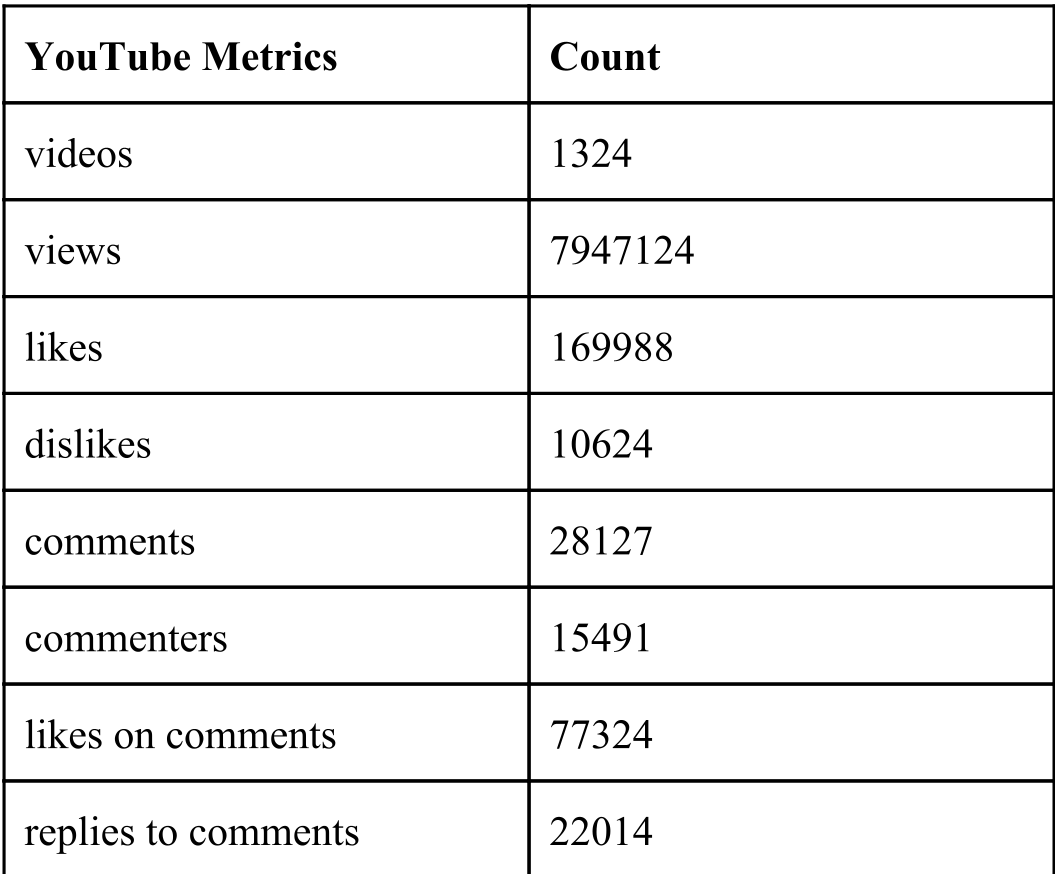 Table 1: Quantitative breakdown of engagement during the NATO exercise analysis.
Critical Insight & Conclusion
The genius of YouTubeTracker isn't just in the "what" but the "how." It recognizes that Information Operations (IO) on YouTube don't just happen via the video content itself; they happen in the metadata and interactions. By inflating comments and likes through bots, hostile actors ensure their content appears in the "Recommended" sidebar of unsuspecting organic users.
Limitations: The current tool relies heavily on manual tracker creation. Future iterations would benefit from automated discovery of related hostile clusters using graph neural networks.
Future Outlook: As AI-generated video (Deepfakes) becomes more prevalent, tools like YouTubeTracker will be essential for verifying the authenticity of not just the video, but the "grassroots" community surrounding it.