
The Small-World of YouTube: Decoding the DNA of Short Video Sharing
Understanding the Characteristics of Internet Short Video Sharing: A YouTube-Based Measurement Study
This paper presents a large-scale, 1.5-year measurement study of YouTube to characterize the emergence of Internet short video sharing. It introduces a novel discovery that YouTube's "related videos" form a small-world network, and proposes a social-network-assisted peer-to-peer (P2P) distribution scheme that significantly outperforms traditional Client/Server and P2P models.
TL;DR
This seminal measurement study explores why YouTube fundamentally differs from traditional media. By crawling 5 million videos over 18 months, the authors prove that YouTube videos aren't just isolated files—they are nodes in a Small-World Network. This insight allows for a social-assisted P2P delivery system that slashes server costs and reduces buffering times by leveraging the "Related Video" links.
Problem & Motivation: Why Traditional CDNs Fail YouTube
In the mid-2000s, networking experts were baffled by YouTube's growth. Traditional streaming (like Netflix or IPTV) focused on hour-long movies and followed a predictable Zipf distribution (where a few hits dominate almost everything).
The authors identified three critical gaps in existing knowledge:
- Scale vs. Length: YouTube had millions of clips, but they were tiny compared to movies.
- Popuarlity Mismatch: YouTube's "long tail" didn't behave like Zipf's law. Many "unpopular" videos were still being watched because of recommendation links.
- Social Links: No one had quantified how the "Related Videos" sidebar actually moved traffic across the site.
Methodology: Mapping the Video Graph
The researchers built a BFS (Breadth-First Search) crawler that treated YouTube as a directed graph. If Video A linked to Video B in its "related" section, an edge was drawn.
The Discovery of "Small-World" Dynamics
The study found a remarkably high Clustering Coefficient (0.2 - 0.3) and a short Characteristic Path Length. This means the video ecosystem is highly local (videos cluster in niches like "Music" or "Comedy") yet globally connected (you can get from a cat video to a political debate in just a few hops).
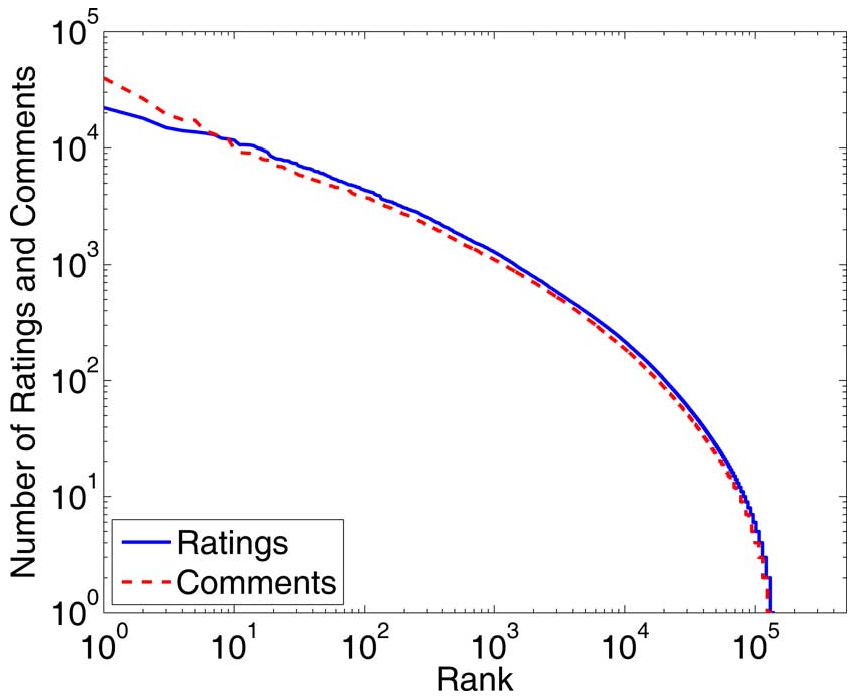 Fig 1: Visualizing the tight-knit clusters of YouTube's video recommendation network.
Key Findings: The Heavy Tail and Active Life Span
Contrary to previous assumptions, the authors found that Gamma and Weibull distributions fit YouTube's popularity much better than Zipf's law.
- The 10-Minute Limit: 98% of videos were under 600 seconds, creating a "snackable" content loop.
- Active Life Span: Life cycles follow a Pareto distribution—most videos are "hot" for a very short time and then go cold, though they never truly "die" due to the lack of a deletion policy.
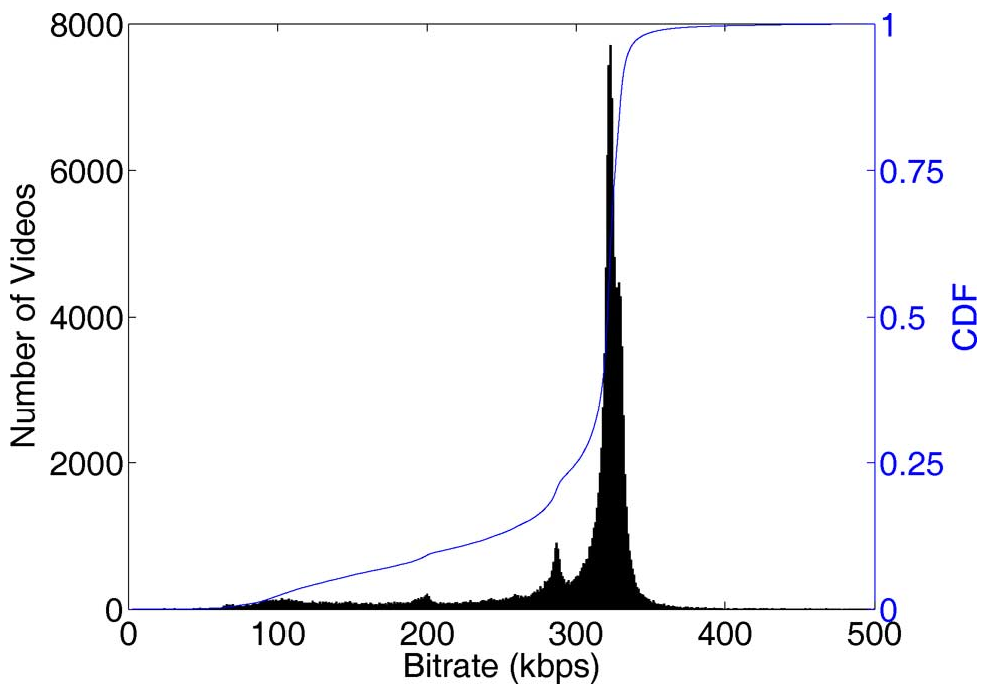 Fig 2: The distinct peaks in video length, highlighting the 10-minute uploader limit and the 3-4 minute music video sweet spot.
Methodology Evolution: The Social-Assisted P2P Model
The authors didn't just observe; they engineered a solution. They proposed a Bi-layer Overlay for P2P distribution:
- Lower Layer: Standard P2P exchange for the video currently being watched.
- Upper Layer: An interest-based overlay that connects peers who have watched "Related Videos."
By pre-fetching the first 10 seconds of "related" videos based on the social graph, they drastically reduced startup latency—solving the biggest hurdle for P2P short-video delivery.
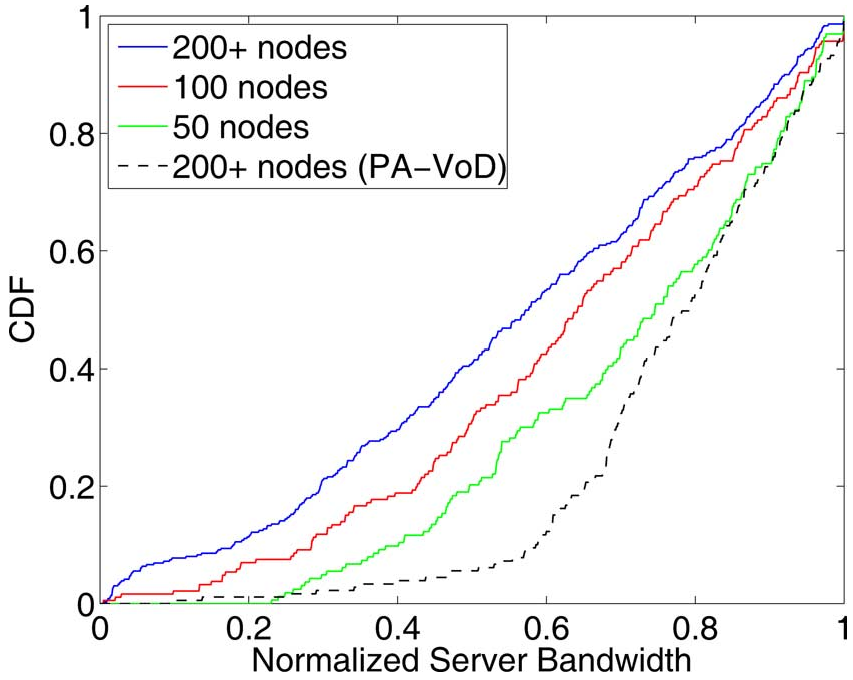 Fig 3: The Social-Network-Assisted P2P architecture (NetTube) and its impact on reducing server bandwidth.
Critical Analysis & Future Outlook
Takeaway: The success of modern platforms like TikTok can be traced back to the principles in this paper. Content distribution is no longer a "storage" problem; it is a "graph" problem.
Limitations:
- The data is from 2007-2008; modern YouTube algorithms are much more dynamic (AI-driven) than the static uploader-defined tags measured here.
- P2P delivery for web video eventually lost out to massive localized CDNs (Google Global Cache), but the logic of pre-fetching based on social correlation remains the backbone of modern app performance.
Conclusion: This research was the first to prove that in the age of UGC, the social metadata is as important as the video pixels themselves for scaling the Internet.