
Beyond the Hype: Modeling Why Users Abandon Social Networks
Understanding and Modeling Usage Decline in Social Networking Services
The paper proposes a novel research model to understand and predict "Usage Decline" in Social Networking Services (SNSs). It synthesizes several Information Systems (IS) theories—most notably an extension of the Technology Acceptance Model (TAM)—to categorize user withdrawal into Purge, Permanent Inactivity, and Temporal Inactivity.
TL;DR
While academia has long obsessed over how technologies "go viral," this paper pivots to a more somber reality: Usage Decline. By synthesizing decades of Information Systems (IS) theory, the authors propose a predictive framework to understand why giants like MySpace and Digg fell. They argue that withdrawal is not a simple binary "exit" but a nuanced transition influenced by declining perceived usefulness and eroding user loyalty.
The "Substitution" Fallacy
In classical economics, if a product becomes too expensive or a better one appears, you substitute it. However, Social Networking Services (SNS) break these rules. Profiles cost nothing to keep (zero pecuniary cost), and users frequently use multiple platforms simultaneously. Therefore, "leaving" a social network is rarely a clean break; it is often a slow slide into Temporal or Permanent Inactivity.
The authors identify a critical gap: existing models (TAM, UTAUT) are designed to predict adoption, but they don't adequately address the friction or "reverse-incentives" that lead to abandonment.
Methodology: The Anatomy of Withdrawal
The researchers built their model on two pillars: Technology Acceptance (Efficiency/Ease) and Customer Loyalty (Emotional/Practical value).
1. Defining the Exit
The paper categorizes withdrawal into three distinct states:
- Purge: Total deletion of account and social bonds.
- Permanent Inactivity: The "Ghost Profile"—content remains, but the user never returns.
- Temporal Inactivity: A temporary break, often reversible through external triggers like notifications.
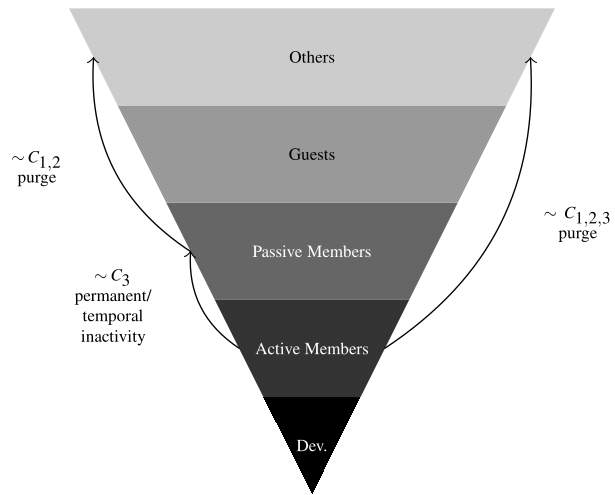 In the figure above, the authors map the transition from Active Member (C3) back toward Passive or Non-member states.
2. The Integrated Research Model
The core innovation is a multi-factor model that links Perceived Usefulness and Ease of Use with Loyalty Factors like:
- Utilitarian Value: Does this still do something useful?
- Hedonistic Value: Is it still fun?
- Social Influence: Are my friends still here?
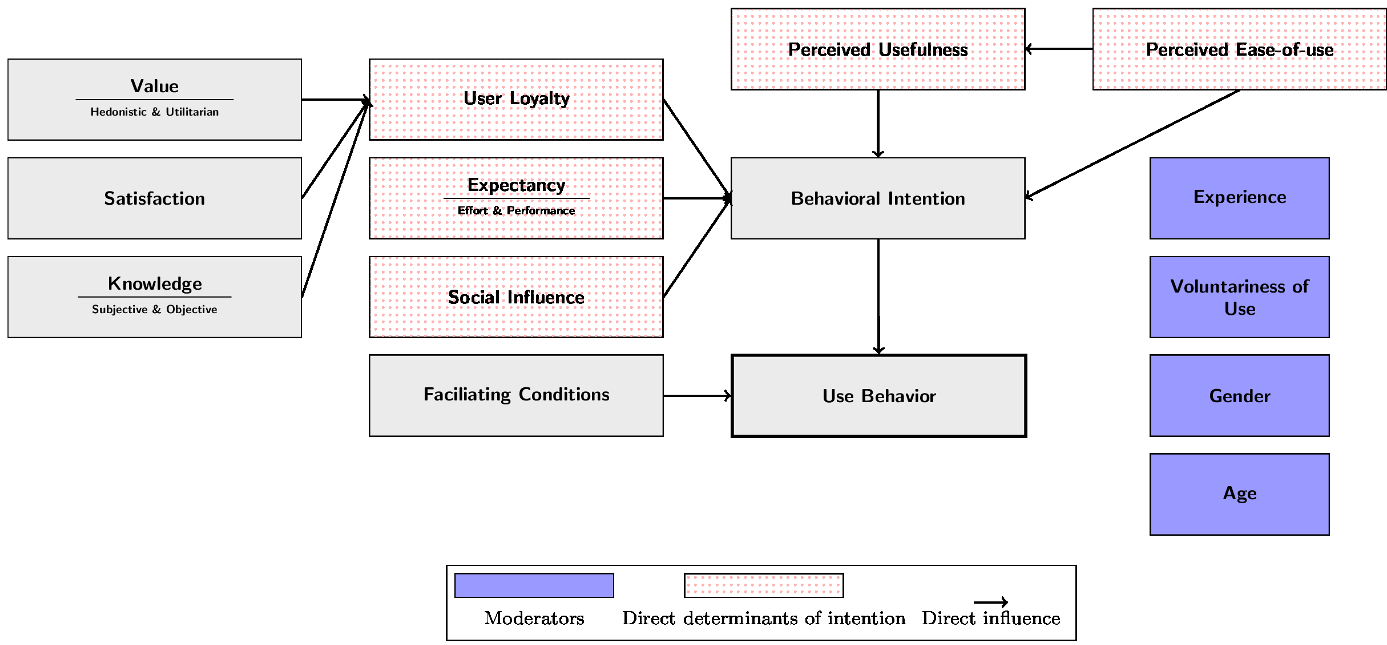 This architecture shows how behavioral intention is moderated by demographics (age, gender) and experience level.
Why Digg Died and MySpace Faded
The paper uses two high-profile casualties as evidence:
- Digg: A sudden, poorly received redesign in 2010 tanked its "Perceived Ease-of-Use," leading to a mass exodus to Reddit.
- MySpace: Lost its "Perceived Usefulness" and "Social Influence" as the network effect shifted toward Facebook's cleaner, more "utility-driven" interface.
Designing for Retention: Four Golden Rules
To combat the decline, the authors derive four strategic design principles:
- User Engagement: Keep the platform "living" with real-time status updates to maintain perceived usefulness.
- User Expression: Foster individuality through profile customization to increase satisfaction.
- Communication Channels: Integrate SMS, Email, and APIs to increase the "utilitarian value" of the network.
- Keep it Simple: Eliminate "clutter" to reduce frustration and preserve the "Ease-of-Use" anchor.
Critical Insight
The most striking takeaway is that Loyalty in social networks is fragile. Unlike a CRM system in a workplace (where use is often mandatory), social networks rely on "Voluntariness." Once the hedonistic value (pleasure) drops or the social influence (peer pressure) moves elsewhere, the "Perceived Usefulness" collapses, making withdrawal inevitable regardless of how "easy" the site is to use.
Future Outlook
This work serves as a foundational checklist for modern product managers. As we see shifts from "General Purpose" networks to "Categorized" or "Functional" ones, understanding the mechanics of the off-ramp is just as vital as optimizing the on-boarding. The next frontier? Applying this model to decentralized social media (Web3) where "Purging" and data portability might change the cost of withdrawal entirely.