
Unmasking Digital Deceit: Why Spammers Behave Differently on Yelp vs. Social Media
Understanding Network Characteristics of Spam Users in Social Media
This paper systematically explores the network characteristics of spam users across two distinct domains: e-commerce (YelpChi) and social networking (Tagged). By analyzing homophily, k-core centrality, and cohesiveness, the authors reveal that spammer behavior varies significantly depending on whether they spread opinion-based or fact-based false information.
In the cat-and-mouse game of spam detection, we have long relied on what users say (textual analysis) or when they say it (temporal patterns). However, the most robust signal often lies in who they talk to. This paper, "Understanding Network Characteristics of Spam Users in Social Media," provides a deep-dive into the structural DNA of spammers across two major digital ecosystems: e-commerce platforms and social networks.
TL;DR
The research reveals a startling dichotomy: Spammers on e-commerce sites like Yelp tend to hide in the shadows, forming tight-knit, isolated "opinion-rigging" groups at the edges of the network. In contrast, spammers on social networking sites like Tagged act as "power players," embedding themselves in the network's core to maximize the reach of fake news.
The Core Conflict: Opinion vs. Fact
The authors categorize false information into two types:
- Opinion-based: Subjective reviews intended to influence a buyer (e.g., fake Yelp reviews).
- Fact-based: Fabricated claims that contradict ground truth (e.g., fake news on social media).
The "Spammer's Dilemma" is that while they can easily fake a review's text, they cannot easily fake a long-term, organic social network. This makes network topology a "gold mine" for detection.
Methodology: The Structural Toolkit
The study utilizes three sophisticated lenses to examine the behavior of actors in the YelpChi and Tagged datasets:
- Homophily Testing: Do spammers hang out with other spammers? (Tested via t-tests on cross-label edges).
- K-Core Decomposition: Are spammers at the "heart" of the network or the "fingertips"?
- Cohesiveness: Do they form "triads" or tightly looped cliques?
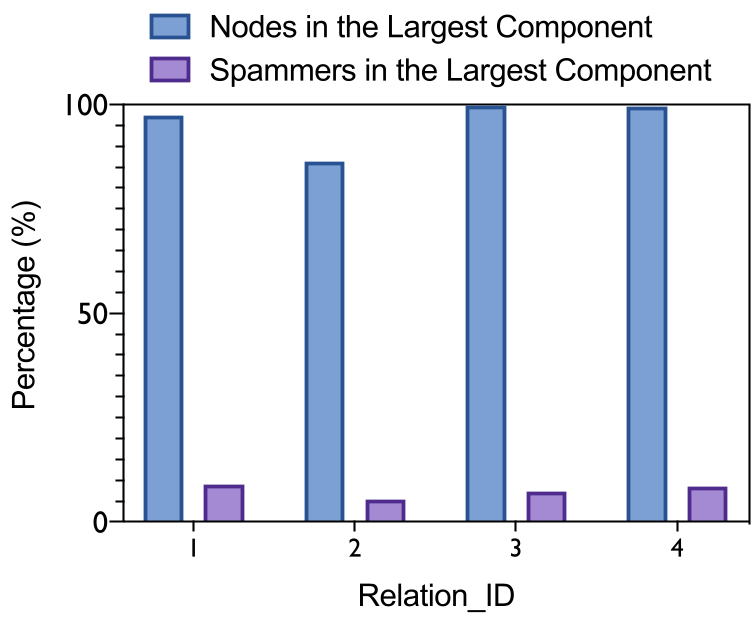 Figure 1: Risk classification logic for performers in the YelpChi dataset.
Key Findings: A Tale of Two Networks
1. The Homophily Paradox
On Yelp, the Homophily property holds strong. Spammers co-review the same products, effectively linking them together in the graph. However, on Tagged (social networking), this property is non-existent. Spammers actively reach out to legitimate users (sending messages, playing games) to spread misinformation, meaning their links are almost always "heterophilous" (connecting different types of users).
2. Centrality: Core vs. Periphery
The k-core analysis (Figure 3 & 4) highlights a major shift in strategy:
- E-commerce (Yelp): Spammers are likely to have low k-core values. They inhabit the periphery because their activity is concentrated on a small number of targeted stores.
- Social Media (Tagged): Spammers have high k-core values. They are central spreaders. Interestingly, the authors identified "periphery hubs"—nodes with a massive number of links but to very low-quality, low-degree neighbors—a classic signature of bot-like behavior.
 Figure 2: Spammers on Yelp concentrate in low k-core shells (the periphery).
3. Cohesiveness
Spammers on Yelp are surprisingly "social" with each other, forming tightly knit groups with high local clustering coefficients. On social networks, the connections are sparse and rarely form closed triangles (triads), as the goal is broad dissemination rather than mutual support.
Critical Insight: The "Periphery Hub"
One of the most valuable takeaways is the identification of the Periphery Hub. In social networks, a user with thousands of friends (high degree) who resides in a very shallow k-core (meaning their friends have no other friends) is almost certainly a spammer. This structural anomaly is much harder to "spoof" than linguistic styles.
Conclusion
This study proves that there is no "one-size-fits-all" graph feature for spam detection. While a clustering algorithm might catch a Yelp review ring, it would likely fail on a social media botnet. Future SOTA (State-of-the-Art) models must integrate these domain-specific network signatures—specifically targeting the "Periphery Hubs" of social media and the "Cohesive Groups" of e-commerce—to build truly robust defense systems.
Data Sources:
- YelpChi: Opinion-based review data.
- Tagged: Fact-based social interaction data.