
Decoding Player Bonds: A Formal Look at Social Graph Extraction in Online Gaming
Understanding and recommending play relationships in online social gaming
This paper introduces a formal framework for extracting social graphs from Online Social Games (OSGs) by applying multi-faceted mapping rules and thresholds. Using large-scale datasets from Dota-League and DotAlicious, the authors demonstrate that different extraction strategies significantly alter graph topology and propose a socially-aware matchmaking algorithm that outperforms random baselines.
TL;DR
Online gaming is more than just mechanics; it’s a web of social and adversarial relationships. This paper moves beyond the simple "friends" list by introducing a formal framework to extract hidden social structures from raw match logs. By analyzing millions of Defense of the Ancients (DotA) matches, the authors prove that how you define a "connection"—and how strictly you filter it—completely changes your understanding of the player community.
The "Weak Link" Problem in OSGs
Most researchers build social graphs by drawing a line between any two players who share a match. But is a single, 30-minute encounter with a stranger a "relationship"? Probably not.
The authors argue that existing studies suffer from threshold blindness. In competitive environments like MOBA games, adversarial relationships (foes) are just as important as cooperative ones (friends). Without a way to filter out "weak" links (casual one-off matches) and categorize relationship types (winning together vs. losing together), we can't build accurate matchmaking or recommendation systems.
Methodology: The Six Lenses of Graph Extraction
To solve this, the researchers propose a formalism that maps match data into graphs using six specific rules:
- Same Side (SS) / Opposing Sides (OS): Distinguishes between teammates and rivals.
- Matches Won (MW) / Matches Lost (ML): Tests the "misery loves company" vs. "glory binds" hypotheses.
- Play Percentage (PP): A directed metric showing how much of Player A's total time is dedicated to Player B.
By applying a threshold (minimum number of interactions), they can effectively "peel the onion" of the social network to find the core clusters.
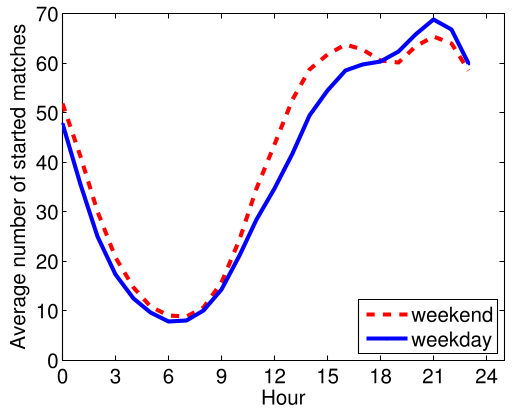 Fig 1: Diurnal match patterns show that gaming activity follows predictable social cycles, but the underlying graph structure is far more complex.
Key Insights: Culture Matters
The study compared two communities: Dota-League (strictly moderated, queue-based) and DotAlicious (player-led, server-based).
- Social Choice vs. Automation: In DotAlicious, where players choose their teammates, "Same Side" links resulted in significantly higher clustering than "Opposing Sides." Players actively sought out friends.
- The Victory Bond: Winning together (MW) creates stronger, longer-lasting social ties than losing together (ML) in DotAlicious. In Dota-League, the win/loss ratio was a flat 50/50 across all links, reflecting the "forced" balance of their automated matchmaking.
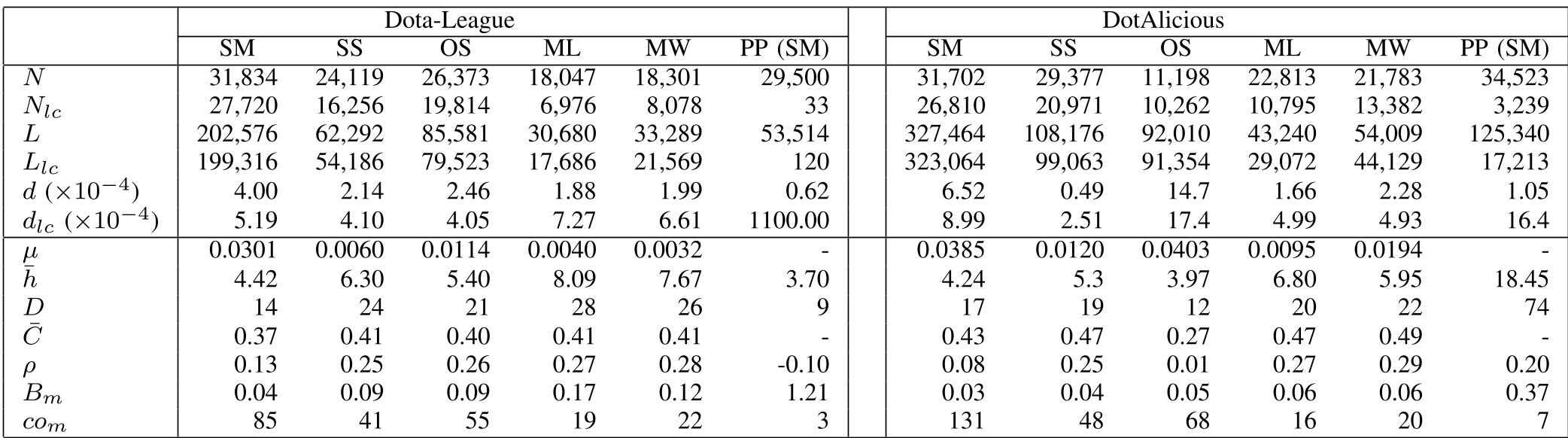 Table 1: Quantitative comparison across different mapping strategies reveals that "SM" (Same Match) is too broad to capture specific social nuances.
The Matchmaking Breakthrough
The authors didn't just analyze data; they used it to build a better Matchmaker.
Using their formalism to identify "clusters" (dense groups of players with high interaction thresholds), they proposed an algorithm that prioritizes placing cluster-mates together. When compared against the original systems:
- Random Matchmaking: Performed poorly (expected).
- Original Systems: Were decent but missed many social opportunities.
- Formalism Matchmaking: Consistently achieved higher "utility scores" by ensuring players were surrounded by recognizable faces from their specific social clusters.
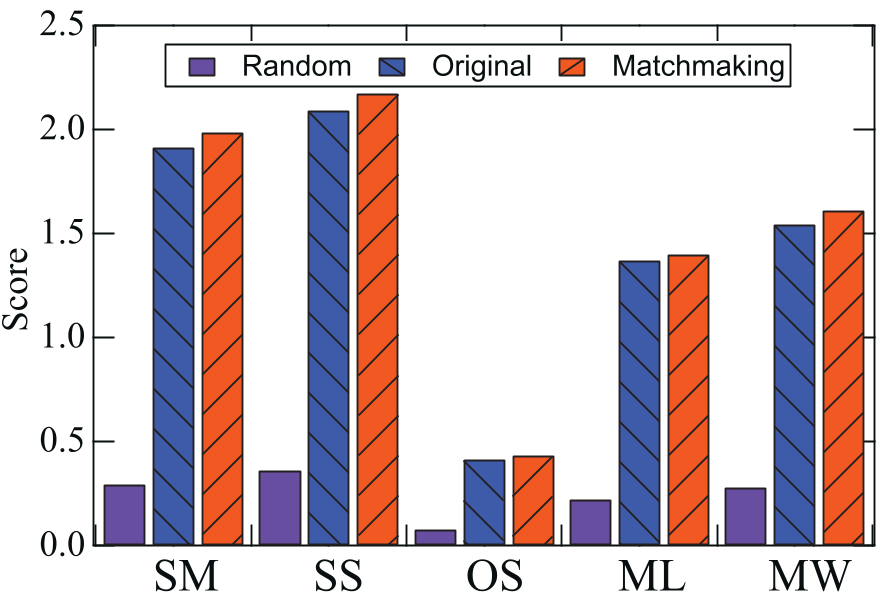 Fig 2: The proposed algorithm (Matchmaking) consistently outperforms Random and Original methods in preserving social ties.
Critical Analysis & Conclusion
The true value of this work is the realization that the "Giant Component" is often an illusion. When you raise the threshold, the massive, interconnected social graph shatters into hundreds of tiny, tight-knit "guilds."
Takeaway: If you are a developer, stop focusing only on "Skill Rating" (Elo/MMR). By identifying these latent social clusters using thresholded graph extraction, you can create matches that are not just "fair," but socially rewarding—increasing long-term player retention.
Limitations: The study focuses on MOBA games. The dynamics might differ significantly in MMORPGs or FPS games where "adversarial" interactions are less structured.