
Game Theory in Social Computing: The Delicate Balance Between Answering and Voting
Understanding Sequential User Behavior in Social Computing: To Answer or to Vote?
This paper introduces a game-theoretic framework to model sequential user participation in social computing systems (e.g., Q&A sites). It focuses on the strategic choice between "answering" (direct content creation) and "voting" (rating existing content) through a model that accounts for the answering-voting externality.
TL;DR
Why do some Stack Overflow questions get buried under mediocre answers while others attract top-tier expertise? This paper models this dynamic as a sequential game, revealing that user participation is a strategic trade-off governed by an "answering-voting externality." The authors prove that an equilibrium exists where high-ability users answer early, and platform value is maximized only when voting rewards don't overshadow the effort of content creation.
The "Answering-Voting" Dilemma
In social computing systems like Reddit, Amazon, or Stack Overflow, value stems from User Generated Content (UGC). However, users face a three-way branch every time they visit a page:
- Participate Directly: Provide an answer (High cost, delayed reward via future votes).
- Participate Indirectly: Cast a vote (Low cost, immediate minor satisfaction/points).
- Lurk: Do nothing (Zero cost, zero reward).
The "Why" behind this paper is the externality: A user's decision to answer today is gamble on the voting behavior of users who arrive tomorrow. If the system rewards voters too highly, why would anyone bother with the difficult task of writing a detailed response?
Methodology: The Sequential Threshold Model
The authors move beyond static models by treating the question as a state machine where the state is the current number of answers.
The Core Logic
- Ability Threshold: Only users whose ability () exceeds a certain threshold will choose to answer.
- Dynamic Programming: Because users are "strategic" and forward-looking, they calculate the expected future discounted reward.
- The Threshold Structure: As more answers accumulate, the threshold for a new answer increases. It becomes "harder" to provide a novel, high-value contribution that will attract votes among the existing noise.
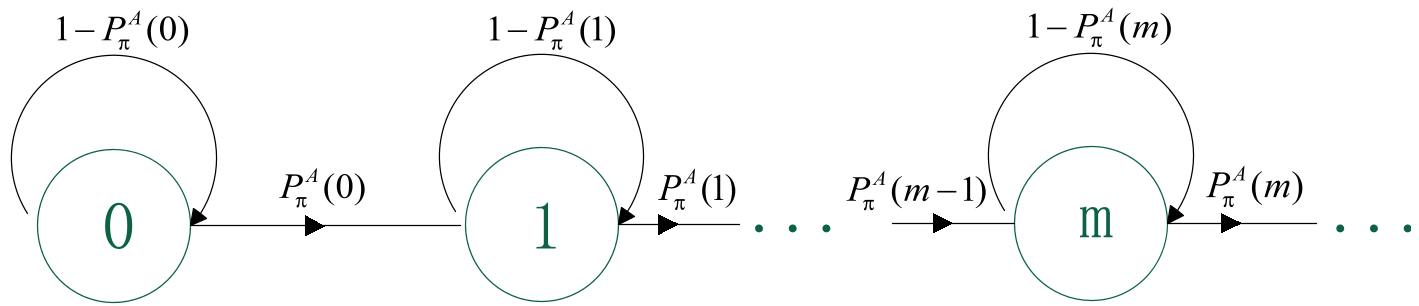 Figure 1: State transition of the sequential game where users decide based on the current number of answers.
Empirical Proof: Stack Overflow Data
To validate the model, the authors analyzed 430k questions from Stack Overflow. They found two striking correlations:
- The First-Mover Advantage: The earliest answers consistently receive the highest scores.
- The Saturation Effect: Once a few answers exist, the probability of a new user contributing an answer drops exponentially. It effectively becomes a "winner-takes-most" environment for early contributors.
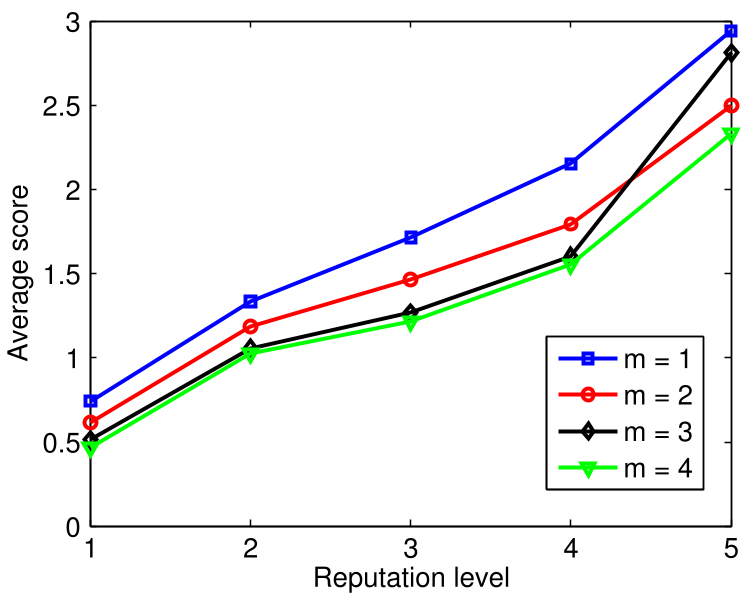 Figure 2: Data shows that later answers (higher time rank) receive significantly fewer rewards, proving the "Answer Earlier" advantage predicted by the model.
Designing the Perfect Incentive
The most valuable part of this research for product Managers and System Designers is the Incentive Sensitivity Analysis. Through simulations of three use cases (Diversity-focused, Timeliness-focused, and Quality-focused), they found:
- The Voting Cap: Voting should be encouraged enough to provide feedback, but if the reward () is too high, it creates "lazy" users who only vote and never contribute content.
- Diversity vs. Quality: Increasing the penalty for downvotes () actually increases average answer quality but decreases the speed of answers. If you want a fast response, lower the penalty; if you want the "right" response, raise the stakes.
Critical Insight & Limitations
This work successfully bridges the gap between abstract game theory and real-world social data. However, it assumes a "random" voting model—in reality, users are often biased by existing scores (the "herding effect"). Future extensions should consider how ranking algorithms (displaying the top-voted answer first) create a positive feedback loop that might discourage even high-ability users from correcting an early, popular, but slightly incorrect answer.
Final Takeaway
Social computing platforms are not just repositories of information; they are delicate ecosystems. The balance between the "worker" (answerer) and the "critic" (voter) must be managed through precise reputation point calculus to ensure the "elite" members of the community remain active.