
WeChat Lucky Money: Deciphering the Digital Red Envelope through a Cross-Cultural Lens
Understanding Users’ Acceptance of Money Gifting in a Social Game
This study investigates international users' acceptance of "WeChat Lucky Money," a digital money-gifting social game. By conducting experiments and interviews with North American and Korean participants, the research explores how cultural background influences the adoption of social payment features in global social media.
TL;DR
Can the Chinese tradition of "Lucky Money" become a global social media staple? This study analyzes how North American and Korean users interact with WeChat's money-gifting features. While both groups enjoyed the gamified "Group Lucky Money," their underlying motivations differed: Americans saw it as a fun game of chance, while Koreans felt a deeper social obligation to reciprocate, highlighting critical cultural nuances for designers of global social fintech.
Problem & Motivation: The Gap in Digital Gifting
Social media platforms are increasingly evolving into "everything apps" that include e-commerce and finance. However, "money gifting"—sending actual cash as a social gesture—remains a culturally sensitive domain.
Existing literature suggests:
- Westerners (Independent Self-Construal): Focus on the gift’s attractiveness and making the recipient happy, with fewer rigid budgets.
- East Asians (Interdependent Self-Construal): Focus on reputation, social obligation, and the "burden" of reciprocity.
The authors sought to understand if the massive success of WeChat Lucky Money (which saw 8 billion packets sent in a single night in China) could be replicated with international users who are navigating a new cultural environment.
Methodology: Gamification vs. Tradition
The experiment tested two distinct UX paradigms within WeChat:
- Individual Transfer: A fixed amount sent from one person to another (Digitalized Tradition).
- Group Lucky Money: A randomized "grab bag" where users compete to see who gets the most (Social Game).
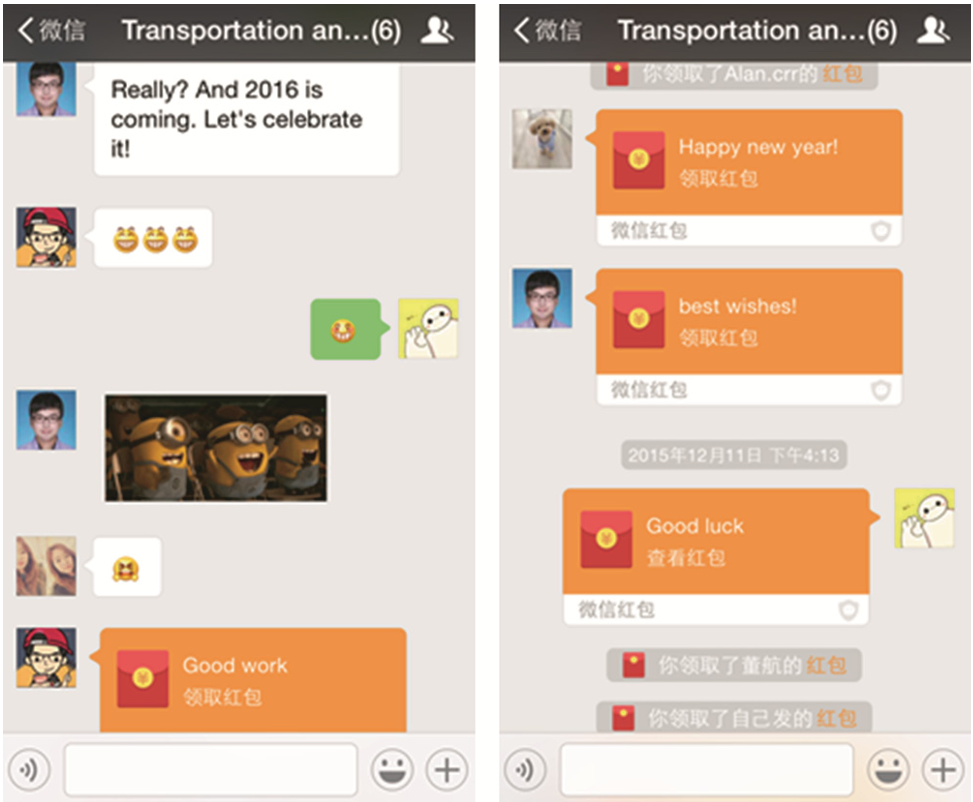 Figure 1: Illustration of the competitive Group Lucky Money interface.
Core Findings: "Funny Game" vs. "Social Pressure"
The study revealed that while quantitative acceptance levels were similar across cultures, the qualitative "Why" was vastly different.
1. The Power of Randomness
The "Group Lucky Money" functioned as a social icebreaker. Because the amounts were randomized, it removed the "transactional" feeling of money and replaced it with "entertainment." For North Americans, it was a "lottery"; for Koreans, it was a way to "share happiness."
2. Social Support vs. Social Pressure
Individual Lucky Money (fixed amounts) triggered much higher feelings of social support than group gifting. However, a sharp cultural divide emerged:
- North Americans: Generally felt "excited" or "surprised," though some felt uncomfortable if the amount was too high.
- Koreans: Reported significant "social pressure." One participant noted it felt "strange" because they immediately felt the need to "send it back" to maintain social equilibrium.
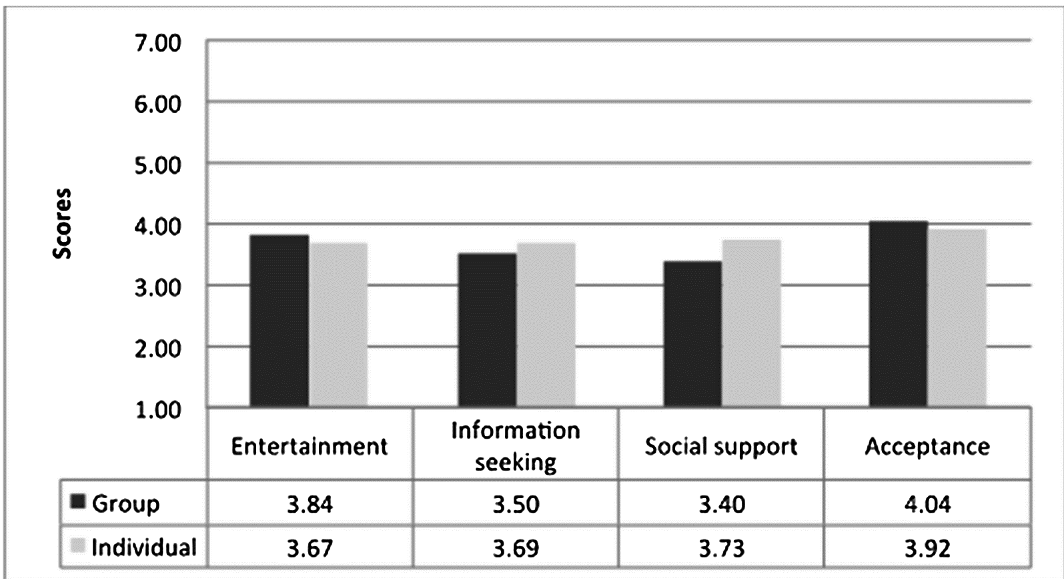 Figure 2: User experience dimensions showing neutral-to-positive attitudes across Entertainment, Information Seeking, and Acceptance.
Critical Analysis & Conclusion
Takeaways for Global Product Design
- Gamify the Finance: To introduce social payments to cultures where giving money is "taboo" or "rare," use randomized allotments. This shifts the focus from the value of the money to the fun of the interaction.
- Contextual Guardrails: Since Koreans (and potentially other collectivist cultures) feel pressure from high-value gifts, platforms should perhaps suggest "standard" or "modest" amounts for non-family interactions to reduce social friction.
- Educational UI: The study found that none of the participants had tried the feature until they were taught. Global apps need significantly more aggressive educational onboarding for features that carry "cultural baggage."
Limitations
With only 16 participants, this is an exploratory study rather than a definitive proof. The sample was restricted to college students, who are naturally more tech-savvy and open to new social norms.
Future Outlook
As social media moves toward the "Metaverse" and broader social payment ecosystems (like X/Twitter's payment ambitions), understanding the delicate balance between entertainment (games) and social debt (payment) will determine which platforms can successfully bridge the global cultural gap.