
Unmasking the Predators: How Network Topology Reveals Internet Luring on Twitter
Communication Based on Unilateral Preference on Twitter: Internet Luring in Japan
This study investigates "unilateral preference" in social networks by analyzing Japanese Twitter interactions involving the hashtag "runaway" (Iede). Using network analysis, the authors identified a specialized bipartite structure where adult men systematically target vulnerable young girls, achieving a high-precision detection of predatory "luring" behavior through k-core decomposition.
TL;DR
Researchers from the University of Tokyo have uncovered a disturbing "bipartite" reality on Japanese Twitter. By analyzing hashtags related to running away from home, they discovered that interactions aren't driven by mutual friendship, but by unilateral preference—an asymmetric seeking behavior. Using k-core network analysis, the study demonstrates that the most densely connected "core" of these conversations has a staggering 70%+ rate of predatory luring.
The "Runaway" Crisis and the Failure of Traditional Network Theory
In the wake of the 2017 Zama incident, where Twitter was used to facilitate a multi-victim kidnapping and murder, the Japanese academic community turned its focus toward the dark side of OSNs (Online Social Networks).
Traditional social network theories revolve around two pillars:
- Homophily: We connect with people "like us."
- Preferential Attachment: The "rich get richer," where famous nodes get more links.
However, these theories don't explain Internet Luring. Predators don't want friends; they want targets. They use search functions as a "laser-guided" tool to find vulnerable individuals (e.g., girls tweeting about running away) with whom they have zero prior connection. This study identifies this as Unilateral Preference.
Methodology: Identifying the "Predatory Bipartite" Structure
The researchers tracked "runaway" (家出 - Iede) hashtags over six months, mapping interactions between those seeking help (Targets, mostly young girls) and those responding (Reaction users, mostly adult men).
To prove this wasn't just a standard community, they measured three specific indicators:
- Link Asymmetry (A): Reaching nearly 1.0, showing the network is strictly divided into "givers" and "receivers."
- Mutual Friendship Density: Remained near zero, proving these weren't existing friend groups.
- Out-degree Growth: High-activity "Reaction" users contacted multiple, different "Targets," a hallmark of indiscriminate reaching.
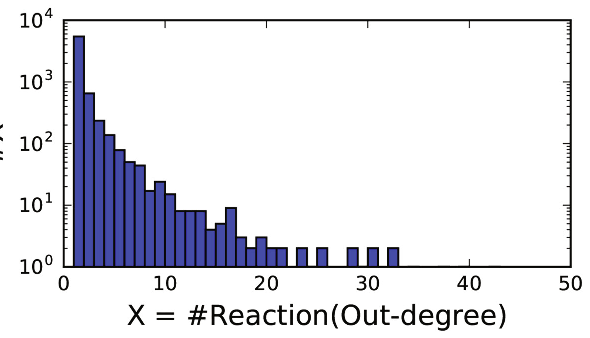 Fig 1: The distribution shows a massive volume of "Reaction" users (R) targeting a concentrated group of "Target" users (T).
Detecting Luring: The Power of K-Core
Not every reply to a runaway girl is predatory; some are expressions of concern. To separate the signal from the noise, the authors used k-core decomposition.
A k-core is a sub-graph where every node has at least k degrees. As the researchers increased k, they effectively "peeled away" the peripheral, casual noise of the network to reveal the high-intensity core.
- The Baseline: 61% of all replies were identified as luring (asking for LINE IDs or private meetings).
- The Core Effect: In the k-core (where k=6), the luring density jumped significantly.
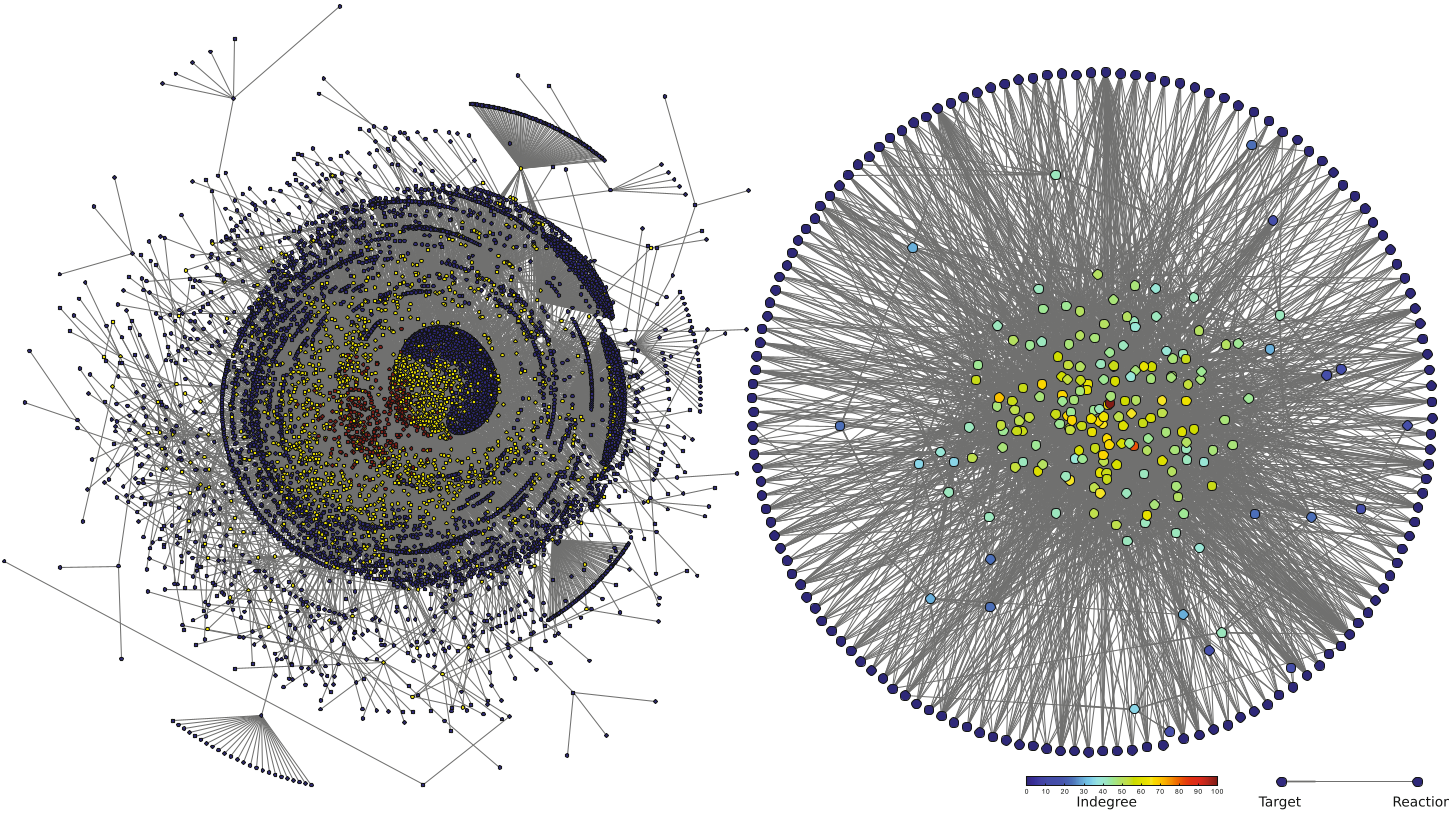 Fig 2: Visualizing the k-core. The central "core" (darker nodes) represents the highest concentration of luring activity.
Critical Analysis: Why This Matters
The most profound insight here is that network topology is a better predictor of danger than keyword filtering.
Predators frequently change their vocabulary to avoid system bans (e.g., shifting from "suicide" to "runaway"). However, their structural signature—the way they systematically "graze" through vulnerable target nodes—is much harder to hide. This study proves that platforms can identify high-risk clusters simply by looking at who is repeatedly contacting "search-matched" vulnerable users.
Limitations
The study relies on human annotation for gender and intent estimation, which is subjective. Furthermore, it focuses on public interactions. Much of the actual harm moves into Direct Messages (DMs) quickly, a "dark space" that researchers currently cannot access for analysis.
Conclusion: A New Blueprint for Safety
This research moves the conversation from content moderation to structural moderation. By recognizing "unilateral preference" as a distinct mathematical pattern, social media platforms can design algorithmic intervention tools that flag predators based on their connection patterns long before a specific "banned word" is ever typed.
Takeaway: In the battle against online grooming, the shape of the network is often more revealing than the words within it.