
Beyond Permissions: Unveiling the "Invisible" Threat of SNS Inference Attacks
Unintended disclosure of information: Inference attacks by third-party extensions to Social Network Systems
This paper presents a comprehensive empirical study on SNS API inference attacks, where third-party extensions exploit legitimately accessible data to uncover hidden user attributes. Using a Facebook-integrated simulation with 8 custom algorithms and over 400 participants, the study demonstrates that even simple, non-machine-learning techniques can achieve high success rates in deanonymizing "private" information.
TL;DR
Think your Facebook privacy settings keep your birthday or partner's name safe? Think again. This study reveals how third-party extensions—like photo editors or games—can use the data you legitimately grant them to "guess" the private info you withheld. Even with naive algorithms, researchers successfully inferred sensitive data for nearly 95% of participants.
The "Broken" Trust Model of SNS APIs
Modern Social Network Systems (SNSs) like Facebook rely on a permission-based architecture. If you want an app to post to your wall, you give it "Wall" permission. The industry assumption is that users are protected because they control these "on-off" switches.
The Motivation: The authors argue that this model is fundamentally flawed. Once an untrusted third-party server receives your data via an API, the SNS loses control. Malicious developers don't need to "hack" the system; they can simply infer what they aren't authorized to see by connecting the dots between your public posts and background knowledge.
Methodology: High-Logic, Low-Complexity
The brilliance of this study lies in its simplicity. Instead of using black-box AI, the authors created 8 transparent algorithms focusing on different Inference Channels:
- The "Birthday" Channel: Scanning wall posts for spikes in "Happy Birthday" messages.
- The "Partner" Channel: Identifying the person of the opposite gender most frequently tagged in your "Wedding" or "Love" photo albums.
- The "Proxy" Channel: Accessing a friend's profile to see if they listed you as a "sibling," thereby discovering your family tree even if you hid your own family list.
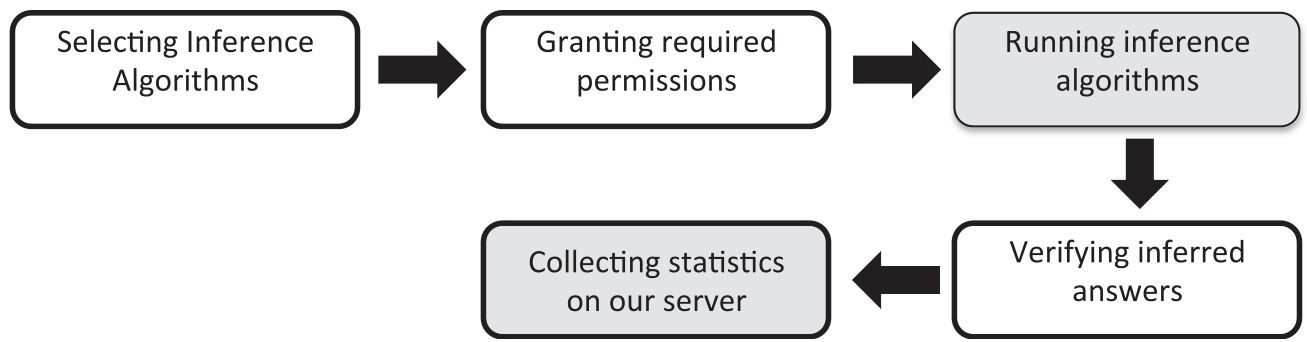 Figure 1: The experimental flow used to validate inference accuracy with real participants.
The Analytical Framework
To move beyond simple "success/failure" metrics, the authors introduced a rigorous classification for user profiles:
- Directly Usable: User granted the app permission.
- Usable: Indirect permissions (from friends) are also available.
- Inferable: The required data actually exists in the profile.
- Applicable: The inference is logically possible (e.g., you can't infer a "spouse" for a single person).
Key Results: An Alarming Success Rate
The study found that some attributes are almost impossible to hide.
- Birthday Prediction: In profiles with at least one greeting, the accuracy was a staggering 93.9%.
- Hometown & Partner: Even with incomplete background databases, the "Hometown" algorithm hit over 32% accuracy, while the "Partner" algorithm achieved 56.1% applicability success.
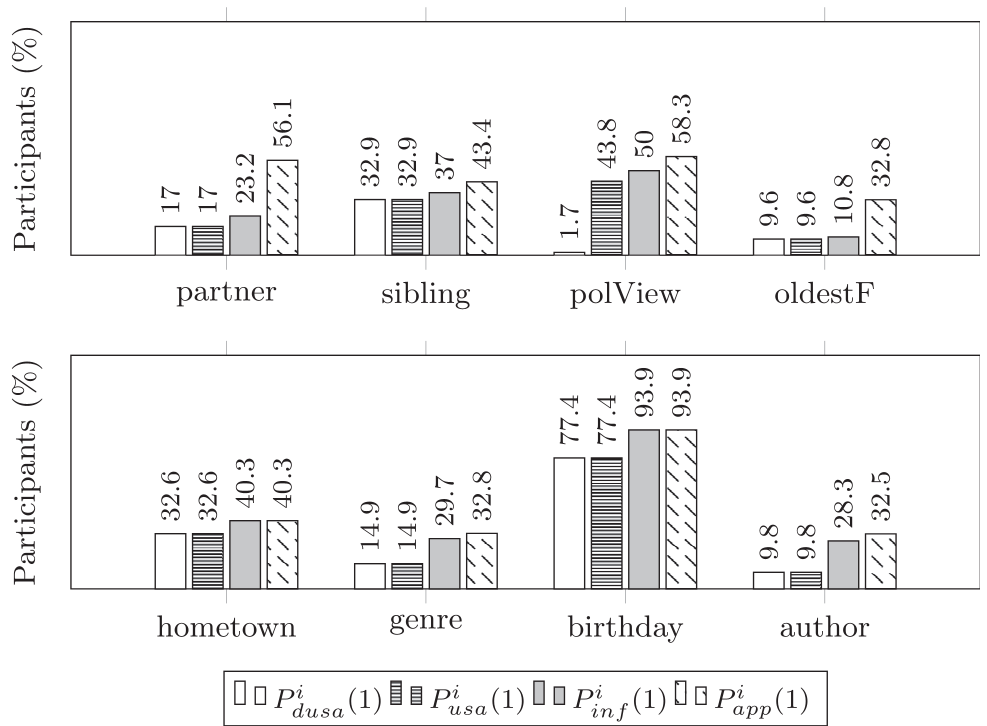 Figure 2: Performance of various inference algorithms across different profile classes.
The Real Danger: Building Blocks for Identity Theft
Inference isn't just a privacy nuisance; it's a weapon. The authors modeled how these "guesses" could bypass bank security questions (e.g., "What is your youngest sibling's name?").
If a bank uses "Disjunctive" questions (pick 1 of 3), an attacker using these SNS inference tools has a 36% chance of total account takeover. In the world of Facebook (with millions of users), a 36% success rate translates to millions of compromised identities.
Critical Insight: The "Friend" Loophole
One of the most profound takeaways is that your privacy isn't just in your hands—it's in your friends'. The "sibling" and "political view" algorithms succeeded primarily by exploiting default settings on friends' profiles. Even if you lock down your account, if your friend hasn't changed their default API settings, your relationship to them is still visible to the apps your friend uses.
Conclusion & Future Outlook
The paper concludes that "security-by-disclaimer" (warning users that apps are untrusted) is a failed strategy. We need a fundamental shift toward Privacy-by-Proxy—where the SNS provides "transformed" or "blinded" data to apps instead of raw profile information.
For developers and researchers, this work serves as a benchmark for the Inference Gap: the distance between what a user thinks they are sharing and what an algorithm can actually derive.