
Unsocial Networks: Why Your Profile Doesn't Define Your Influence
Unsocial Networks - Restoring the Social in Social Networks
This paper challenges the dominant "economic view" of social networks, which treats human actors as independent "physical symbol systems." The author proposes a "relational view" centered on structural equivalence and descriptive roles, arguing that social structures emerge from interdependent relations rather than prior individual attributes.
TL;DR
Most Information Systems (IS) treat you as a "Physical Symbol System"—a box with input, output, and a set of fixed attributes. This paper argues that this "Economic View" is fundamentally flawed. By looking at sociology and vertebrate studies, Donald Steiny demonstrates that social structure isn't built by independent agents following rules; it is an emergent property of relations. The future of social tech lies in understanding "Structural Equivalence" rather than just collecting user demographics.
Background: The Ghost of Herbert Simon
In the academic coordinate system, this work serves as a critical bridge between Sociological Theory and Information Systems. It challenges the bedrock of IS—the "Physical Symbol System" hypothesis proposed by Herbert Simon—which suggests that humans are simple symbol-processing machines.
1. The Paradox of the "Economic View"
The conventional wisdom in computer science and IS is that if we define simple rules for agents (like in a simulation), macro structures like hierarchies will naturally emerge. This view suggests:
- Nodes are Pipes: Individuals are just stations where information flows.
- Attributes Rule: We classify people by race, gender, job title, or "values."
- Density is Hierarchy: We assume that if people talk more frequently, they are part of the same functional "system."
The Problem? This view can't explain reality. If hierarchies were based on prior attributes (like strength or intelligence), a hierarchy would never change unless the individuals changed. But experiments (e.g., by Ivan Chase) show that when groups are separated and reunited, they form totally different stable hierarchies. Attributes don't predict structure.
2. Methodology: From Nodes to Relations
Steiny proposes shifting our focus from the Node to the Relation. This is the "Relational View."
The "Boys and Girls" Insight
Consider the diagram below. If we group by attribute (Gender), we get two sets. If we group by relation (who actually talks), we see a completely different social reality. Node B, the "Broker," becomes the most critical point not because of who they are, but where they sit between groups.
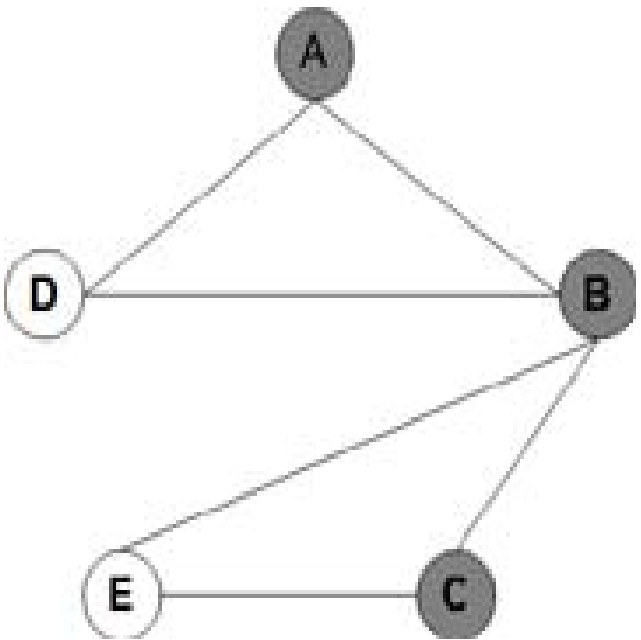 Figure 1: Traditional attribute-based sets vs. relational interdependence.
Structural Equivalence
The core technical mechanism discussed is Structural Equivalence. Two people are structurally equivalent if they have the same pattern of links to other people, even if they don't know each other.
- Example: All Vice Presidents in different companies are structurally equivalent because they relate similarly to Presidents and Managers.
- The Power: Innovation doesn't spread like a disease (proximity). It spreads across equivalent sets. We adopt things from people we perceive as being in the same "role" as us.
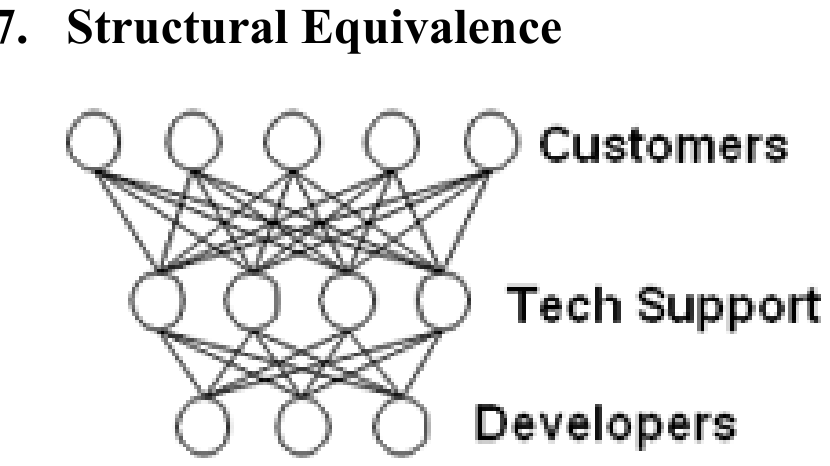 Figure 2: Identifying roles (sets) through link patterns rather than labels.
3. Results: Why Profiles are a Waste of Time
The paper presents a striking critique of modern Social Networking Sites (SNS) like Facebook and LinkedIn:
- Over-reliance on Profiles: We spend millions of hours filling out "Age, Sex, Location," but these are prior attributes that rarely drive actual social dynamics.
- Weak Ties are Strong: Following Granovetter, the paper notes that "weak ties" (acquaintances) are more important for information flow than "strong ties" (close friends), yet most systems prioritize the latter.
- Innovation Adoption: Burt’s re-analysis of medical innovation diffusion proved that Structural Equivalence was a far better predictor of which doctors adopted a new drug than mere social contact.
4. Deep Insight: Restoring the "Social"
The "Social" in social networks has been lost to "Engineering." We have treated networks as flat maps of pipes. Steiny argues for a Multi-Network approach:
- Humans occupy multiple roles simultaneously (Father, Employee, Hobbyist).
- We are the "confluence of networks."
- The Future: Instead of asking users for more data (manual profiling), IS should use techniques like Latent Semantic Analysis (LSA) to describe roles based on actual interaction patterns.
Conclusion
This paper is a wake-up call for IS. If we continue to model humans as "Physical Symbol Systems," we will keep building "Unsocial Networks"—tools that store data but fail to understand human organization. By embracing the Relational View, we can move from being an engineering discipline to a true natural science of social interaction.
Takeaway for Architects: Stop building databases of users. Start building maps of relationships. The role defines the action, not the person.