
Unsupervised Anomaly Detection: Outsmarting Healthcare Fraud with Deep Generative Models
Unsupervised Anomaly Detection for Discrete Sequence Healthcare Data
The paper introduces an unsupervised anomaly detection framework for discrete healthcare sequence data to identify insurance fraud. It leverages two deep learning architectures—LSTM for next-token prediction and seq2seq for sequence reconstruction—achieving state-of-the-art ROC AUC of 0.771 on real-world medical billing data.
TL;DR
Researchers have developed a new unsupervised framework that identifies healthcare fraud by treating medical billing as a sequence modeling problem. By using LSTM-based prediction and seq2seq Autoencoders, the system flags "unlikely" treatment patterns as potential fraud. A novel Empirical Distribution Function (EDF) normalization step was introduced to handle the massive variety of medical codes, achieving a massive performance leap over traditional baselines like Isolation Forest.
Background: The Hidden Cost of "Upcoding"
Healthcare fraud is a multi-billion dollar problem. A common tactic is upcoding, where a doctor records a more expensive procedure than what was actually performed (e.g., billing a 30-minute session for a 15-minute visit). Traditional detection relies on manual audits or rigid expert rules. However, fraud patterns evolve, and labeled "fraud" data is rare and expensive to obtain.
The authors position this work as a shift from supervised classification to unsupervised sequence modeling. By learning the "normal" rhythm of patient treatments, the model can flag deviations without ever seeing a "fraud" label during training.
Methodology: Reconstructive Intuition
The core insight is simple but powerful: A model trained on legitimate medical sequences will fail to accurately predict or reconstruct fraudulent ones.
1. The Models
The researchers tested two distinct deep learning approaches:
- The Predictor (LSTM): Attempts to predict the next treatment code based on the history of previous visits.
- The Reconstructor (Seq2Seq Autoencoder): Compresses the entire visit sequence into a latent vector and then tries to reconstruct it.
2. The EDF Normalization (The "Secret Sauce")
With over 2,000 different treatment codes, a "high error" on a rare treatment might be normal, while a "medium error" on a common treatment is highly suspicious. To fix this, the authors introduced an Empirical Distribution Function (EDF). Instead of using raw probability errors, the model looks at the historical distribution of errors for that specific treatment and converts it into a percentile. This ensures that the anomaly score reflects how unusual an error is relative to its own class.
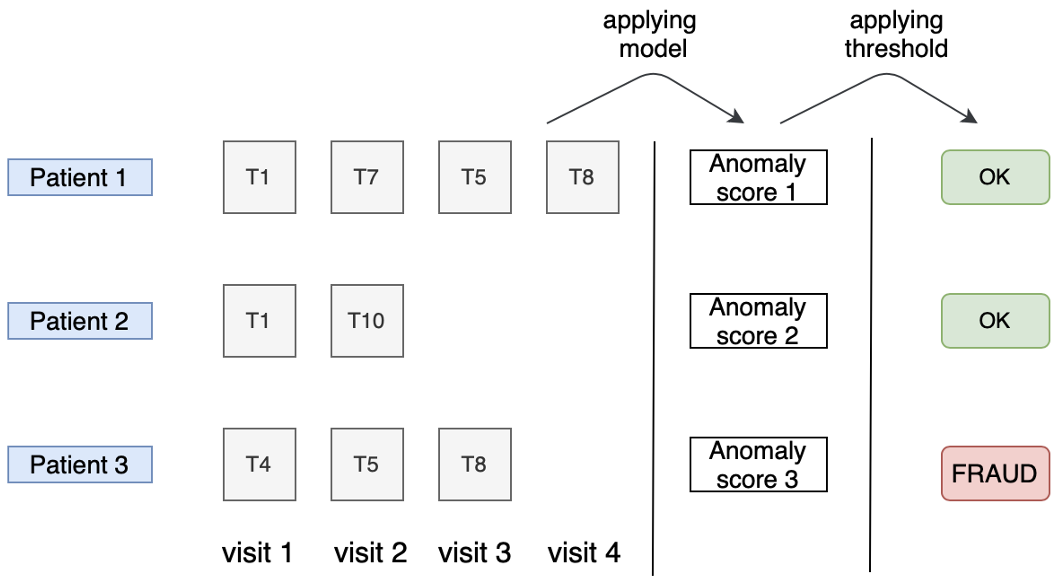 Figure 1: The proposed unsupervised pipeline, showing the transition from raw data to EDF-normalized anomaly scores.
Experiments & Results
The model was validated on a real-world dataset from Allianz, containing 350,000 records.
SOTA Comparison
The results were striking when compared to the Isolation Forest baseline (a standard for unsupervised detection). While Isolation Forest struggled with the discrete, sequential nature of the data (Recall of 0.07), the deep learning models achieved a Recall of 0.80 with significantly higher precision.
| Model | ROC AUC (Treatments) | Precision (@0.8 Recall) |
|---|---|---|
| Isolation Forest | - | 0.080 |
| LSTM + EDF | 0.768 | 0.033 |
| Autoencoder | 0.771 | 0.033 |
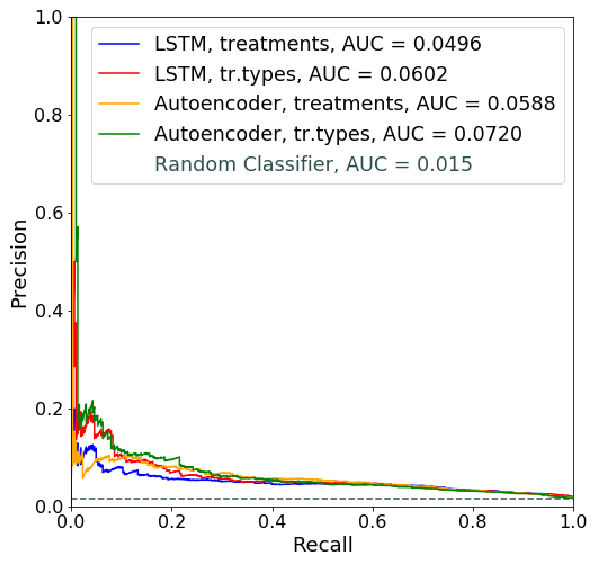 Figure 2: ROC curves comparing the LSTM and Autoencoder performance across different levels of class granularity.
The Impact of Sequence Length
The study also found that model performance varies with the number of patient visits. Detectability grows more stable as the sequence length increases, as the model has more "context" to establish what constitutes a normal medical history for a patient.
Critical Insight: Why This Matters
The most significant takeaway is that generative errors are excellent proxies for fraud. By moving away from "black-box" classifiers that require labels, insurance companies can deploy systems that detect new types of fraud the moment they appear.
However, the paper also reveals a limitation: while the ROC AUC is high (0.77), the absolute precision remains low (around 3-5%) due to the extreme class imbalance. This suggests that while the model is an excellent "filter" to reduce the workload for human auditors, it cannot yet replace them entirely.
Future Outlook
This work sets a new baseline for discrete sequence anomaly detection in healthcare. Future research could investigate Attention-based Transformers to capture even longer-term dependencies or incorporate Graph Neural Networks (GNNs) to model the relationships between specific doctors and clinics, effectively combining "what" was done with "who" did it.