
Beyond Keywords: Unsupervised Legal Concept Extraction via Statutes
Unsupervised Legal Concept Extraction from Indian Case Documents using Statutes
This paper introduces an unsupervised framework for extracting legal concepts (catchphrases) from Indian Supreme Court case documents by leveraging external legal Statutes. By clustering cited statutes and applying LDA topic modeling, the method successfully identifies abstract legal concepts that are often missing from the literal text of the judgment.
TL;DR
Researchers have developed a new unsupervised approach to extract legal "catchphrases"—the essential concepts of a court case—by looking not just at what the judge wrote, but at the Statutes they cited. By clustering related laws and using topic modeling, this method identifies abstract legal principles that traditional text-mining tools miss, doubling the accuracy (F-score) over previous baselines.
Background: The "Stare Decisis" Challenge
In Common Law systems like India's, the principle of Stare Decisis (standing by decided matters) means lawyers must traverse thousands of past precedents to argue current cases. These documents are unstructured, dense, and exhausting to read. To navigate this sea of data, "catchphrases" are vital. However, in India, these are often manually assigned by expensive legal experts because many core concepts are implicit—they are understood by a lawyer but not explicitly written in the judgment text.
The Insight: Statutes as a Semantic Bridge
The authors' core intuition is that Statutes are the DNA of a legal case. If a case cites "Section 302 of the IPC" (Punishment for Murder), the document is inherently about "homicide" or "punishment," even if those specific words are rare in the text.
By grouping statutes that discuss similar matters (e.g., grouping various sections related to "Emergency" or "Building Sanctions"), we can create a "concept map." When a new case cites a statute, we can map it to its corresponding cluster and extract the cluster's core topic as the catchphrase.
Methodology: Mapping the Legal Landscape
The paper proposes two primary unsupervised pipelines to convert citations into concepts:
- Representation: Each statute title and description is converted into a TF-IDF vector, then compressed using Singular Value Decomposition (SVD) to 200 dimensions.
- Clustering:
- LouvainComm+LDA: A graph is built where statutes are nodes and edges represent textual similarity. The Louvain algorithm finds communities of related laws.
- KMeans+LDA: A standard clustering approach based on vector distance.
- Concept Generation: LDA (Latent Dirichlet Allocation) is performed on the text within each cluster to extract "topics" (unigrams) which become the final catchphrases.
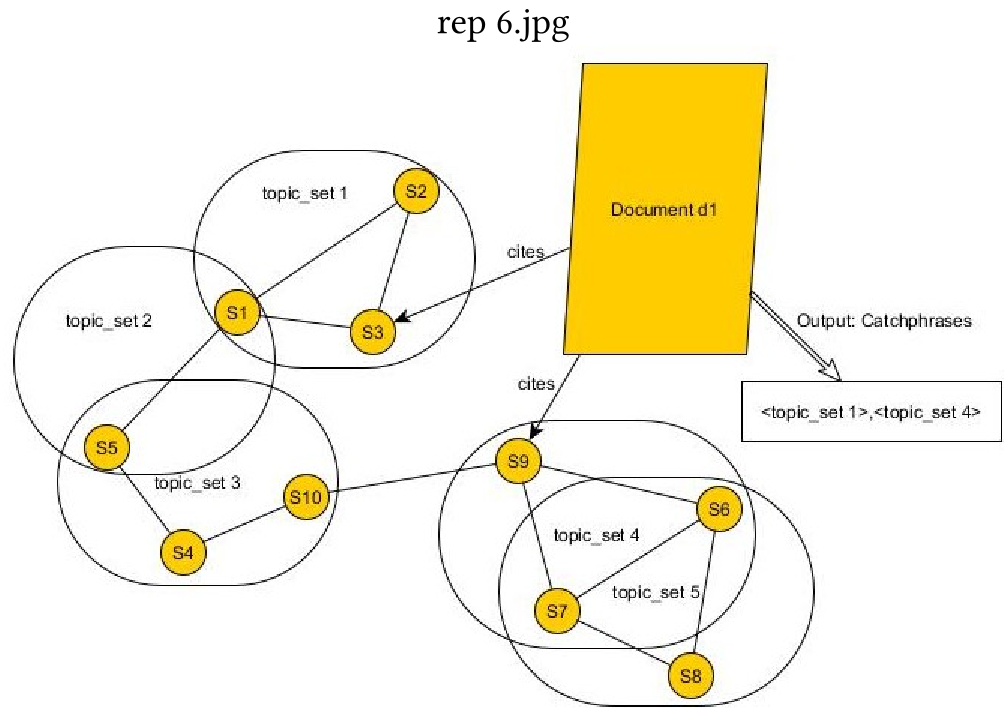 Figure 1: The workflow from citation extraction to community-based topic generation.
Experiments & SOTA Evolution
The authors tested their approach against 1,200 Supreme Court cases using gold-standard keywords from Thomson Reuters Westlaw India.
| Method | Precision | Recall | F-score |
|---|---|---|---|
| PSLegal (Baseline) | 0.0506 | 0.2179 | 0.0723 |
| KMeans+LDA (Proposed) | 0.1049 | 0.3373 | 0.1430 |
The results (as shown in the table below) indicate a massive jump in Recall. This confirms the hypothesis: by looking at Statutes, the model finds "legal concepts" that a simple word-count method (like TF-IDF or PSLegal) would never find because the words simply don't exist in the judgment text.
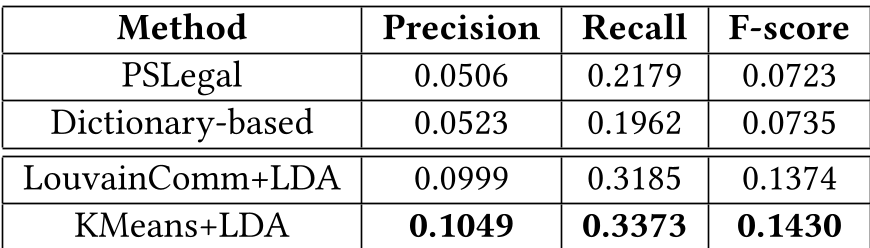 Table 2: Quantitative comparison showing the superiority of Statute-based methods.
Critical Insight & Future Outlook
The beauty of this research lies in its Inductive Bias. Instead of trying to teach a model the "meaning" of law through massive compute, it uses the existing structure of the legal system (Citations and Statutes) to provide a shortcut to semantic understanding.
Limitations: The current method relies on topic unigrams, which can sometimes be too generic (e.g., "punishment"). Future iterations using Transformers (BERT/RoBERTa) or Legal Embeddings could provide more nuanced, multi-word catchphrases.
The Takeaway: For domain-specific AI, external metadata is often more valuable than the primary text itself. This methodology sets a precedent for how we can build low-cost, high-efficiency Legal IR systems without needing massive labeled datasets.