
Spectral Sparse Regression: Tackling the High-Dimensional Chaos of Social Media
Unsupervised Spectral Sparse Regression Feature Selection using Social Media Datasets
This paper proposes an Unsupervised Spectral Sparse Regression framework for feature selection in social media datasets. It integrates link information (Graph and Social Dimensions) with attribute values using spectral analysis and sparse regression to identify relevant features from high-dimensional, unlabeled social data.
TL;DR
The explosion of social media data presents a paradox: we have massive amounts of information but very few labels. This paper introduces an unsupervised framework that leverages Spectral Analysis and Sparse Regression to select relevant features by analyzing not just what users post (attributes), but also who they are connected to (links).
Background: Beyond Attribute-Value Data
In traditional data mining, we treat datasets as flat tables. However, social media is "inherently linked." If two users follow each other (link), they likely share interests (attribute similarity). This paper positions itself as a solution to the "Curse of Dimensionality" in social media by treating link information as a first-class citizen alongside content attributes.
The Problem: The High Cost of Labels
Supervised feature selection is powerful but relies on human-labeled data, which is:
- Expensive: Labeling millions of tweets or posts is unfeasible.
- Static: Social media trends change faster than labels can be generated.
- Incomplete: It often ignores the underlying social graph (homophily and social influence).
The authors argue that we need Pseudo-class labels—mathematical approximations of categories derived from the data's internal structure.
Methodology: The Fusion of Links and Logic
The core of the proposed system is the LUFS (Linked Unsupervised Feature Selection) framework. It operates on two primary engines:
1. Link Information Capture
- Graph Regularization (SG): Captures individual-level relationships based on social correlation theories.
- Social Dimensions (SSD): Captures group-level behaviors, identifying users belonging to the same communities even if they don't interact directly.
2. Spectral Sparse Regression
The authors use spectral analysis to decompose the feature space into Eigenvectors, which serve as the foundation for the pseudo-labels. A Sparse Regression algorithm then finds the "K" most relevant features by assuming that only a small subset of features truly contributes to the underlying structure.
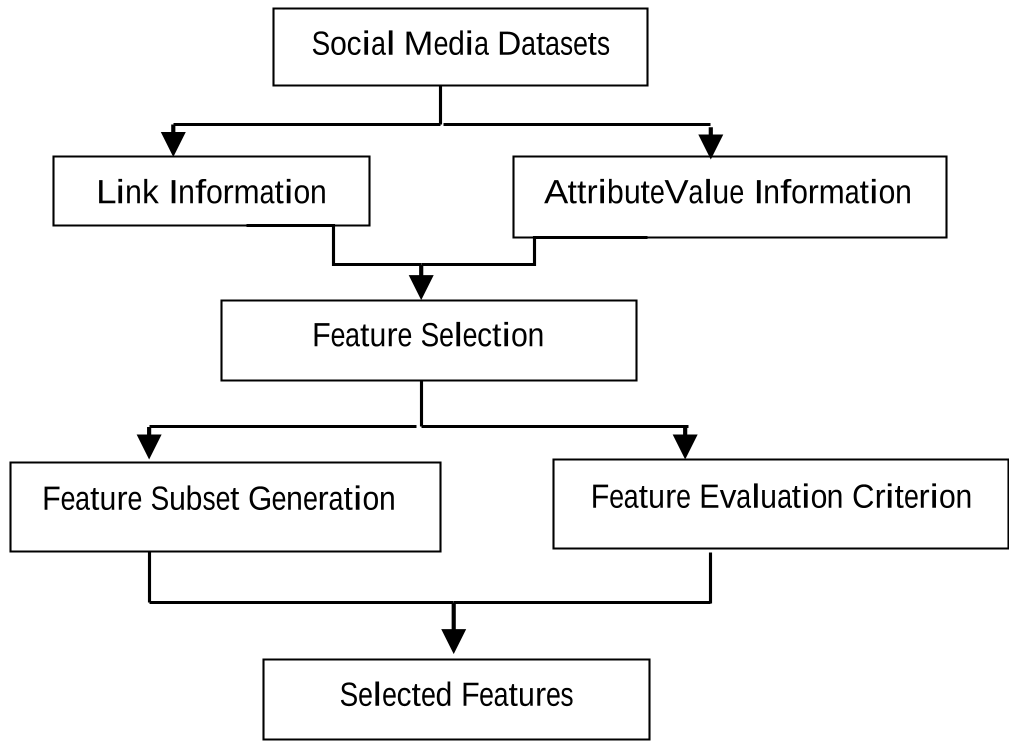 Figure 1: Architecture of the proposed spectral unsupervised selection system.
Experiments and Results
The study evaluated the framework on two distinct real-world datasets:
- Twitter: 8,000 instances with over 9,000 features.
- Pirate Bay: 5,700 instances with over 6,000 features.
Performance Metrics
The researchers focused on Accuracy and Normalized Mutual Information (NMI). By utilizing sparse regression, the model was able to strip away redundant data that conventional algorithms often retain, leading to a more "comprehensible" and efficient feature subset.
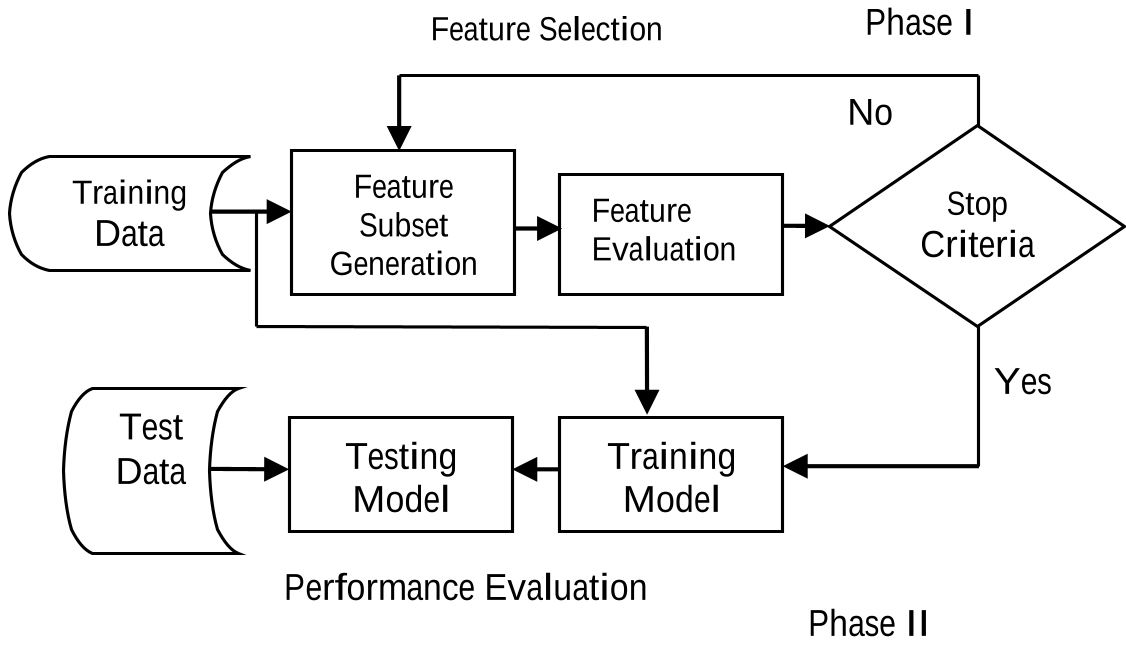 Figure 2: The two-phase model of feature selection and evaluation.
Critical Insight & Future Outlook
While the paper successfully demonstrates that spectral sparse regression reduces dimensionality better than "link-blind" algorithms, it also acknowledges a limitation: these techniques cannot yet cluster objects into human-readable classes perfectly on their own.
The Takeaway: The future of social media mining lies in Self-Supervised Learning, where the graph structure itself provides the "labels." The authors suggest that the next evolution will involve "Clustering-based feature selection" to further refine accuracy and reduce error rates in even larger datasets.
Summary of Impact
By converting the "linkage" of social media into a mathematical constraint for sparse regression, this work provides a roadmap for processing massive, unlabeled datasets without the need for human intervention.