
Intelligent Spine Orthoses: Precision Upper-Body Motion Recognition via IMU Fusion
Upper-Body Motion Mode Recognition Based on IMUs for a Dynamic Spine Brace
This paper introduces an upper-body motion mode recognition framework using four wearable IMU sensors and cascaded machine learning classifiers (QDA and SVM). Designed for a dynamic spine brace, the system achieves a high recognition accuracy of up to 97.64% across sixteen distinct locomotion modes and transitions.
TL;DR
Researchers have developed a high-precision motion recognition system for a dynamic spine brace using just four IMU sensors. By employing a cascaded classification architecture with QDA and SVM algorithms, the system can distinguish between 16 different upper-body movement modes and transitions with 97.64% accuracy, paving the way for intuitive, active spinal rehabilitation.
Background & Motivation: Moving Beyond Limbs
While wearable robotics has made massive strides in leg and arm exoskeletons, the human spine remains a challenging frontier. Most existing spine braces are "passive," meaning they provide rigid support but don't adapt to the user's movements.
The Robotics and Rehabilitation Laboratory at Columbia University recently proposed a dynamic spine brace capable of applying active forces. However, for a robot to help a human move, it must first "understand" what the human is doing. This paper addresses the critical bottleneck: intent recognition. Traditional limb-based sensing doesn't capture the complex, coordinated movements of the torso, requiring a more sophisticated sensory and algorithmic approach.
Methodology: The Power of Cascaded Intelligence
The team utilized four wireless IMUs placed strategically at the neck (C4), upper back (T6), and lower back (L5). To solve the complexity of 16 different movement modes, they didn't just throw data at a single model. Instead, they used a three-layer cascaded strategy:
- Level 1: Binary classification between Static (sitting/resting) and Dynamic (reaching/returning).
- Level 2: Branching dynamic movements into Forward (static to dynamic) and Return (dynamic to static).
- Level 3: Fine-grained identification of the specific direction (Center, Left 45°, Right 45°, Left, Right).
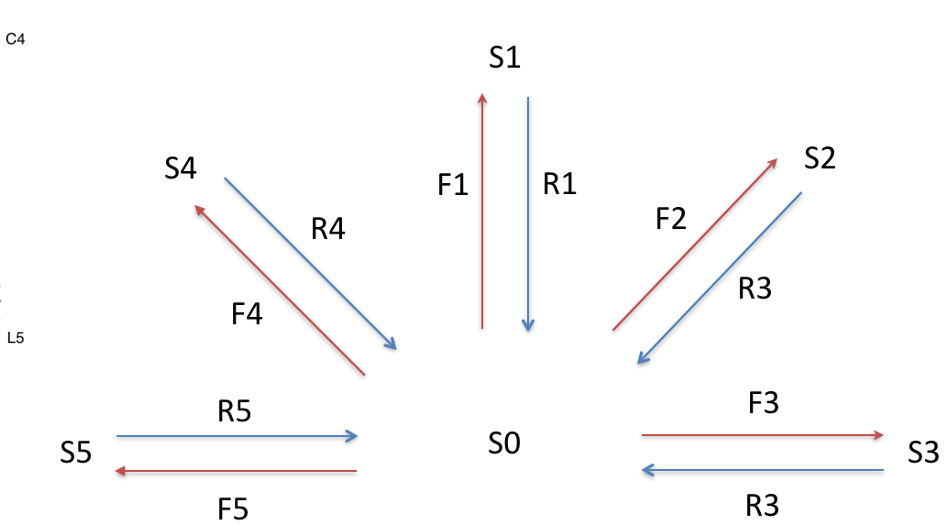 Fig 1: The placement of IMUs on the human spine and the hierarchical control strategy.
By using a 150-ms sliding window and 180-dimension feature vectors (capturing mean, variance, and extrema), the researchers compared Quadratic Discriminant Analysis (QDA) and Support Vector Machines (SVM).
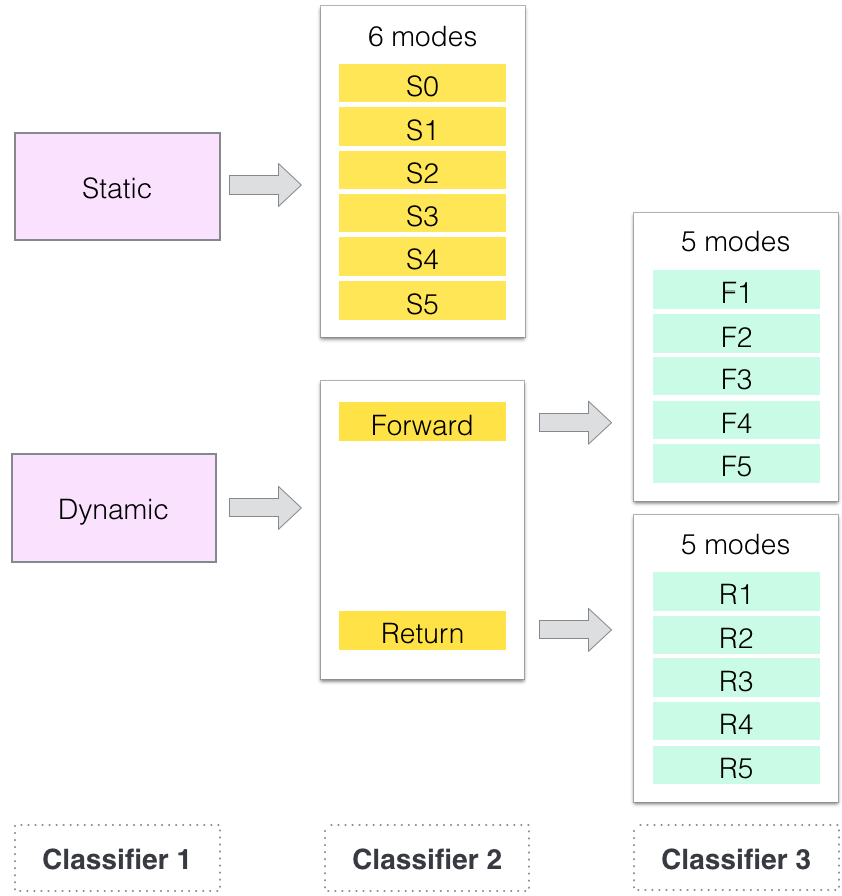 Fig 2: The 3-layer cascaded classification workflow implemented in the study.
Experiments & Results: Near-Perfect Accuracy
The results were remarkably robust. Using 10-fold leave-one-out cross-validation (LOOCV), the system proved it could handle the nuances of upper-body shifts:
- Static Recognition: 100% Accuracy.
- Transition Recognition: ~98% Accuracy (SVM).
- Overall System: 97.64% (SVM) vs. 96.77% (QDA).
While SVM provided slightly higher accuracy, the authors noted the computational trade-off: SVM requires significantly longer training times due to its algorithmic complexity. For real-time applications, QDA remains a strong contender due to its efficiency.
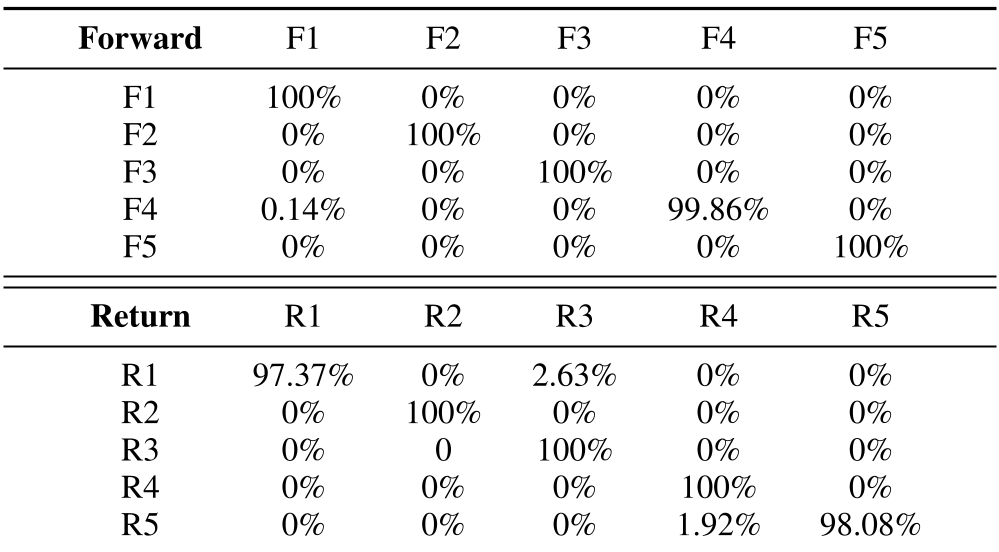 Table 1: Confusion Matrix for Forward and Return transitions (QDA).
Critical Insight & Future Outlook
The core "win" of this paper is demonstrating that hierarchical decision-making (cascaded classification) mirrors the natural hierarchy of human movement. By first determining the broad state (static vs. dynamic) before pinpointing the direction, the model avoids the "noise" that often plagues flat classification models in complex sensory environments.
Limitations: The study was conducted on a small sample (3 male subjects). Future iterations will need to validate these models across more diverse body types (age, gender, and spinal conditions) to ensure the brace remains effective for its primary target: adolescents with scoliosis.
Conclusion: This research provides the "brain" for the next generation of spinal orthoses, transforming them from rigid cages into responsive, intelligent partners in rehabilitation.