
Secure Urban Computing: Bridging Urban Design and Digital Context Management
Contexts-Management Strategy with Security Consideration in Urban Computing based on urban design
This paper proposes a comprehensive "Contexts-Management Strategy" for Urban Computing (UrC) that integrates urban design principles with robust security protocols. It introduces a multi-layered security framework—covering users, devices, shop servers, and public networks—to protect against automated context-driven attacks in smart city environments.
TL;DR
As cities transform into "smart" landscapes, the sheer volume of exchanged data—known as Context—creates a massive attack surface. This paper introduces a strategic management framework that treats security as an integral part of urban design, ensuring that as your devices "talk" to the city, they aren't being lied to by malicious actors.
The Evolution: From Ubiquitous to Urban
While Ubiquitous Computing (UC) focuses on fixed spaces (like a smart home), Urban Computing (UrC) operates on a city-wide scale. The authors point out a critical philosophical shift: in a city, a single space can change meaning based on social context. A living room is a "private rest space" for a family, but a "public meeting space" for a community group.
The technical challenge is that as users move through "Outlet Streets" or parks, their devices must broadcast information (ID, preferences, location) to receive proactive services. This "implicit exchange" is the Achilles' heel of the modern smart city.
Key Threats: When the City "Lies"
The paper categorizes several high-stakes security threats unique to the UrC ecosystem:
- Sham (Fake) Servers: Attackers set up spoofed nodes that pretend to be legitimate shop servers to steal user profiles.
- Malicious Contexts: Injecting false data (e.g., wrong directions or fake store availability) into the network to manipulate user behavior.
- Context-Based DDoS: Overwhelming a context server’s reasoning engine by flooding it with complex data requests.
Methodology: The Five Layers of Defense
To counter these threats, the authors propose a structured security configuration across the entire urban infrastructure.
1. The Architecture of Trust
The system defines specific security factors for every entity involved in the "Urban Life" scenario.
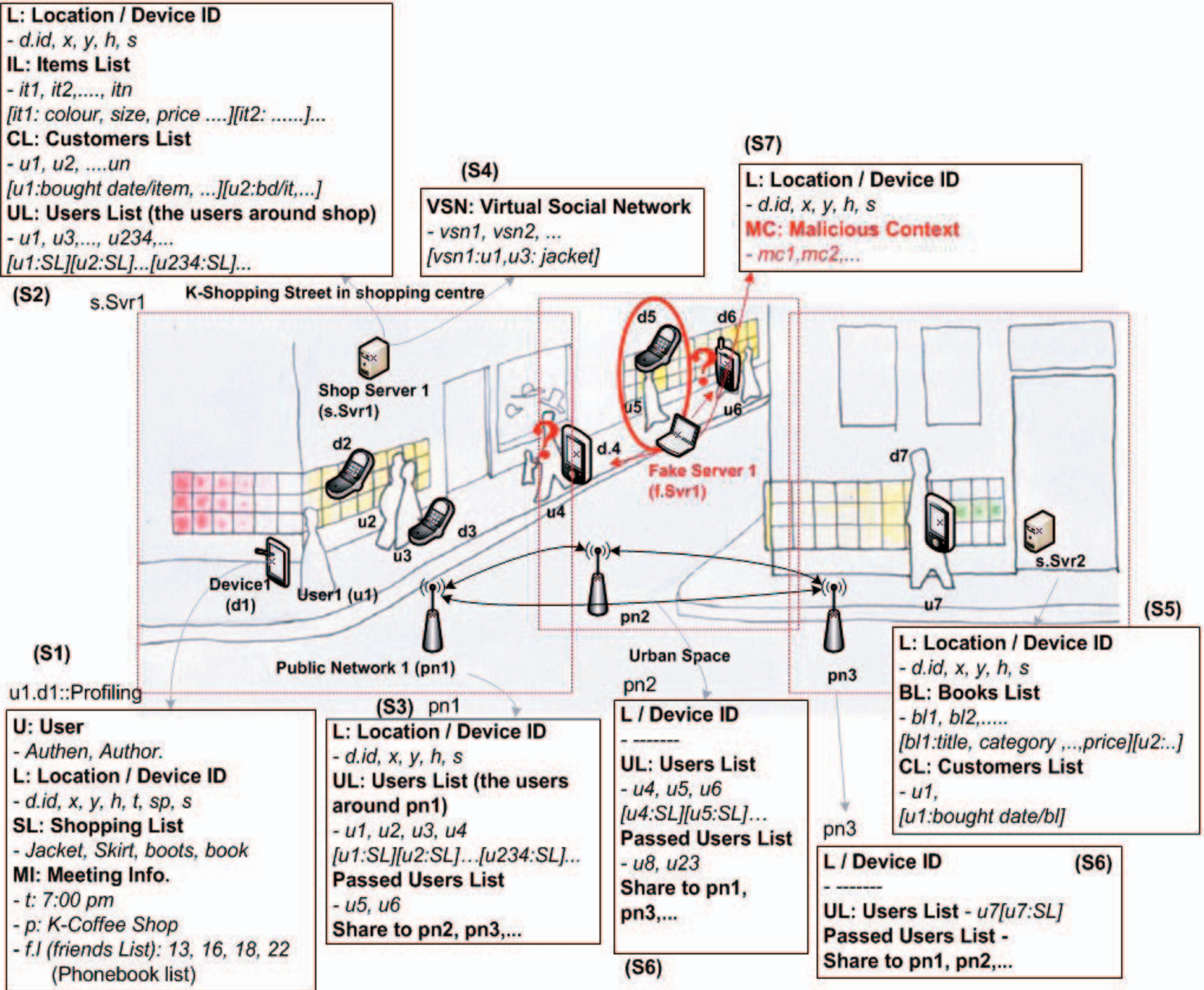 Figure 1: The interaction between users (u1), devices (d1), and various shop servers (s.Svr) within a public network.
2. Contextual Security Parameters
Instead of a one-size-fits-all approach, each layer has a specialized "Security List":
- Device Security (): Includes
enc.Alg(encryption algorithm) andvalidate(proves the availability and purity of receiving contexts). - Shop Server Security (): Utilizes
ACL(Access Control Lists) to define who can access specific situational data. - Context Security (): Every piece of data is tagged with
S.Level(Security Level) andsec.Svr(the server that authenticated the data's origin).
Security Context Flow
The flow of information is validated against a central Security Server. The authors argue that context is not just location; it is a composite of . By checking these parameters, the system can detect "polluted contexts" injected by attackers.
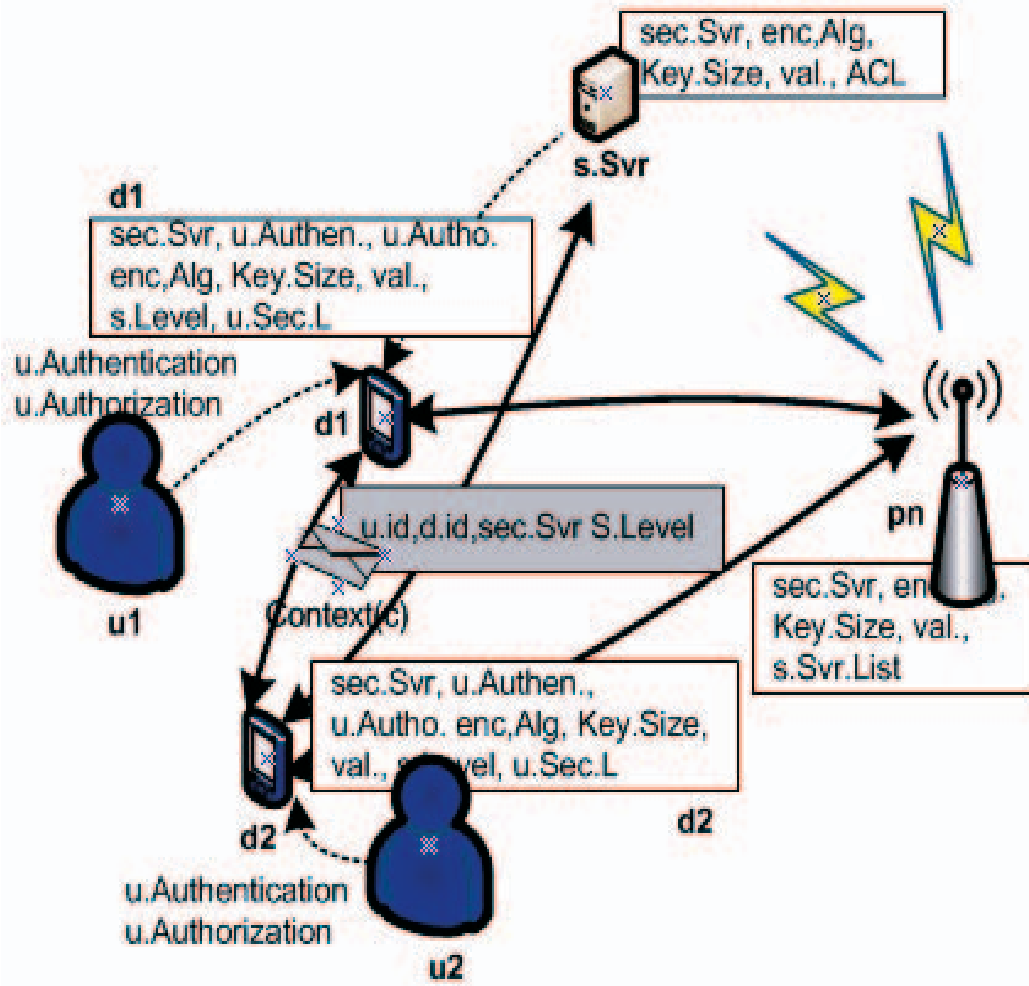 Figure 2: The logic flow for validating context integrity from devices to public networks.
Experiments & Core Insights
The paper analyzes a shopping scenario on "Outlet Street" to demonstrate how a user's today's profiling (shopping list and friend meetings) can be leveraged by attackers.
| Scenario Step | Context Involved | Potential Vulnerability |
|---|---|---|
| S3: Walking on Street | Location, ID, Profile | Fake server pretends to be a shop |
| S4: Virtual Social Net | Ad-hoc social context | Fraud info sent to misleading groups |
| S6: Meeting Friends | Profile, Proximity | DDoS against the context server |
Key Finding: The authors emphasize that Context Encryption is necessary but computationally expensive. They call for "Soft Real-Time" requirements—encryption must be powerful enough to protect privacy but lightweight enough not to delay the proactive suggestions that make Urban Computing useful.
Critical Analysis & Future Outlook
The strength of this work lies in its taxonomy. By breaking down security into distinct "lists" (User, Device, Server, Network), it provides a blueprint for city planners.
Limitations:
- Algorithm Specificity: The paper calls for "light and powerful" encryption but does not propose a specific new mathematical algorithm, leaving that for future work.
- Scalability: While the Outlet Street scenario works well, the sheer density of a metropolis like Tokyo or New York might require even more decentralized validation methods.
Conclusion: As we move toward "Safe Urban Life," the management of context must become as dynamic as the city itself. Security policies must adapt based on whether a user is in a public park or a private bookstore, ensuring a balance between convenience and digital safety.