
The Night is Young: Decoding Urban Life Through Mobile Crowdsourcing
The night is young: urban crowdsourcing of nightlife paerns
The paper presents a large-scale mobile crowdsourcing study titled "Youth@Night," designed to capture the nightlife patterns of 200+ young people (ages 16-25) in Switzerland over three months. By combining a custom Android application for self-reports with in-situ mobile video recordings, the authors provide a unique dataset of 1,394 check-ins and 843 videos characterizing the physical, social, and ambiance contexts of youth nightlife.
TL;DR
How do young people actually spend their weekend nights? Is it all clubs and bars, or is the reality more domestic and diverse? The "Youth@Night" study leverages a custom smartphone app and in-situ video recording to document the nightlife of 204 Swiss youths. The findings reveal a landscape of "unfiltered" private gatherings and public hangouts, proving that mobile videos can scale urban sociology research while exposing the gap between sensor data and human perception.
Background Positioning: Beyond the "Check-in"
While ubiquitous computing (Ubicomp) has long used GPS and accelerometers to track mobility, the vibe of a place remains elusive. Previous SOTA methods relied on "opportunistic sensing" (passive audio in pockets) or social media scrapes. However, social media is curated and performance-based. This paper moves the needle by using participatory sensing, where users intentionally record 10-second panoramas, providing a "being there" quality that raw coordinates cannot match.
The Core Challenge: The "Beautification" Bias
The authors identify a major gap: we know very little about what happens in private homes or non-commercial public squares at 2 AM. Social media check-ins (like Foursquare) are heavily skewed toward restaurants and trendy spots. For youth, who face high costs of entry in Swiss nightlife, the "real" action often happens at home or in parks—spaces that are historically "dark" to urban researchers.
Methodology: The Lens of the Smartphone
The researchers deployed a dual-app system:
- Survey Logger: Prompted users hourly to report their location, social circle (who are they with?), and drink consumption.
- Video Logger: Captured 10-second panoramic videos.
The Brunswik’s Lens Model Analysis
To validate if a computer can "feel" the atmosphere, the authors extracted Automatically Extracted Loudness (AEL) and Brightness (AEB). They then compared these to:
- In-situ reports: What the user said while they were there.
- External coding: What research assistants said after watching the video.
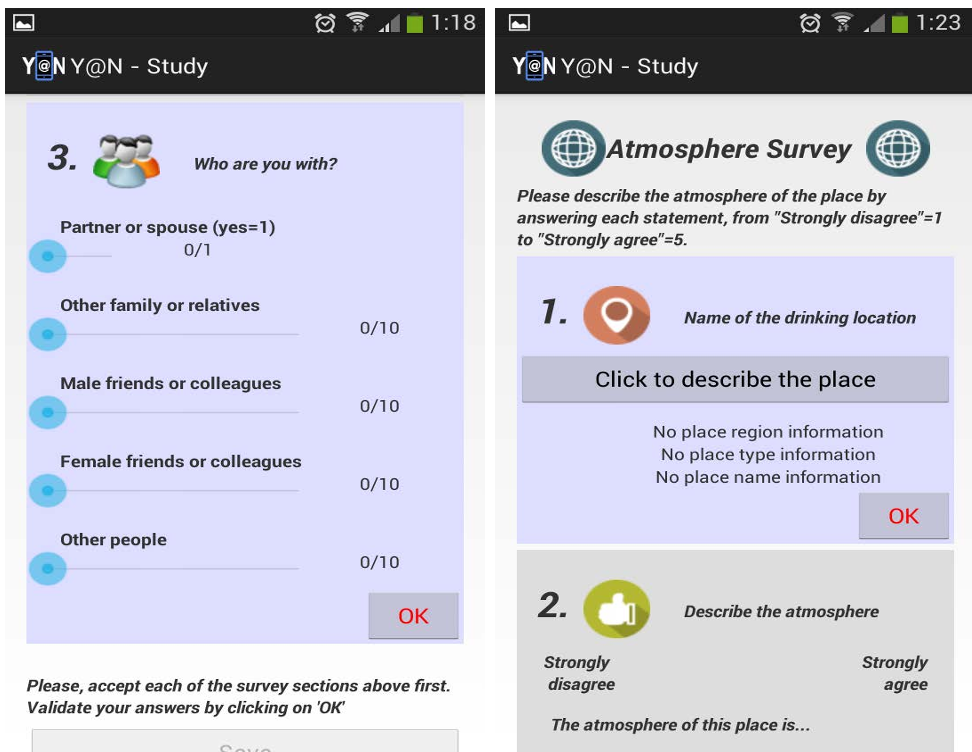 Figure 1: The Survey Logger interface designed for real-world nightlife conditions.
Key Insights: Private vs. Public
The data debunked the myth that nightlife is purely commercial.
- Private Dominance: Nearly 48% of activity occurred in private homes. These spaces were "unfiltered"—showing messy bedrooms and intimate gatherings, a stark contrast to the "Instagrammable" versions of life.
- The Alcohol Factor: 84% of check-ins in "Public Spaces" (parks/lakesides) involved alcohol, highlighting the prevalence of "street drinking" despite the focus on bars.
Performance & Data Validity
The study found a fascinating discrepancy in perception:
- Cue Utilization: Automatic features (AEL/AEB) correlated strongly with external observers.
- Cue Validity: These same features correlated poorly with in-situ participants.
Conclusion? People at a party might not "feel" how loud or dark it is because they are immersed in the social context (and perhaps influenced by alcohol). This underscores a critical lesson for AI: Sensor ground truth does not always equal human experience ground truth.
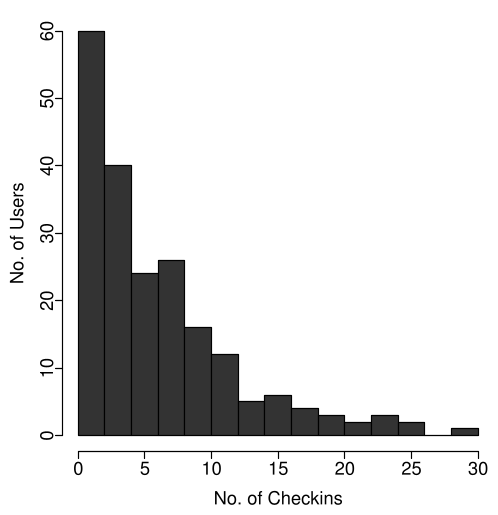 Figure 2: Distribution of loudness and brightness across different urban categories.
Critical Analysis & Future Outlook
Contribution: The paper successfully bridges the gap between signal processing and human geography. It demonstrates that youth are surprisingly compliant with video recording even in sensitive settings, provided the "why" is clear.
Limitations: The study relies on Android users and specific Swiss urban contexts (Zurich/Lausanne). Furthermore, the 10-second video limit, while practical for battery and data, may miss the temporal evolution of a night out.
Future Work: The next frontier is automatic scene understanding—can we train models to detect "house parties" vs. "family dinners" purely from these 10-second snippets? This work lays the foundation for "Urban Ambiance AI" that understands the heartbeat of a city after dark.