
Decoding Urban Rhythms: A Nonparametric Approach to Lifestyle Evolution
Exploring Urban Lifestyles Using a Nonparametric Temporal Graphical Model
The paper introduces a novel unsupervised nonparametric temporal topic model to discover urban lifestyle patterns from Location-Based Social Networks (LBSNs). By integrating textual content, venue categories, and time stamps, the framework identifies lifestyle topics and group-specific patterns, outperforming state-of-the-art models in time stamp prediction and pattern quality.
TL;DR
Researchers have developed a new unsupervised graphical model that discovers how different groups of people—such as office workers, students, and researchers—move through a city. Unlike previous models that were slow and rigid, this approach uses "abstract footprints" and a temporal component to see how these lifestyles change from summer to winter, achieving superior prediction accuracy and computational efficiency.
The Challenge: Why Your Check-ins Are Hard to Model
Analyzing location-based social network (LBSN) data like Foursquare or Facebook Places is notoriously difficult due to data sparsity. Most users only check in occasionally, and individual venues may have very few data points.
Prior state-of-the-art methods typically used hierarchical trees (like hLDA) to cluster lifestyles. While intuitive, these models are:
- Computationally Explosive: They don't scale well to millions of check-ins.
- Temporally Blind: They treat a check-in the same way whether it happens on a snowy Monday or a sunny Saturday.
- Rigidly Structured: They assume lifestyles follow a strict tree hierarchy, which fails to capture users who belong to multiple overlapping social groups.
The Solution: Abstract Footprints & Multi-Level Topics
The authors propose a framework that moves beyond raw location strings. Instead, they convert a check-in into an Abstract Footprint. For example, a visit to a specific artisanal bistro becomes [Restaurant: (LunchTime, Weekday)].
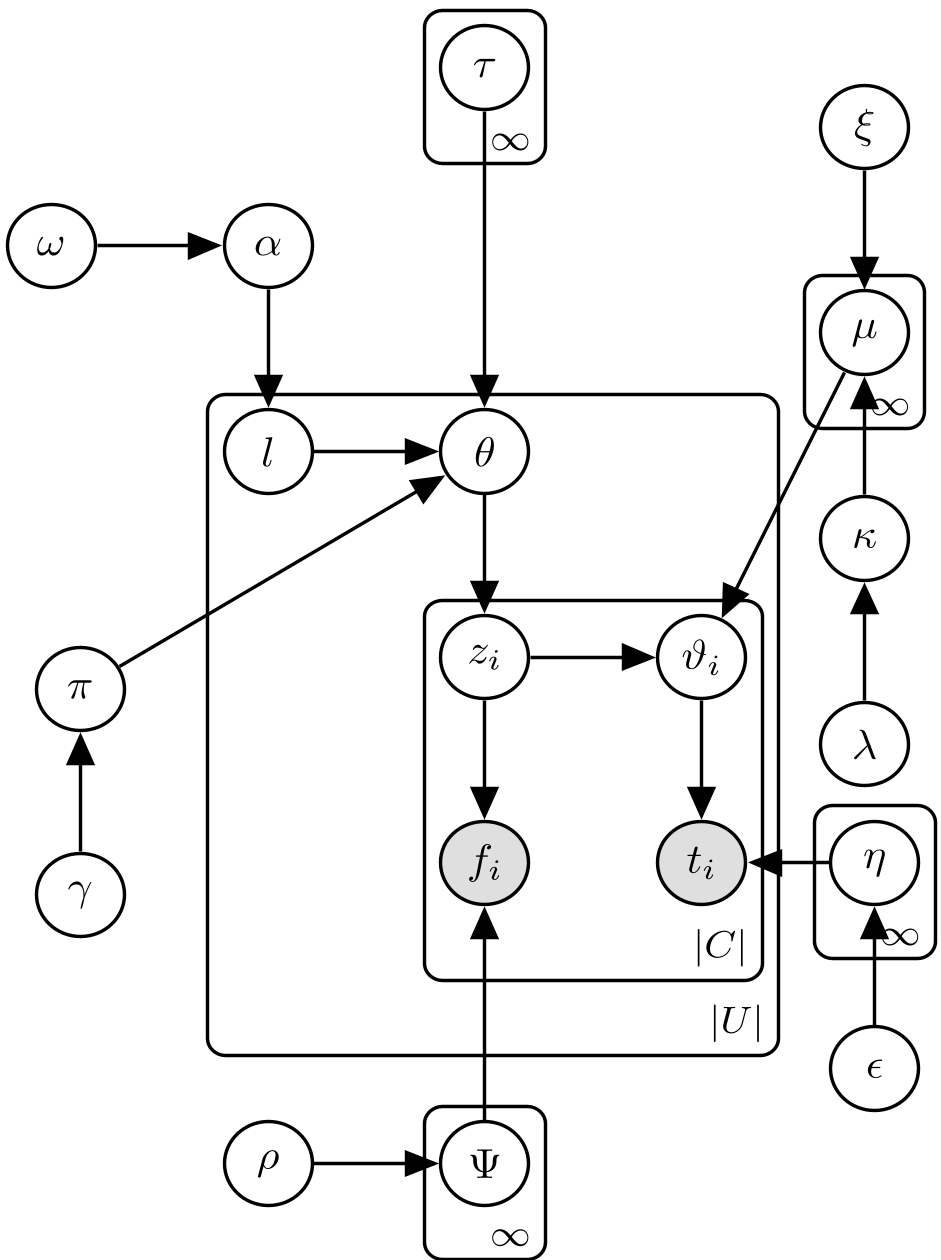
1. Methodology Hook: The Two-Level Topic Model
The core of the framework is a nonparametric graphical model. It doesn't ask you to pre-define the number of lifestyles; it learns them from the data.
- Lifestyle Topics: Soft clusters of abstract footprints (e.g., the "Office Routine").
- Lifestyle Patterns: Clusters of users who share a specific mixture of topics.
2. Capturing the "Drama in Time"
To model how habits change throughout the year, the researchers integrated a Hierarchical Dirichlet Process mixture of Gaussians. This allows the model to detect that "Park visits" are frequent in July but disappear in January, shifting the lifestyle pattern dynamically without manual intervention.
Experimental Proof: Faster and Smarter
The researchers tested their model across 8 million check-ins in the US and several other countries.
Performance vs. The Field
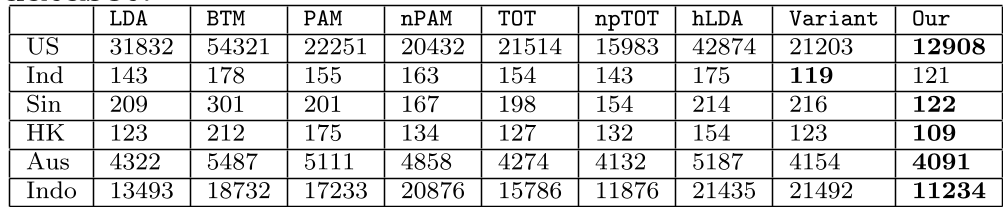
When compared to standard LDA or the complex hLDA used in previous lifestyle studies, this model consistently showed lower perplexity (a measure of how well the model predicts the data).
Key Wins:
- Time Stamp Prediction: The model successfully predicted the month of check-ins significantly better than the "Topics Over Time" (TOT) baseline.
- Speed: The model processed large datasets in 2.29 CPU hours, whereas the previous hLDA-based approach took 5.50 hours—a 58% reduction in training time.
Insightful Visualization: Summer vs. Winter
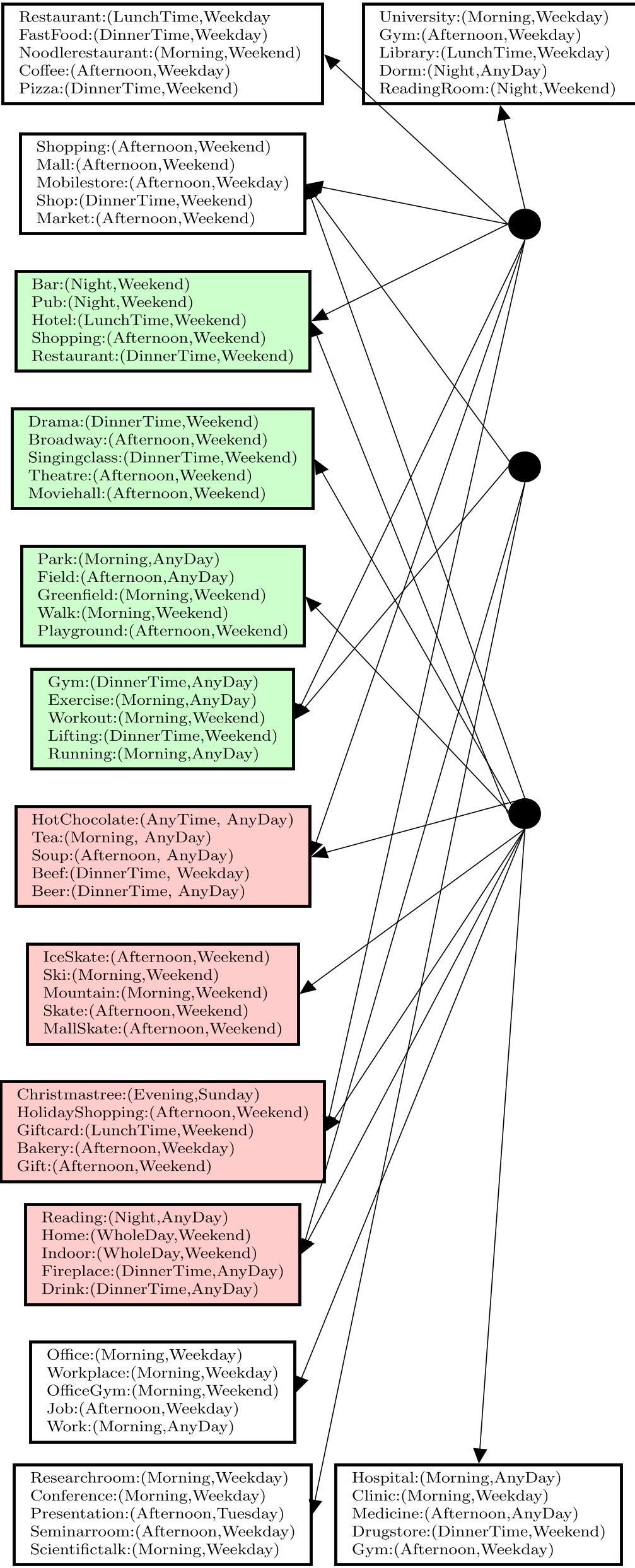
The most compelling result is the qualitative view of lifestyle shifts. As seen in the figure below, the model identifies "Hot Drinks" and "Home Reading" as winter staples for office workers, whereas "Parks" and "Outdoor Dining" dominate the summer topics for the same group.
Conclusion & Future Value
This research moves us closer to "Urban Computing" that actually understands human context. For developers and marketers, this means:
- Smarter Recommendations: Not suggesting a salad shop to a worker on a weekend.
- Ad Targeting: Knowing exactly when a "Student" lifestyle group is most likely to be at a specific category of venue.
Limitations: The model relies on LBSN data, which has demographic biases. Future iterations could integrate credit card logs or mobile phone traces for a more universal view of city life.
Takeaway: By abstracting specific venues into "functions" and treating time as a continuous variable, we can finally model the complex, evolving drama of urban life at scale.