
Urban Tapestries: Weaving Social Knowledge into the Pervasive City
2517_Urban Social Tapestries.
The paper presents "Urban Tapestries" (UT), an interdisciplinary project exploring "public authoring"—the use of pervasive computing to allow citizens to map and share local knowledge, memories, and experiences. It moves beyond traditional broadcast models to create a decentralized, user-generated "information tapestry" overlaid on the physical urban environment.
TL;DR
Urban Tapestries (UT) is a pioneering experiment in public authoring, enabling citizens to annotate the physical world with digital "pockets" of memories, stories, and data. By moving away from the "consumer-only" model of mobile services, UT transforms urban space into a collective narrative fabric, proving that pervasive computing can be a tool for community empowerment and identity rather than just a delivery system for ads.
Problem & Motivation: Beyond the Digital Tourist
In the early 2000s, the vision for location-aware technology was disappointingly narrow. It was built for the "tourist"—someone needing directions or coupons for the next 50 weeks of their life. This "broadcast model" treated the city as a commercial map rather than a social experience.
The authors of Urban Tapestries recognized a massive gap: Social Knowledge. This is the "glue" of society—the intangible stories and coincidental connections that make a neighborhood a home. The challenge was: How do we make the ephemeral tangible? How can technology help residents reclaim the interpretation of their own streets from curators and advertisers?
Methodology: Pockets, Threads, and Tapestries
The UT platform operates on a decentralized, people-centric architecture. Instead of a central authority dictating content, the system relies on two fundamental primitives:
- Pockets: Discrete units of content (text, audio, video) tagged to a specific geographic boundary. They can be persistent or "digital graffiti" that expires over time.
- Threads: Interconnected sequences of pockets that form a thematic narrative—such as a literary walk through Bloomsbury or a record of local estate management issues.
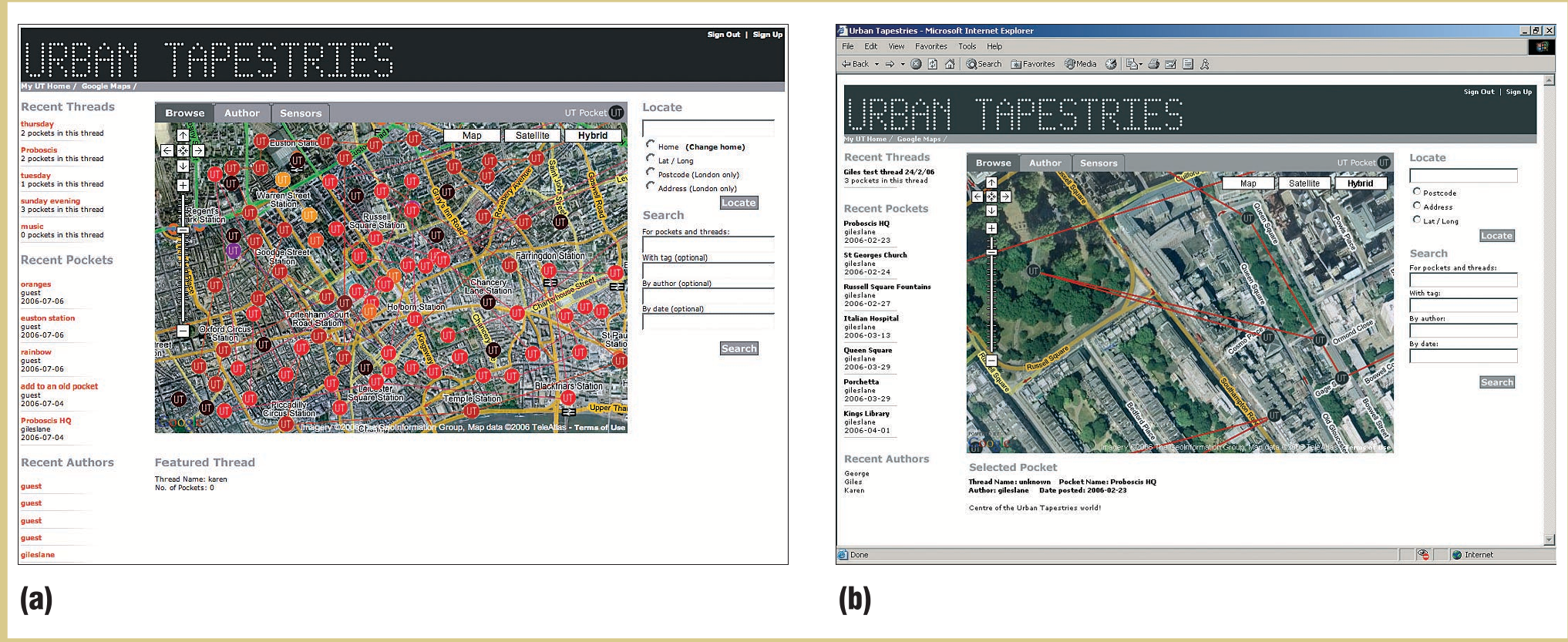
Figure 1: The UT thread-browsing interface, visualizing how individual stories are overlaid on the urban fabric.
The Four Design Principles
- Content Co-creation: Users are actors and authors, not just consumers.
- Organic Growth: The "tapestry" grows and fades at the pace of the community.
- Decentralized Operation: Peer-supported content validation via trust networks.
- People-centric Functionality: Augmenting everyday life rather than replacing it.
Experiments & Results: Transmuting Space into Place
Through Experimental Ethnography and Bodystorming (workshops where participants "acted out" scenarios using maps), the team deployed UT in London's Bloomsbury district.
Key Insights:
- Ownership of Territory: UT allowed participants to "mark" their localities, effectively claiming digital ownership over physical territories.
- Intergenerational Socialization: A fascinating "asymmetric" socialization emerged—seniors provided the "stories" while younger users provided the "technical inclination," creating a shared community bond.
- Play as Participation: The study found that UT was viewed fundamentally as a playful technology. This playfulness was the primary driver for overcoming technological distrust or "tech saturation."
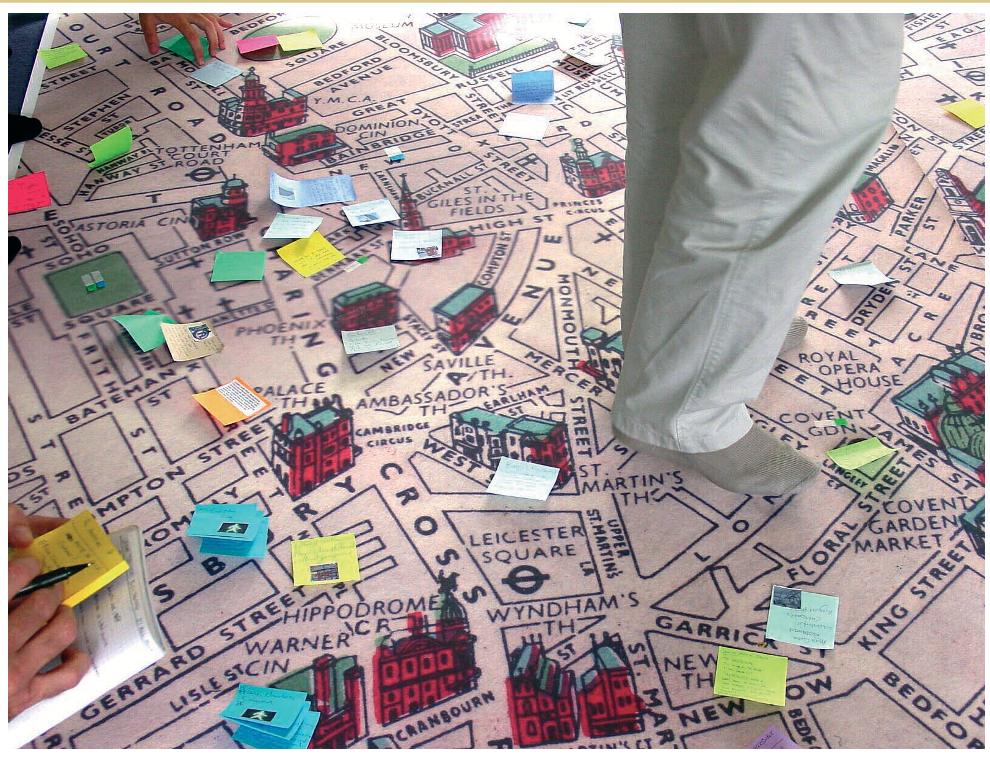
Figure 2: Participants engaged in bodystorming to identify what types of local annotations hold the most value.
Critical Analysis & Conclusion
Takeaway
Urban Tapestries succeeds because it treats pervasive computing as a cultural practice rather than just a technical utility. It validates the "view from somewhere," grounding digital data in the lived experience of local residents.
Limitations & Future Work
While UT pioneered the "citizen as author" concept, it faced challenges with technical unfamiliarity among older demographics. Furthermore, the paper notes that while it worked in the dense social fabric of London, the system's effectiveness might change drastically in different spatial contexts (e.g., suburban or rural areas).
The legacy of Urban Tapestries is visible today in everything from "locative media" art to the way we use social media to "check-in" and tell stories. It remains a definitive argument for a more human, narrative-driven approach to the "Smart City."