
Urban Tribes: Decoding Social Subcultures through Group Photos
Urban tribes: Analyzing group photos from a social perspective
This paper introduces the task of "Urban Tribe" classification, which aims to identify social subcultures (e.g., Hipsters, Goths, Bikers) from group photographs. The authors propose a framework that combines low-level visual features with high-level semantic attributes (poselets and facial cues) to achieve socially meaningful image categorization.
TL;DR
Can an algorithm tell the difference between a group of hipsters at a bar and preppies at a formal event? This paper moves beyond simple face detection to Urban Tribe Classification. By combining low-level textures with high-level semantic "attributes" (like clothing styles and facial expressions), the authors demonstrate that social subcultures have distinct visual signatures that machines can learn to recognize.
The Motivation: Why Visual Search Fails Socially
Most computer vision systems are excellent at identifying what is in a photo (e.g., "three people, one table, two glasses") but terrible at understanding the context of the interaction. A search for "people in a bar" might return a biker gang and a corporate mixer in the same results because they share similar low-level color distributions.
The authors argue that human groups form "Urban Tribes"—subcultures with shared interests and, crucially, shared visual aesthetics. Capturing these "Social Signals" is the key to more intelligent social media indexing and advertising.
Methodology: From Pixels to Social Semantics
The core challenge is representing a group not just as a collection of individuals, but as a cohesive social unit. The authors' pipeline involves three critical layers:
1. Robust Person Hypothesis
Instead of just using bounding boxes, the system fuses Poselet-based detection (which identifies body parts like torsos and heads) with Facial Analysis APIs. This allows the model to handle "type 1" (full body + face), "type 2" (face only), and "type 3" (body only) detections, ensuring no social cue is lost.
2. Feature Fusion
The model doesn't just look at color histograms. It uses:
- Low-level Features: RGB histograms, HOG (Histograms of Oriented Gradients), and Textons.
- High-level Attributes: Semantic cues like is the person wearing a hat?, are they smiling?, do they have long sleeves?, or are they wearing glasses?.
3. Group Modeling: SoP vs. BoP
The authors compared two strategies for aggregating this data:
- Set of People (SoP): Classifies each person individually and uses a voting mechanism to label the group.
- Bag of Parts (BoP): Treats the entire image as a "bag" of detected parts (heads, faces, torsos) and uses a vocabulary-based approach (similar to Bag-of-Words) to classify the image.
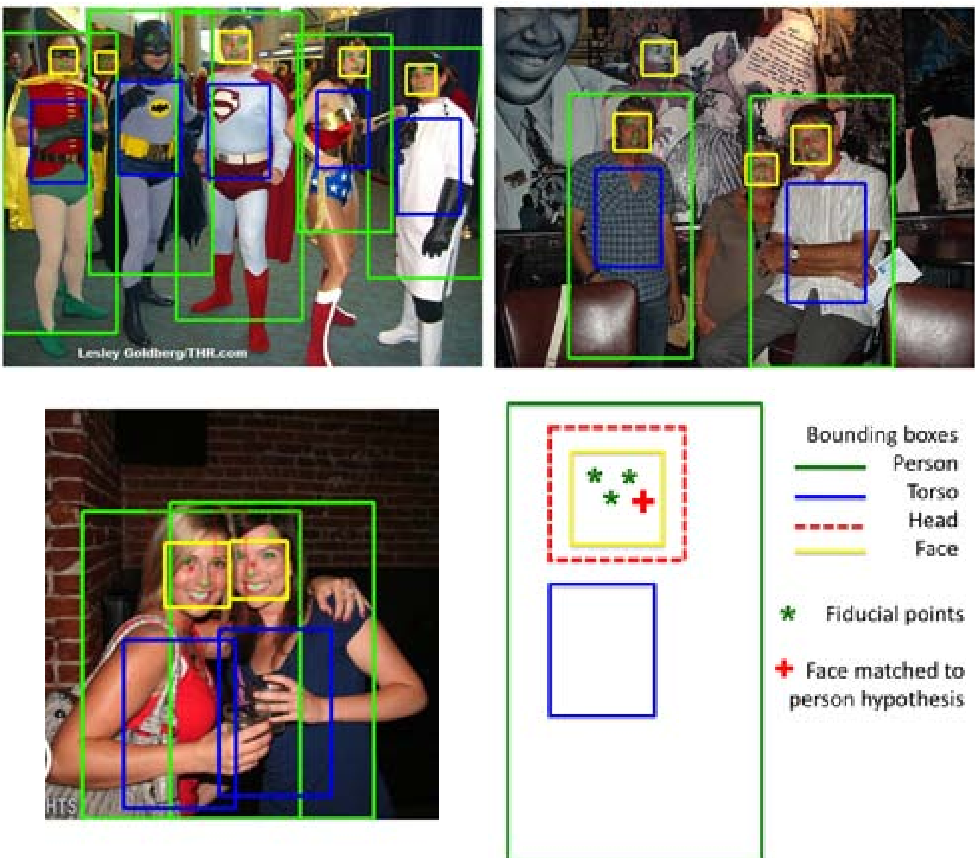 Figure 1: The hypothesis generation process, showing how face and person detections are merged.
Experiments: Do Algorithms Have a "Social Compass"?
The authors collected a dataset of 340 images across 14 categories, including "Hipsters," "Country Bar," "Goth/Japanese Girls," and "Bikers."
Key Findings:
- Accuracy: The Bag of Parts (BoP) model reached 51% accuracy. While this sounds modest, it is nearly 8x better than random chance (7%), proving that social tribes are visually distinct.
- The Power of Attributes: Including semantic attributes (like clothing type) significantly boosted performance over using raw image data alone.
- Confusion Matrix Insights: The model struggled most with categories that were visually similar, such as different types of "Club" or "Pub" settings, which even humans find difficult to distinguish without specific cultural knowledge.
 Table 1: Performance comparison showing that the BoP model combined with Global context (Gl) yields the highest accuracy.
Deep Insights & Conclusion
The value of this work lies in its social perspective. It treats "style" and "belonging" as computer vision problems.
Limitations: As an early work in this field, the dataset is small (340 images), and the classification relies on Nearest Neighbor (NN) methods rather than deep neural networks. Furthermore, the "Urban Tribes" defined are somewhat stereotypical and may not capture the fluid nature of modern social identities.
Future Outlook: This research paves the way for "Socially Aware AI." Imagine a photo app that doesn't just group photos by "Date" or "Location," but by "Vibe"—automatically distinguishing your professional networking events from your weekend hiking trips based on the collective visual language of the group.
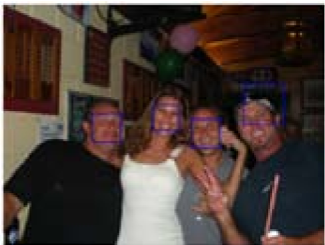 Figure 2: Examples of correctly classified groups (Hipsters, Formal Events) demonstrating the model's ability to pick up on social cues.