
UrbanWeb: Bridging the Digital-Physical Divide through Lightweight Context Tagging
UrbanWeb: a platform for mobile context-awaresocial computing
UrbanWeb is a Web-based context-aware hypermedia platform designed for mobile social computing. It introduces a lightweight metadata tagging system that extends Web 2.0 principles to physical environments, allowing developers to link digital services to urban contexts via GPS, 2D barcodes, and RFID.
TL;DR
UrbanWeb is a pioneering hypermedia platform that treats context as an extension of Web 2.0 tagging. By moving away from rigid, hard-coded data structures, it allows mobile applications—from social media to location-based educational dramas—to dynamically respond to a user's surroundings using GPS, 2D barcodes, and sensor data.
Contextual Blindness: The Mobile Pain Point
The promise of the mobile internet was "anywhere, anytime, any device." However, the authors argue this is a fallacy: we are always at a specific place, at a certain time. Traditional mobile services often fail because they ignore the physical backdrop of the user. Before UrbanWeb, developers faced a trade-off: use rigid frameworks with fixed context types (difficult to extend) or build siloed, "hard-wired" apps that couldn't share state or scale across the urban environment.
The "Context as Tagging" Insight
UrbanWeb’s core innovation is its Lightweight Property Model. Instead of defining complex classes for every scenario, it treats every digital resource as a base object that can be "tagged" with properties at runtime.
How Context Matching Works
Imagine a user scanning a 2D barcode at a historical monument.
- Sensing: The app captures the barcode ID and GPS coordinates.
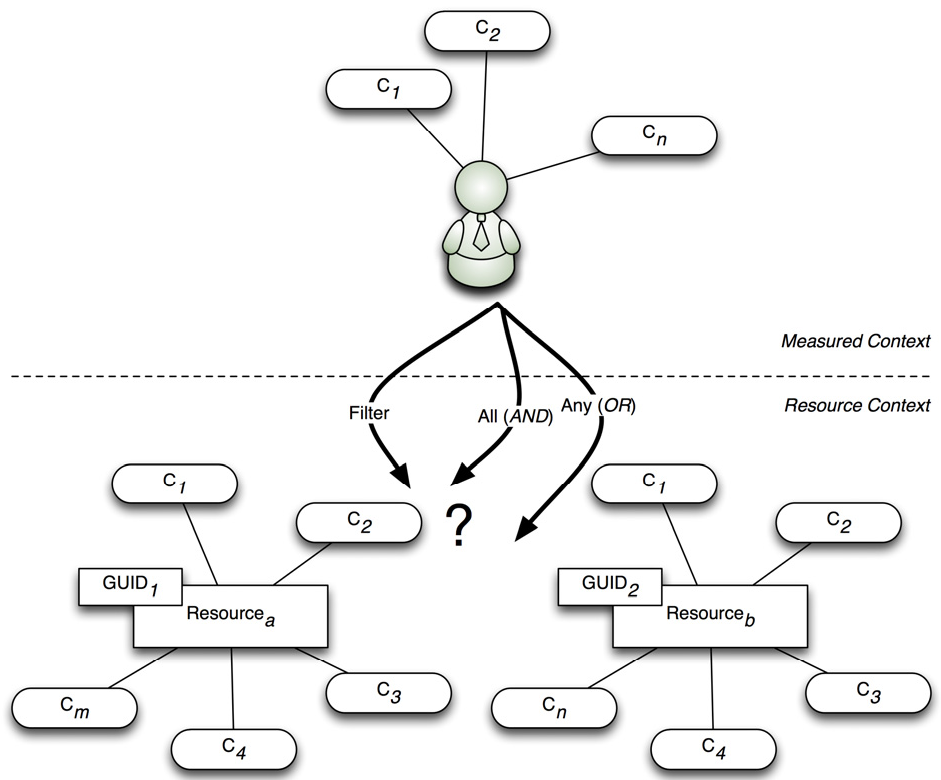
- Matching: The system performs a "similarity match" between the user's current measurements and the properties tagged onto digital resources.
- Resolution: Using AND/OR logic, the platform returns the most relevant services—perhaps a poll, a video blog from another tourist, or an audio scene from a historical drama.
Architecture: Built for the "One Web"
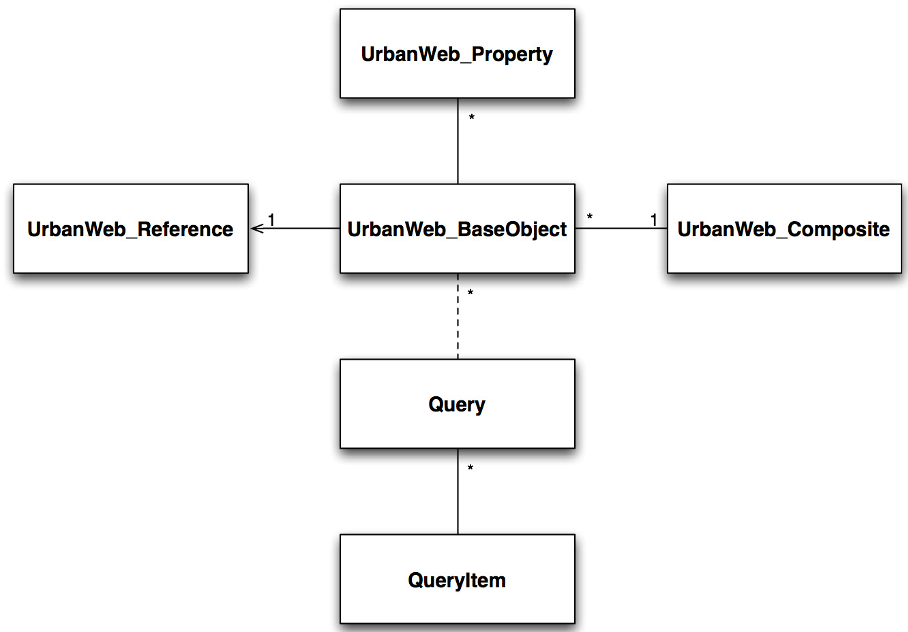
The framework is implemented using PHP and MySQL, providing a Data-Object interface that abstracts the database. This allows it to serve multiple client types—HTML5 web apps, native Java ME applications, or widgets—simultaneously.
- UrbanWeb_BaseObject: The universal atom of the system, carrying a UUID and a collection of dynamic properties.
- Query Mechanism: Supports "fuzzy" matches, allowing for range-based searches (e.g., "Find all photos within 50 meters of my current GPS coord").
Real-World Impact: From Festivals to Classrooms
The authors validated UrbanWeb through several high-stakes deployments:
- TagBlogger & Polls: During the Aarhus City Festival, users could "check-in" to locations via barcodes to leave multimedia comments or participate in real-time polls.
- Mobile Urban Drama (HasleInteractive): This application turned the city into a theater stage. Students used mobile phones to trigger story beats. Critically, UrbanWeb handled Session Management, ensuring that all members of a student group stayed synchronized in the narrative even if they were on different individual devices.
- Education Bridge: The system automatically tagged student-produced media with time/location data, serving as a bridge between the physical field trip and the subsequent classroom analysis.
Critical Insight & Future Outlook
The genius of UrbanWeb lies in its simplicity. By mimicking the way we already tag content on the web (e.g., Flickr or Delicious), it makes "Context" a first-class citizen of the web ecosystem. While modern systems now use 5G and more advanced SLAM for positioning, the architectural philosophy of UrbanWeb—decoupling sensor cues from service logic—remains a cornerstone of successful Urban Computing.
Limitations: The 2010 implementation relied heavily on manual entry or 2D barcodes for precision, which has since been superseded by ubiquitous high-precision GNSS and ARCore/ARKit. However, the logic of "Context Similarity Matching" is still highly relevant in the era of Edge Computing and the Metaverse.