
Bridging the Digital Divide: A Usability Deep-Dive into Social Networks for the Aging Population
A Usability Protocol for Evaluating Online Social Networks
This paper introduces a usability protocol to evaluate Online Social Networks (OSNs), specifically focusing on Facebook's "Timeline" interface. By employing eyetracking and "Think Aloud" protocols, the study assesses how age-related differences impact user interaction and establishes a baseline for designing inclusive OSNs to combat social isolation in elderly populations.
TL;DR
Social isolation is a growing crisis for the elderly, yet only a fraction of those over 65 utilize Online Social Networks (OSNs) like Facebook. This study reveals that while older users want to connect, current UI designs impose a 40-60% time penalty on them. By using eyetracking and quantitative task analysis, the authors demonstrate that the "Timeline" interface creates cognitive friction and emotional anxiety, necessitating a shift toward "progressive design" for senior citizens.
Background: OSNs as a Healthcare Tool?
With the UK’s over-65 population set to reach 23% by 2034, social isolation is no longer just a social issue—it’s a public health priority. OSNs offer a cost-effective way to maintain "social connectedness." However, the "digital native" assumption of modern UI design creates a barrier that prevents this demographic from reaping the benefits of social communication and collaboration.
Problem & Motivation: The Anxiety of Interaction
Most usability studies focus on efficiency for the average user, but they often ignore the Inductive Bias inherent in younger users who find "exploring" a new UI enjoyable. For the elderly:
- Cognitive Load: Complex features lead to "miscues" where users progress in the wrong direction and feel forced to restart.
- Emotional Barriers: Unlike younger users who learn by trial and error, older participants expressed fear of "making the wrong decision and breaking something."
- Interface Evolution: Major updates (like Facebook’s Timeline) are often released without considering the "re-learning" curve for non-fluent digital users.
Methodology: Eye-Tracking and Task Analysis
The researchers utilized a dual-method approach:
- Quantitative Eyetracking: Observing internal gaze patterns to identify where users get lost visually.
- Qualitative "Think Aloud" Protocol: Capturing the real-time emotional state and logic of the participants.
 Figure 1: Comparison of mean task completion times between Older and Younger users across core Facebook tasks.
Key Results: The 20-Second Gap
The data suggests a persistent performance gap. While 90% of participants ultimately enjoyed the experience, the friction reflected in the numbers is telling:
- Task 2 (Status Update): Older users (51s) vs Younger users (31s).
- Task 4 (Photo Upload): This was the most complex task, taking older users 157 seconds compared to 91 seconds for the younger group.
- Functional Redundancy: The study noted that users found "status updates" and "posting on a friend's wall" functionally identical, yet the terminology difference caused initial confusion for older users.
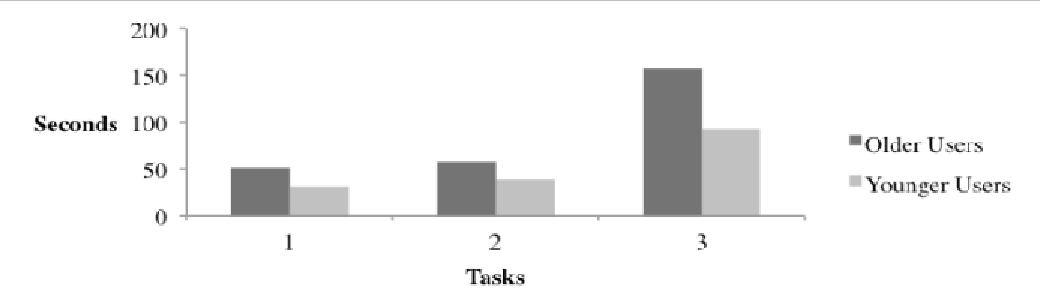 Figure 2: Visual breakdown of interaction metrics.
Critical Insight & Conclusion
The study concludes that Usability != Enjoyment. Users may "enjoy" a platform because of its social value, but its design can still be a failure. The 20-second delay per task is a quantitative symptom of a qualitative struggle.
The Path Forward: Progressive Design
To truly combat social isolation, the researchers suggest moving toward Progressive Design. This means:
- Adapting interfaces to match what older people already do on the internet rather than forcing new paradigms.
- Reducing the "threat" of an error through clearer undo/reset paths.
- Simplifying navigation to minimize the visual search patterns captured by eyetraking.
In the landscape of HCI (Human-Computer Interaction), this paper serves as a reminder that as we move toward Web 3.0 and beyond, the most successful technologies will be those that prioritize accessibility for those who need social connection the most.
Limitations
While the study provides robust quantitative data, the sample size (n=20) is relatively small. Furthermore, the study focuses on a 2011 version of the Facebook UI; however, the underlying findings regarding elderly anxiety and task completion gaps remain highly relevant as UI complexity continues to increase in the era of AI-driven feeds.