
Beyond Functionality: Designing Interfaces that Motivate Students to Share Knowledge
Usable, Aesthetic, Sociable and Motivating Interface for Students’ Online Knowledge Sharing
This paper proposes a conceptual model for Online Knowledge Sharing (OKS) that integrates Usability, Visual Aesthetics, Sociability, and Intrinsic Motivation Design. By applying Self-Determination Theory (SDT) and gamification/social media strategies, the authors identified 33 validated items to measure and stimulate student engagement in online discussion interfaces.
TL;DR
Online learning platforms often fail because they focus on "how to use" rather than "why to share." This research introduces a dual-strategy model—combining Gamification and Social Media—rooted in Self-Determination Theory (SDT). By validating 33 specific interface design items, the authors provide a blueprint for a usable, aesthetic, and sociable interface that triggers intrinsic motivation.
The Problem: The "Ghost Town" Forum
Universities increasingly rely on online discussion interfaces to supplement face-to-face learning. However, these platforms frequently suffer from the "Ghost Town" effect: students login, read content, but rarely contribute.
The authors argue that the root cause is a narrow focus on Functional Usability. While a student can navigate a forum, they often lacks the desire to do so. Existing research has treated visual aesthetics as a secondary "nice-to-have," but this study positions it as a vital antecedent to user satisfaction and engagement.
Methodology: The Motivational Engine (SDT)
To solve the engagement crisis, the authors look toward Self-Determination Theory (SDT), which posits that humans have three innate psychological needs:
- Autonomy: The need to feel in control of one's actions.
- Competence: The need to master tasks and see progress.
- Relatedness: The need to feel connected to others.
The genius of this study lies in mapping specific interface features to these psychological needs:
1. Designing for Autonomy
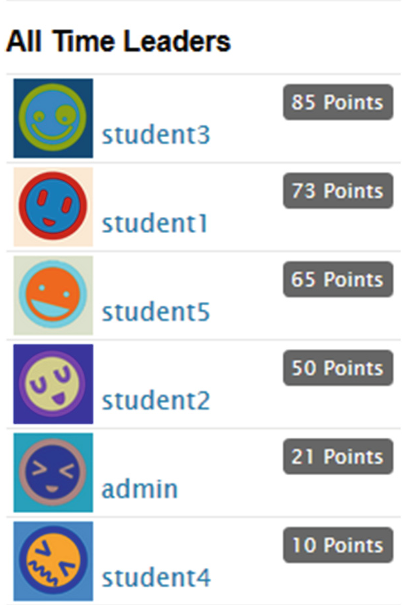
Allowing students to choose Avatars, select Media types for sharing, and customize Feedback delivery (e.g., immediate email notifications) gives them a sense of ownership over the learning process.
2. Designing for Competence
The authors suggest using Badges for "Unexpected Responses" and Rankings for "Direct Responses." Visualizing progress via status bars provides a tangible sense of mastery.
3. Designing for Relatedness
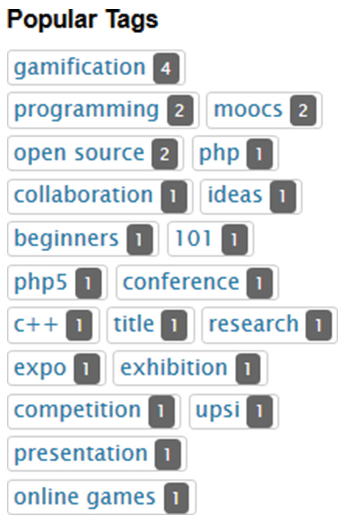
Features like Tagging (connecting similar interests) and Kudos/Appreciation (social validation) foster a sense of belonging in a digital community.
Validating the Model
The study didn't just propose these ideas; it put them through a rigorous Content Validity Test. A panel of experts (PhDs and senior lecturers) evaluated 53 items based on relevance, clarity, and necessity.
Only items that met strict statistical criteria (CVR and CVI) were kept. The result is a refined 33-item scale that covers:
- Usability: Navigation, ease of learning, organization.
- Visual Aesthetics: Color composition, structured layout, "inspired" design.
- Sociability: Comfort in informal conversation, friendship building.
- Intrinsic Motivation: The specific gamified elements mentioned above.
Critical Insight & SOTA Achievement
The core contribution of this work is the decoupling of Usability and Visual Aesthetics. In many older HCI models, these were conflated. By separating them, the authors prove that a "usable" system can still fail if it is aesthetically dull or socially isolating.
Furthermore, the integration of Gamification (typically seen as extrinsic/reward-based) with SDT (intrinsic motivation) creates a more sustainable loop. Instead of students sharing just to "earn a point" (extrinsic), the system used badges to signal "competence" (intrinsic), which is a much stronger long-term driver.
Conclusion & Future Outlook
This paper moves the needle from "How can we build it?" to "How can we make them want to stay?"
Key Takeaways for Designers:
- Don't ignore the "pretty": Visual aesthetics are not just skin-deep; they define user pleasure.
- Informal is good: High sociability scores come from platforms that allow "non-task-related conversations."
- Feedback is fuel: Unexpected, positive feedback is significantly more effective at boosting intrinsic motivation than rigid, predictable rewards.
Future Work: The authors plan to move from expert validation to a full-scale statistical validation with actual students to confirm if these 33 items predict a quantified increase in knowledge-sharing frequency.