
Mobile SNS: Why We Can’t Put Down KakaoTalk and Facebook
Use and gratifications of mobile SNSs: Facebook and KakaoTalk in Korea
This study investigates the drivers of mobile Social Networking Sites (SNS) usage in Korea, specifically comparing KakaoTalk and Facebook. Utilizing the Uses and Gratifications (U&G) theory, the research identifies "hedonic," "integrative," and "mobile convenience" as the primary gratification factors that significantly shape user attitudes and actual usage time.
TL;DR
Why do we spend hours on mobile social apps? This study analyzes the "gratifications" of Korean users on KakaoTalk and Facebook, revealing that Mobile Convenience and Hedonic Joy are the true drivers of our digital habits. Surprisingly, "fetching information" matters much less on mobile than it does on a PC.
The Shift from Desktop to "Anywhere, Anytime"
In the traditional desktop era, social networking was a destination. On mobile, it is an atmosphere. The transition from Internet-based SNS to Mobile SNS isn't just a screen resize; it’s a fundamental shift in user psychology. The researchers identified a critical gap: while we know why people use the web, we don't fully understand the "mobile-first" pull of apps like KakaoTalk.
Methodology: The U&G Framework
The authors utilized the Uses and Gratifications (U&G) Theory, treating users as active goal-seekers. They split gratifications into two buckets:
- Gratifications-Obtained: What you get (Cognitive, Hedonic, Integrative, Social).
- Gratification-Opportunities: What the medium allows (Mobile Convenience).
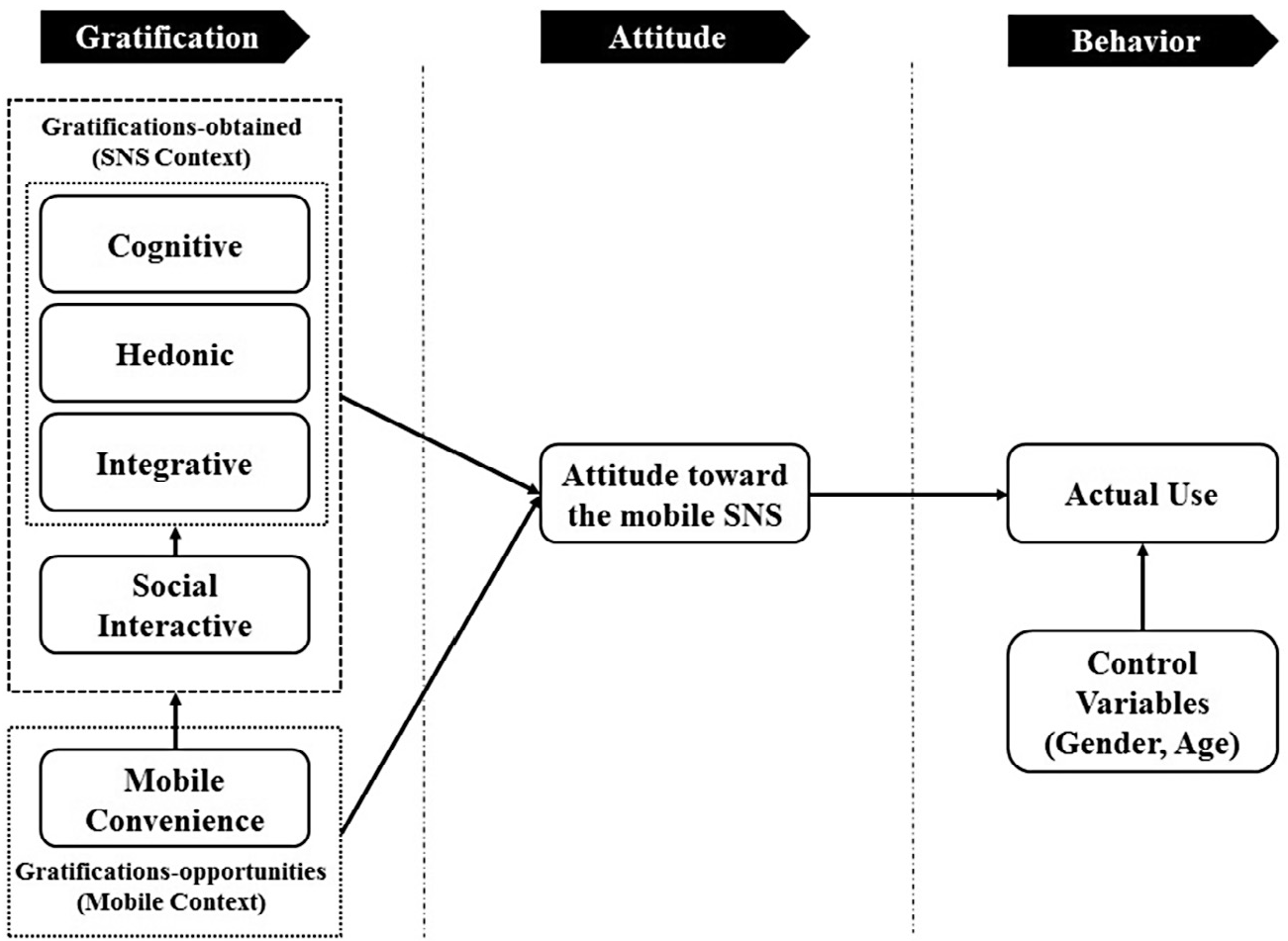
Key Insights: Convenience is the Catalyst
The research produced several "Lightbulb Moments" for tech product managers:
1. The Death of Cognition on the Small Screen
In most web studies, "Cognitive Gratification" (finding info) is a top driver. In this mobile study, it had no significant effect on attitude. Why? The "small screen barrier." Users find it tedious to search for deep information on a phone; they save that for the desktop.
2. Convenience Enhances Everything
Mobile convenience isn't just a feature; it's a multiplier. The study found that convenience significantly boosts social interaction, hedonic pleasure, and integrative belonging. If the app is easy to use "on the fly," users feel more connected and entertained.
3. KakaoTalk vs. Facebook
- KakaoTalk (Closed/Messenger): Users are driven by social interaction and active communication.
- Facebook (Open/Relationship): Users seek "Integrative Gratification"—feeling a sense of belonging and maintaining a persona.
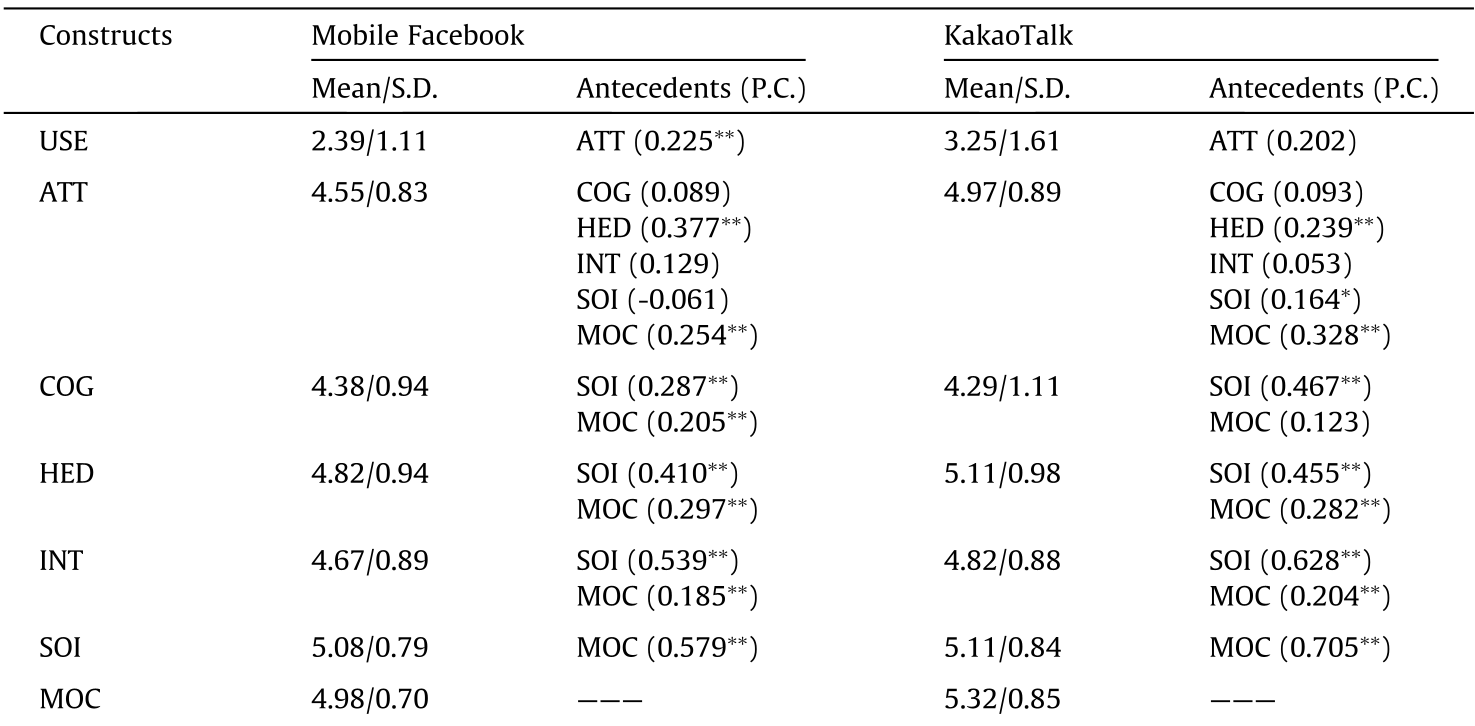
Expert Analysis: The "Social Cause" vs. "Social Outcome"
The paper makes a sophisticated distinction between Social Interaction (the act of talking) and Integrative Gratification (the feeling of belonging). Interestingly, "Talking" (Social Interaction) doesn't make you like the app directly; instead, it makes you feel closer to your friends and entertained, which then makes you like the app. It is a "cause," not just a result.
Conclusion & Future Outlook
The study concludes that for a mobile SNS to survive, it must master Mobile Convenience—not just in terms of location, but in terms of "Ease of Use."
The Takeaway for Developers: Don't build a complex information hub. Build a seamless, "thumb-friendly" emotional connector. As we move toward more immersive social experiences, the "anywhere, anytime" friction-less experience remains the gold standard for user retention.