
Social Networks in Academia: The Thin Line Between Connectivity and Addiction
Study of Use, Privacy and Dependence on Social Networks by Students in the Ecuadorian Universities
This study investigates the usage patterns, privacy awareness, and behavioral dependence on social networks among 438 university students in Ecuador. Using quantitative surveys and statistical analysis (ANOVA), the research identifies Facebook and WhatsApp as dominant platforms and highlights a critical tension between high user awareness of digital risks and the actual prevalence of social media-induced addiction and academic distractions.
TL;DR
A comprehensive study of Ecuadorian university students reveals that while social networks are valued for their educational potential, they are primarily used for social maintenance. This frequent usage—often exceeding two hours daily—is creating a state of "extreme dependence," where students possess a high awareness of privacy risks but lack the self-control to prevent social media from encroaching on their academic and family lives.
Perspective: In the Shadow of Connectivity
While Latin American governments have successfully bridged the "connectivity gap," a new crisis has emerged: the Social Gap of Productivity. This research positions itself at the intersection of sociology and computer science, asking whether the tools meant to democratize information are instead creating a generation of "unproductive professionals" due to a lack of digital self-regulation.
The Core Conflict: Awareness vs. Action
The study highlights a fascinating paradox. Students are not "ignorant" of the dangers; 83.3% of respondents explicitly stated they believe they take risks with social networks, and over 70% are aware that privacy policies can be harmful.
However, this awareness does not translate to protective behavior. The authors found:
- Hypothesis Rejected: The idea that students blindly accept all friend requests was rejected (), suggesting a degree of maturity.
- Hypothesis Accepted: The claim that students neglect essential activities due to social media was supported ().
Methodology and Demographics
The study leveraged a sample of 438 students from two universities, analyzed through the lens of age and gender.
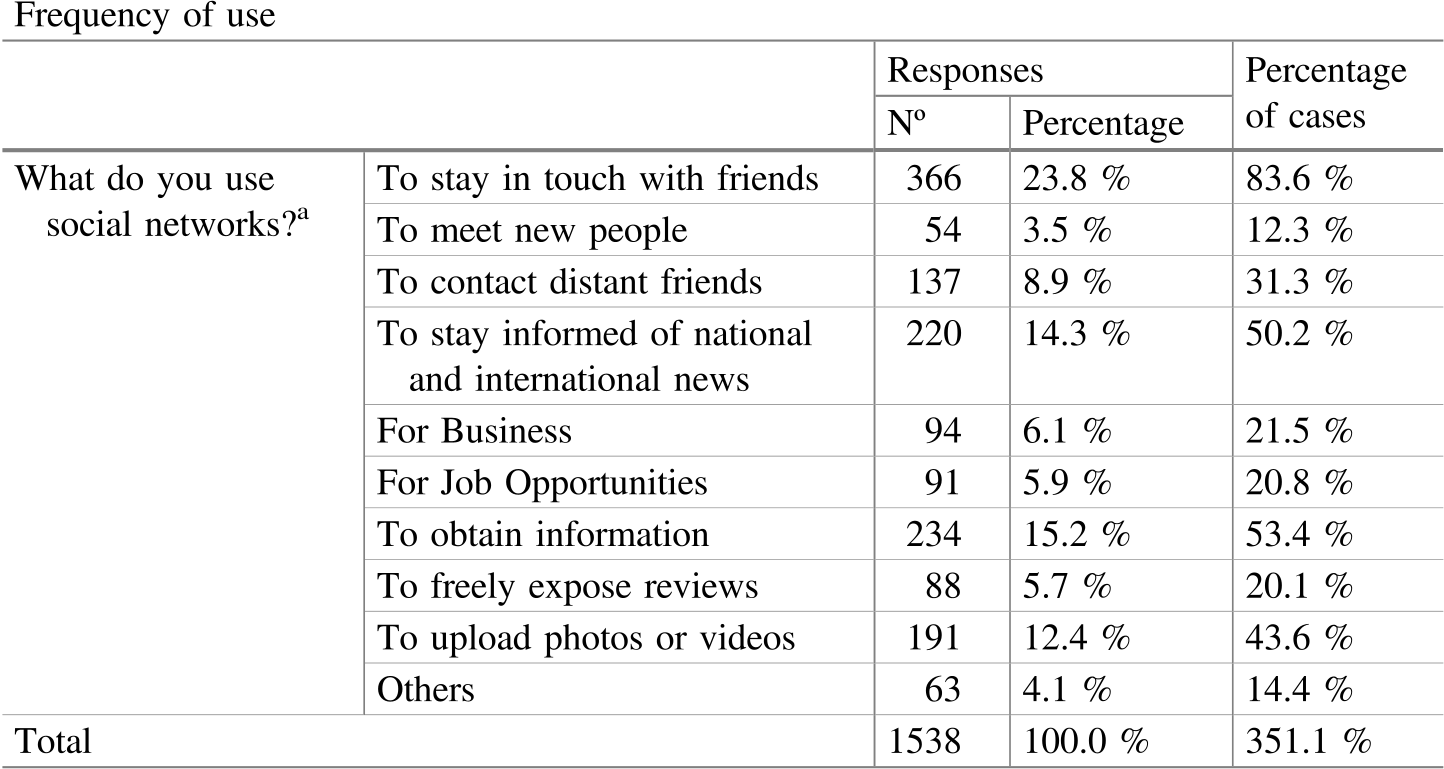 Figure 1: While "staying in touch with friends" (83.6%) is the primary driver, "obtaining information" (53.4%) shows the potential for academic utility.
Key Results: The Addiction Metrics
The data confirms the transition of social networks from a "utility" to a "habitual necessity."
- Platform Dominance: Facebook (94.5%) and WhatsApp (88.4%) are the primary ecosystems.
- Time Sink: Over 50% of students across all age groups use these platforms for more than two hours every single day.
- Content Exposure: Despite being in a university setting, 76.5% of students are exposed to "inappropriate content," complicating the "educational" value of these platforms.
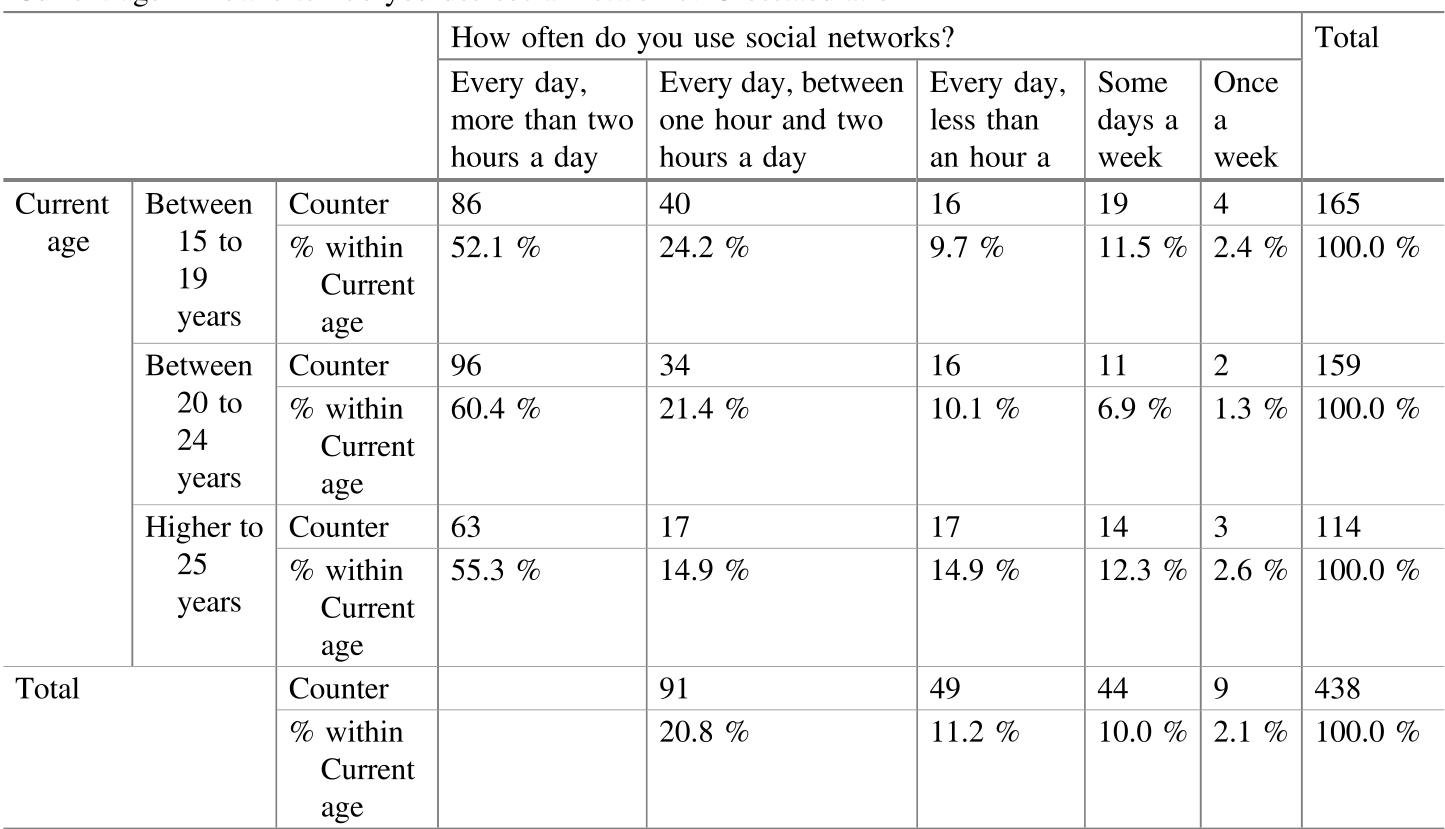 Figure 2: This table illustrates that the youngest demographic (15-19) and the early-career group (20-24) show the highest concentration of heavy daily usage (over 2 hours).
Deep Insight: Why Connectivity Risks Creating "Social Scourges"
The authors offer a stern warning. If universities do not implement specialized programs to guide social media use, students risk becoming "victims of uncontrolled addiction." The physical and mental human toll—ranging from social isolation to "bank account hacking or impersonation"—can turn potential high-value professionals into a "burden to society."
The study suggests that privacy is a choice, but addiction is a biological vulnerability. While students can configure privacy settings, they often struggle to battle the immediate digital rewards of "likes" and "notifications."
Critical Analysis & Future Outlook
Strengths: This work provides necessary empirical data for a specific geographical region (Ecuador) that is often underrepresented in global tech-behavioral studies. The use of ANOVA adds statistical rigor to sociological observations.
Limitations: The study relies on self-reported data, which can be subject to social desirability bias. Furthermore, the definition of "inappropriate content" remains somewhat subjective.
Conclusion for Educators: Universities shouldn't ban social networks; they must instrumentalize them. By creating campus-specific social programs that balance interaction with academic commitments, institutions can foster "Professional Profiles" rather than "Addictive Profiles."