
Beyond Friend-Lists: Rethinking OSN Security with User-Activity-Centric Frameworks
A User-Activity-Centric Framework for Access Control in Online Social Networks
This paper introduces a User-Activity-Centric Framework for Online Social Networks (OSNs), moving beyond traditional identity-based or relationship-only models. It proposes a structured approach involving users, sessions, and activities to handle the complex, collaborative nature of social media privacy.
TL;DR
OSN access control is fundamentally different from traditional corporate security. This paper proposes a User-Activity-Centric Framework that shifts the focus from "permission to files" to "permissions for activities." By introducing a dedicated Session layer and distinguishing between Usage and Control activities, it allows for more nuanced, scalable, and personalized privacy management.
The "Collaboration" Pain Point
In a standard system, if Alice wants to read a file, the system checks Alice's ID. In an OSN, if Alice "pokes" Bob, the system must check Alice’s policies, Bob’s preferences, and potentially the relationships between their mutual friends.
Current systems struggle because:
- Policy Individualization: Every user has different comfort levels.
- Scalability: Adding a privacy rule for every specific user on a viral video resource is a management nightmare.
- The Static Identity Trap: Most systems treat the user as a single, static entity, regardless of whether they are on a public terminal or a private mobile device.
Methodology: The Three Pillars of Activity
The authors redefine the OSN landscape into three core components: Users, Sessions, and Activities.
1. The User-Session Divorce
One of the most insightful contributions is the formal distinction between a User and a Session.
- User: The permanent human representation with fixed attributes (DOB, full friend list).
- Session: A temporary, active instance.
A session can be "constrained"—for example, Homer might start a session that hides his friend list from third-party apps, even though the data exists in his User profile. This provides a "Privacy Sandbox" for active interactions.
2. Activity as the Core Unit
Instead of just "Read/Write," the framework defines Usage Activities (poking, liking) and Control Activities (modifying policies, managing attributes).
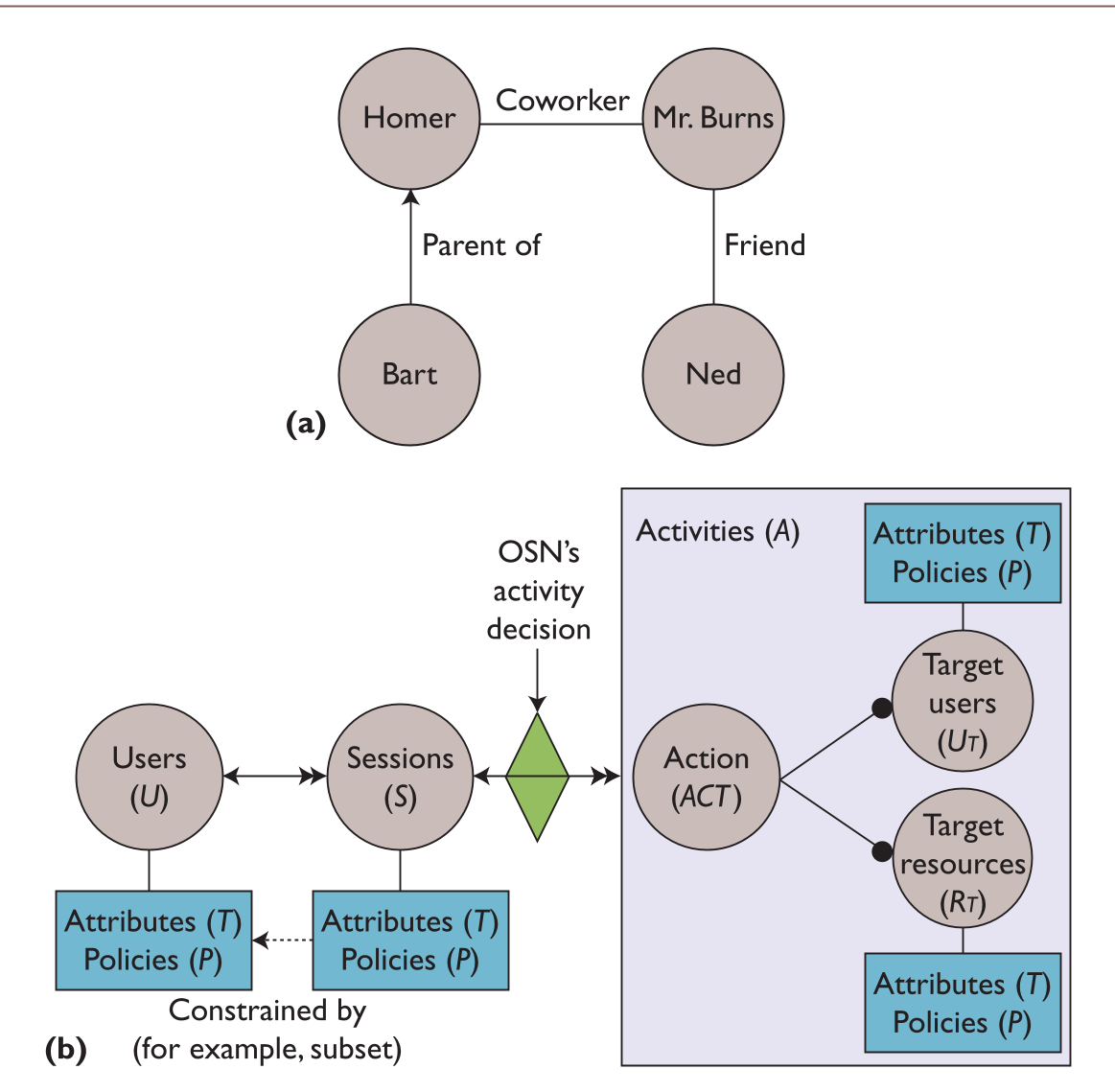 Figure 1: The conceptual framework showing the relationship between Users, Sessions, and the Target Resources/Users involved in an Activity.
Why It Works: Scalability through Filtering
The paper argues for User-based filtering. If Bart is prohibited from seeing violent content, it is far more efficient to attach that "Filter" to Bart's policy than to update the ACL (Access Control List) of every violent video on the platform.
Logical Flow of a Decision
When an action is initiated:
- The Session requests an action (e.g., Friend Invitation).
- The OSN consolidates policies from the Acting User, the Target User, and potentially Related Users (like parents).
- The OSN evaluates attributes (like relationship distance) to reach a final "Permit" or "Deny."
 Figure 2: A typical OSN social graph where access decisions are dependent on multi-step relationships (Coworkers, Family, Friends).
Critical Insight & Future Outlook
The genius of this framework lies in its Inductive Bias toward social dynamics. By treating "Activity" as the primary object, it naturally supports Attribute-Based Access Control (ABAC).
Limitations: While theoretically sound, the "chaining" of policies (policies about policies) could lead to significant computational overhead and "policy conflicts" where two users' preferences diametrically oppose each other.
Takeaway: Future OSNs must move toward this activity-centric model to survive the increasing regulatory and social pressure for granular privacy. The session-based approach, in particular, offers a clear path for mobile-first privacy where context (location, device) is everything.