
Beyond the Backlash: The Psychology of How We Adapt (or Don't) to Facebook Timeline
Understanding user adaptation strategies for the launching of facebook timeline
This paper applies Psychological Coping Theory to analyze how users adapt to major interface overhauls, specifically the 2011 launch of Facebook Timeline. By qualitatively coding 1,149 user comments, it identifies a high correlation between user stress and the perception of mandatory change, ultimately proposing a framework for facilitating successful IT adaptation in social media environments.
TL;DR
When Facebook launched "Timeline" in 2011, it wasn't just a UI update—it was a psychological stressor for millions. This paper analyzes over 1,000 user comments to reveal that the secret to a successful product launch isn't just better features, but increasing the user’s Perceived Control. Without it, users resort to "maladaptive" behaviors: complaining, workarounds, or leaving the platform entirely.
Academic Positioning: This work bridges the gap between organizational IT adaptation and social computing, moving from "Privacy Concerns" to a holistic view of "User Stress and Coping."
The "Timeline" Trauma: Why Users Revolted
In September 2011, Mark Zuckerberg introduced Timeline as a "new way to express who you are." To users, however, it felt like a searchable, archival "stalker bar" forced upon them without consent.
The authors identify a critical gap: Most HCI research looks at why we start using an app, but few look at how we survive when that app changes the rules of the game. For Facebook, the Timeline launch was uniquely stressful because it bundled several major changes:
- Searchable History: Moving from a "Wall" to a "Life Archive."
- Forced Migration: A mandatory shift with only a 7-day grace period.
- UI Clutter: Bundled updates like the News Ticker (the "stalker bar") and a two-column layout.
Methodology: The Coping Framework
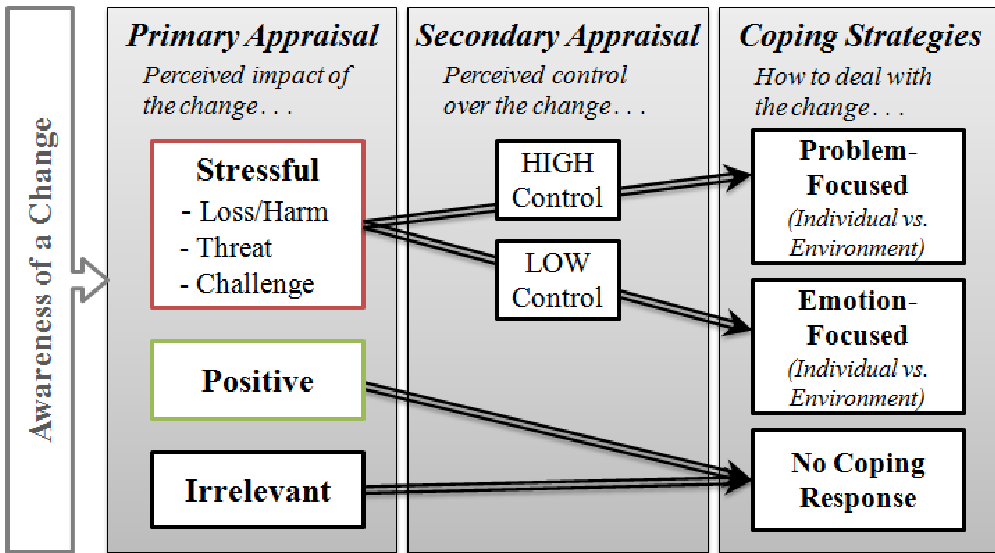
The researchers applied Coping Theory to categorize 1,149 comments from Facebook’s official blog. They looked at two cognitive stages:
- Primary Appraisal: "How does this affect me?" (Is it a threat, a loss, or a challenge?)
- Secondary Appraisal: "What can I do about it?" (Is my control high or low?)
Key Findings: The Control-Adaptation Link
The data suggests a stark divide in how people react based on their sense of agency.
1. Stress is the Default
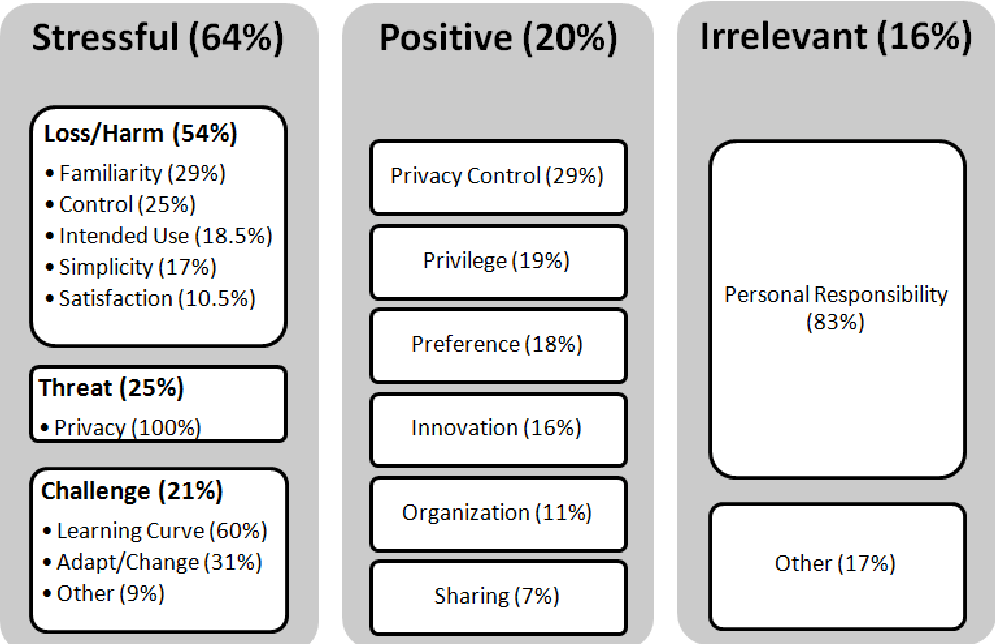
64% of users viewed the change as stressful. The "Loss of Familiarity" (29%) and "Loss of Control" (25%) were the most cited reasons. Interestingly, "Harm" (actual privacy breaches) was rarely mentioned—the stress was mostly psychological and anticipatory.
2. The Power of Perceived Control
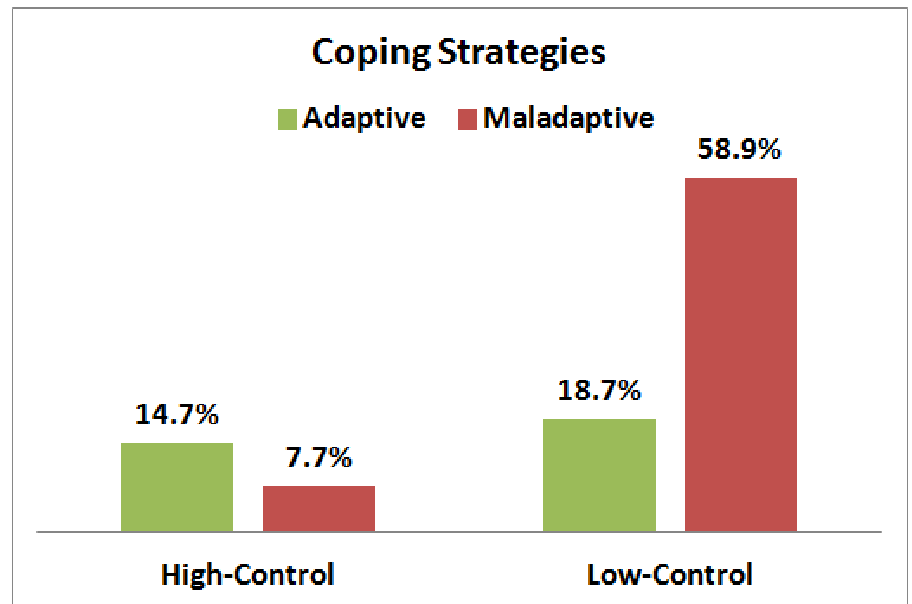
Users who felt they had a choice (high control) viewed Timeline as a Challenge (an opportunity to learn). Users who felt forced (low control) viewed it as a Loss or Threat.
3. Adaptive vs. Maladaptive Coping
The study categorized how users reacted into two buckets:
- Adaptive (Successful Change): Customizing settings, learning the new UI, and making constructive requests.
- Maladaptive (Failure to Adapt): Constant complaining, utilizing browser extensions to "hide" the UI, and threatening to move to Google+ (humorously noted in 2011/2012 context).
Deep Insight: Collaborative Coping
A unique takeaway from this study is that SNS users cope together. Unlike employees in a company who might adapt in silos, Facebook users used the blog to influence each other.
- The Bandwagon Effect: Negative comments gathered "Likes," polarizing the community.
- Peer Support: Some users acted as "organic moderators," teaching others how to use privacy settings.
Lessons for Modern Product Designers
If you are launching a major UI overhaul, this paper suggests a "Control-First" design philosophy:
- Don't Force the Flip: Use opt-in mechanisms to cultivate "early adopters" who see the change as a challenge.
- Acknowledge the Mastery: Users spend years mastering a UI. Changing it is a "loss of resource" for them.
- Facilitate, Don't Dictate: Provide moderators to correct misinformation and make users feel heard, reducing the "helplessness" that leads to platform abandonment.
Summary Table: User Appraisals
Conclusion
The Facebook Timeline launch serves as a masterclass in the "Stress and Coping" model. It proves that technical excellence is secondary to user psychology. To ensure your users adapt, you don't just need a better interface—you need to give them the steering wheel.