
Decoding the Social Soul: Why We Really Use Facebook
User adoption of social networking sites: Eliciting uses and gratifications through a means–end approach
This research investigates user motives for adopting Social Networking Sites (SNSs) by integrating the Means-End Chain (MEC) approach with Uses and Gratifications (U&G) theory. Using laddering interviews with Facebook users, the study identifies five key attributes and four fundamental values—belonging, hedonism, self-esteem, and reciprocity—that drive SNS adoption.
TL;DR
Why do we spend hours scrolling through social media? This study moves past simple "usage stats" to uncover the deep psychological architecture of SNS adoption. By combining Uses and Gratifications (U&G) Theory with Means-End Chain (MEC) analysis, the researchers reveal that our clicks are actually a quest for four core values: Belonging, Hedonism, Self-Esteem, and Reciprocity.
Background: Beyond the Interface
In the early 2010s, as SNSs exploded, researchers struggled to explain why certain platforms "stuck" while others failed. Most studies looked at what people did (browsing, gaming) but ignored why it mattered to their sense of self. This paper argues that an SNS is not just a tool, but a "means" to a deeply personal "end."
The Methodology: The Laddering Technique
To dig into the subconscious, the authors used Laddering Interviews. Instead of a standard survey, they asked "Why is this important to you?" repeatedly until they reached a fundamental human value.
They focused on Taiwanese users—a group in a high-growth phase of adoption—to capture the raw motivations of joining a new digital ecosystem.
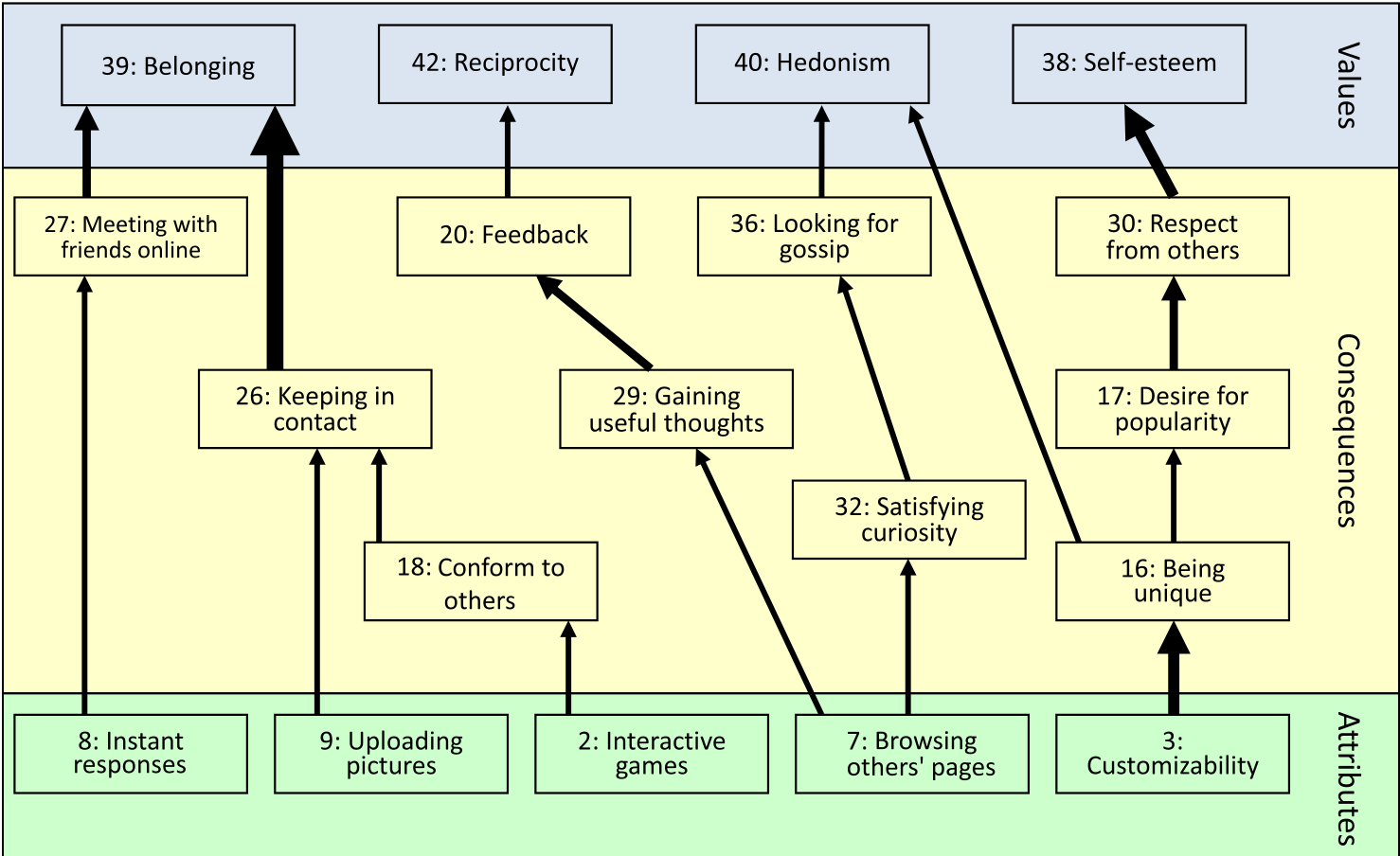 Figure 1: The Hierarchical Value Map (HVM) showing the cognitive path from features to values.
Key Insights: The Four Pillars of Social Value
1. Belonging (The Foundation)
The strongest driver. Features like Instant Responses and Interactive Games (specifically the "Happy Harvest" phenomenon) weren't just about fun; they were about "not being excluded." In a digital context, "Connections precede content." You play the game because your friends are there, not necessarily because you love farming.
2. Hedonism (The Thrill)
Derived from Customizability and Browsing. The "High" comes from the excitement of discovery—peeking into others' lives (satisfying curiosity) and expressing a "unique" self through a well-designed interface.
3. Self-Esteem (The Ego)
The study found a clear chain: Customizability → Uniqueness → Popularity → Respect → Self-Esteem. Users project "possible selves"—highly desirable identities they aspire to have offline—to gain peer respect.
4. Reciprocity (The Social Contract)
Shared insights and feedback loops create a "trusting environment." Interestingly, the study suggests trust on SNSs can be stronger than face-to-face interaction because digital traces enforce a level of responsibility for one's words.
Critical Insight: The "Contextual Integrity" Tensions
One of the most profound takeaways is the ethical conflict of "Publicly Private" behavior. Users feel forced to accept "friend requests" from bosses (surveillance), which kills their "ease of self-expression." This "Contextual Integrity" is the biggest barrier to long-term SNS health.
Conclusion & Value for the Future
For product managers and designers, the message is clear: Functionality is a commodity; psychological gratification is the product.
- Don't just build a game; build a "shared topic of conversation."
- Don't just build a gallery; build a "self-presentation toolkit."
The study reminds us that despite the complexity of the algorithms, the human at the other end of the screen is still just a "fundamentally social animal" looking for a place to belong.