
UFP-Rank: Engineering Virality by Leveraging User Influence in Tag Recommendation
User-Aware Folk Popularity Rank: User-Popularity-Based Tag Recommendation That Can Enhance Social Popularity
The paper introduces User-Aware Folk Popularity Rank (UFP-Rank), a tag recommendation algorithm designed to maximize the social popularity (views/likes) of SNS posts. By integrating user popularity and tag usage tendencies into a graph-based ranking framework, it outperforms methods that solely focus on content or semantic relevance.
TL;DR
In the economy of attention, a tag is more than a label—it's a discovery vehicle. This paper presents User-Aware Folk Popularity Rank (UFP-Rank), a method that doesn't just ask "What is in this image?" but "Which tags will get this image seen?". By mathematically modeling the popularity of users alongside the popularity of content, the researchers boosted Flickr view counts by 280% compared to standard AI-generated tags.
Background Positioning: This work bridges the gap between traditional Information Retrieval (IR) and Social Media Marketing (SMM), evolving the graph-based PageRank philosophy into a tool for social popularity enhancement.
Problem & Motivation: The Identity Gap in Tagging
Why do some posts go viral while others, with similar content, remain invisible?
Previous SOTA methods like FP-Rank recognized that tags attached to popular images are "important." However, they missed a crucial variable: User Authority. In social networks, a tag's value is often inherited from the influence of the person using it. A tag used frequently by a "Power User" carries a different weight than one used by a novice. The authors identify this "User-Awareness" as the missing link in autonomous popularity engineering.
Methodology: The Math of Influence
The core innovation lies in the construction of the Adjacency Matrix (). Instead of a simple co-occurrence graph, UFP-Rank fuses two distinct perspectives:
- The Content Perspective (): Tags linked to high-view posts.
- The User Perspective (): Tags linked to high-influence users, weighted by how many tags that user typically uses.
The authors tested three fusion strategies, finding that element-wise multiplication () was the most effective. This "Product-Rank" ensures that a tag is only highly ranked if it scores well in both content relevance and user-driven popularity.
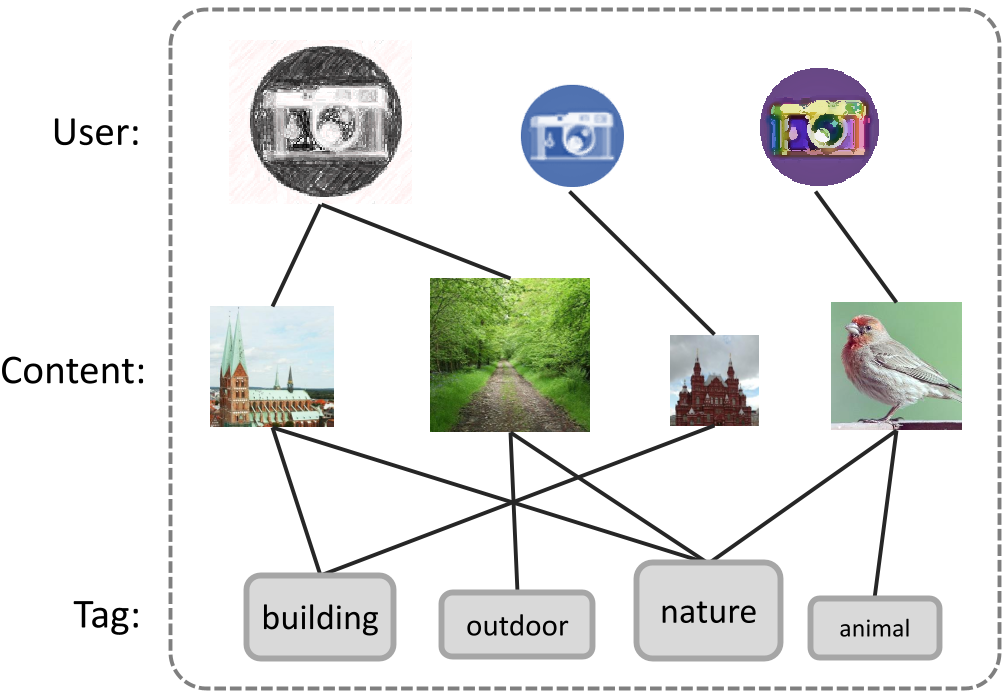 Figure 1: The hybrid relationship between Users, Contents, and Tags in the UFP-Rank framework.
The Algorithm Flow:
- Scoring: Iterative ranking using a damping factor (), similar to PageRank.
- Preference Vector: Using existing tags (e.g., from an image API) as the "seed" to find the most influential neighbors in the graph.
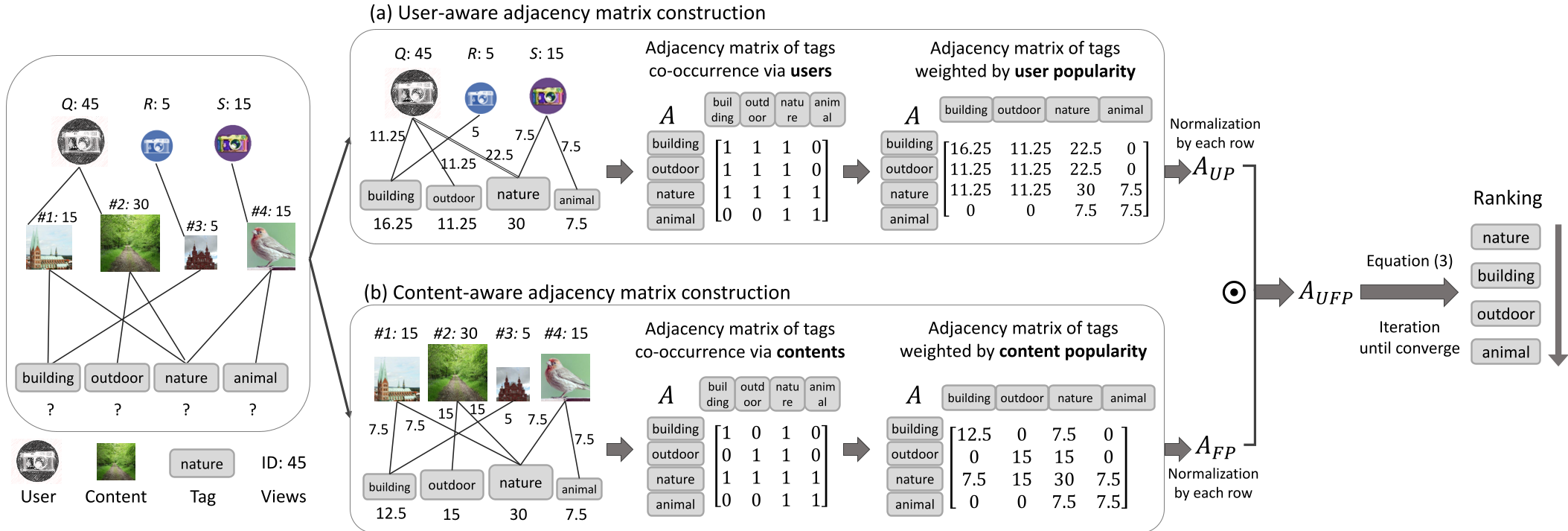 Figure 2: Visual interpretation of how user popularity and tag usage frequency are encoded into the matrix.
Experiments & Results: Real-World Validation
Unlike papers that only test on offline datasets, the authors performed a live SNS experiment. They uploaded 1,000 images to Flickr and tracked views over 10 days.
- The Power of User Data: Even though the test accounts were brand new (Cold Start), the model used "influence signatures" from the 60k image training set to recommend tags.
- Quantifiable Success: UFP-product-Rank reached the highest average views, significantly outperforming Collaborative Filtering and Tagcoor.
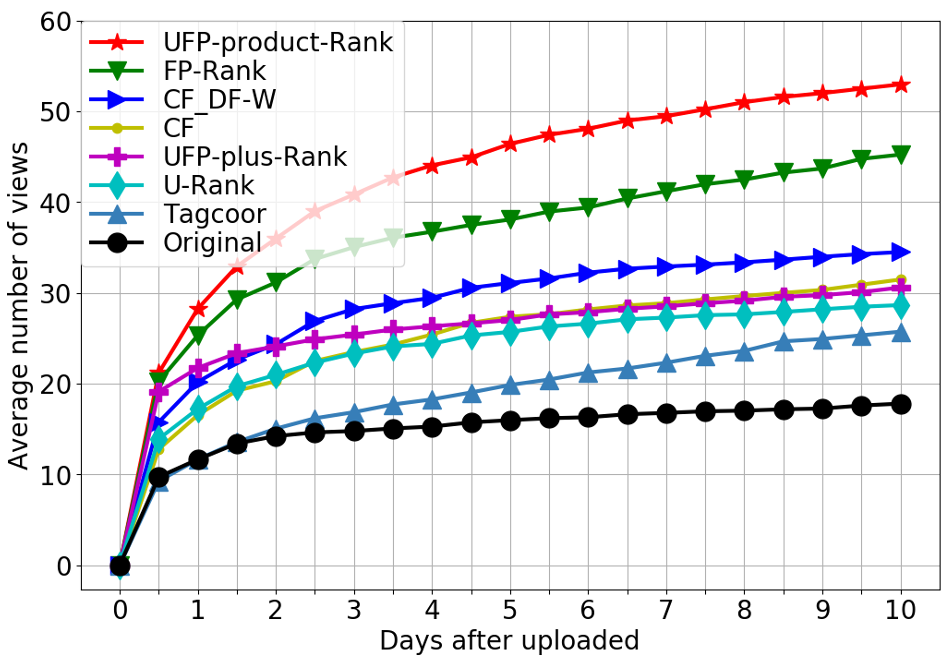 Figure 3: Popularity growth (Views) over a 10-day period. UFP-product-Rank shows a clear superior trajectory.
Critical Analysis & Conclusion
Takeaway
The study proves that for social media, relevance popularity. While a Computer Vision API might describe an image as "blue, sky, clouds," UFP-Rank might suggest "photography, hdr, travel"—tags that users actually search for and engage with.
Limitations & Future Work
- Platform Specificity: The current model is trained on Flickr data. Popularity dynamics on platforms like Twitter (text-heavy) or TikTok (video-loop driven) may require different weighting.
- Subjectivity: While "photography" increases views, is it always "relevant"? There is a fine line between popularity enhancement and "tag spam," though this paper successfully stayed on the side of relevance by using co-occurrence.
Conclusion: UFP-Rank is a vital step toward "Social Media Optimization" (SMO) powered by graph theory, offering a mathematical blueprint for how users and brands can systematically increase their digital footprint.