
From Intuition to Algorithm: Bridging Qualitative Behavior and Bayesian Access Control in Social Media
User Behaviour-Based Access Control for Social Media with Qualitative Research and Bayesian Modelling
The paper proposes a novel User Behaviour-Based Access Control (UBAC) methodology for social media. It combines qualitative research (grounded theory) with Bayesian networks to transform subjective user sharing preferences into probabilistic, automated access control decisions.
TL;DR
Current social media privacy settings are often too rigid or confusing for the average user. This paper introduces a User Behaviour-Based Access Control methodology that bridges the gap between human psychology and technical enforcement. By analyzing user interviews through Grounded Theory and encoding the results into Bayesian Networks, the researchers created a system that predicts whether a user actually wants to share a specific piece of content with an accuracy of up to 88%.
The Crisis of Sharing: Why Traditional Models Fail
Most access control systems (like those in Windows or Linux) are built for "protecting" files. However, social media is about "sharing." Traditional models like Relationship-Based Access Control (ReBAC) rely purely on the graph distance (e.g., "Friend of a Friend").
The problem? Human behavior is messy. We might share a sunset photo with everyone but a political opinion only with close friends on a specific platform. Traditional Rule-Based Access Control (RAC) cannot easily capture this subjective uncertainty or the environmental context (platform, audience, content sensitivity) that dictates our choices.
Methodology: Mining Gold from Interviews
The authors propose a multi-stage pipeline to turn subjective human "feelings" into hard logic:
- Qualitative Data Collection: Semi-structured interviews to understand the "Why" behind sharing decisions.
- Grounded Theory Analysis: A 4-step process (Coding -> Concepts -> Categories -> Theory) to identify the variables that influence behavior.
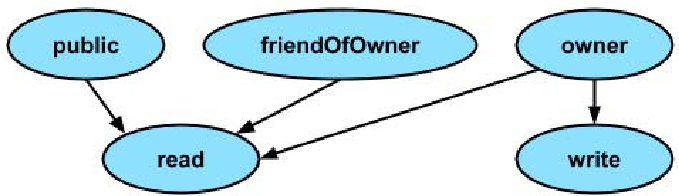
- Bayesian Modeling: Translating these categories into a directed acyclic graph where edges represent the influence of variables on the decision to "Share."
The Power of Probabilistic Reasoning
Unlike standard systems that return a hard Allow or Deny, the Bayesian Network calculates a "Belief Probability" (0 to 1). A result of 0.9 suggests the system is highly confident the user would want to share, while 0.5 indicates total uncertainty—a signal that the system should perhaps ask the user for clarification.
Architecture and Implementation
The core of the system is the Conditional Probability Table (CPT). While simple models use binary truths, this methodology allows for weights. For instance, being a "Friend" might increase the probability of "Read Access" by 80%, rather than making it a hard rule.
 (Note: Figure 3 in the paper illustrates how information variables like 'Public', 'FriendOfOwner', and 'Owner' feed into the 'Read' and 'Write' hypothesis variables.)
Experimental Results: Does it Work?
The researchers tested the methodology on two real-world participants (Model A and Model B) across popular platforms like Instagram, Twitter, and WhatsApp.
Using Leave-One-Out Cross-Validation (LOOCV), they found:
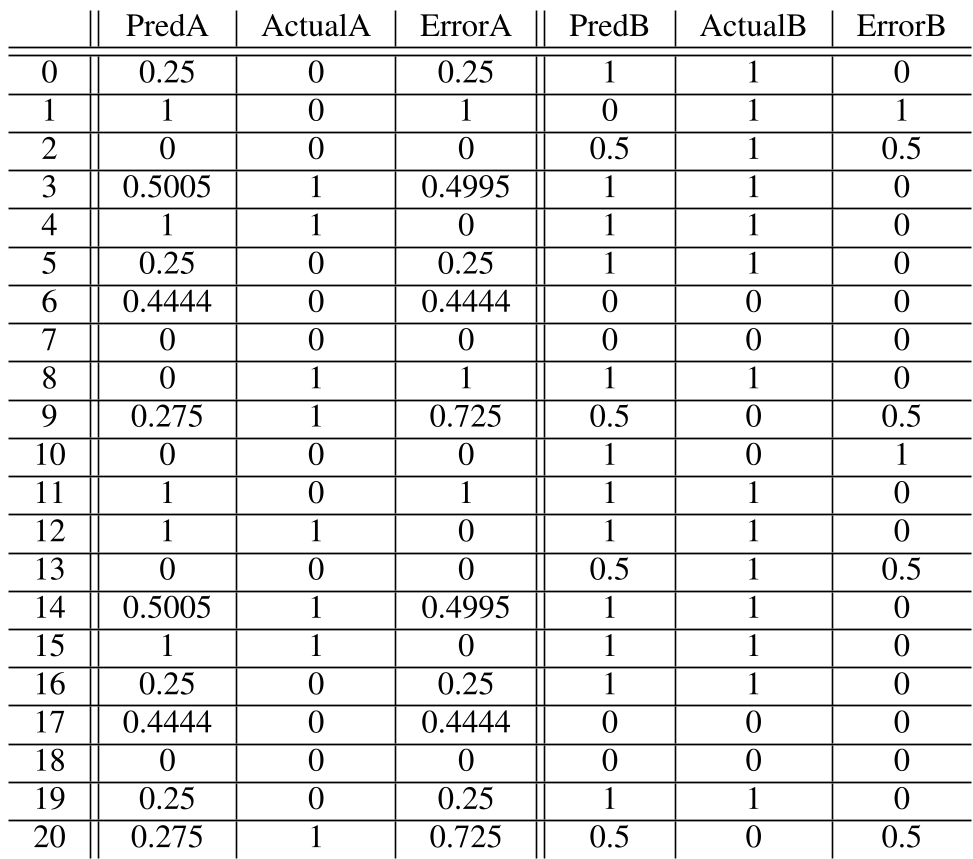
- Model B was exceptionally accurate, with a mean error of only 0.1905.
- When excluding cases where the model was "unsure" (votes near 0.5), accuracy reached 88.24%.
- The difference between Model A and B suggests some users are more "consistent" in their behavior, or that some users' mental models require more complex variables than others.
Critical Analysis & The Future
The genius of this work lies in its Inductive Bias: it assumes that human security preferences aren't random but are grounded in identifiable (though subjective) themes.
Limitations:
- Scalability: Manually interviewing every user is impossible.
- Subjectivity: Grounded theory analysis depends heavily on the researcher's interpretation.
The Road Ahead: The authors suggest creating "User Archetypes" (e.g., "The Liberal Sharer" vs. "The Privacy Advocate"). By pre-training Bayesian models for these types, a new user could simply select a profile or take a quick quiz to have a sophisticated, behavior-based access control policy instantly deployed.
This paper represents a significant step toward Automated Privacy Assistants that truly understand the human element of the digital world.