
The "Less Is More" Paradox: Elevating Emotion Detection Accuracy through User-Centered Hardware Refinement
A user-centered approach for detecting emotions with low-cost sensors
This paper presents a user-centered methodology for emotion detection using low-cost sensors (Heart Rate, movement, and audio). By iterating through design cycles and employing Machine Learning classifiers like Decision Trees and LSTMs, the system achieves a state-of-the-art accuracy of 91.47% for classifying four distinct emotional states.
TL;DR
Researchers have developed a low-cost, wearable emotion detection system that utilizes Arduino-based sensors to track heart rate, movement, and audio. By applying a user-centered iterative design, they discovered a crucial link: reducing the "invasiveness" (weight and size) of the wearable directly improves the accuracy of AI classifiers, ultimately reaching a 91.47% success rate using Decision Trees.
Problem & Motivation: The Observer Effect in Affective Computing
Recognizing human emotion is a "Holy Grail" for healthcare (e.g., autism support) and Human-Computer Interaction (HCI). While physiological signals—like heart rate variability—are more honest than facial expressions, they come with a catch: Invasiveness.
If a user is wearing a heavy, clunky sensor array, the resulting data often reflects the user's annoyance with the device rather than their response to the intended stimuli. Prior works often ignored this "hardware-to-mood" feedback loop. The authors hypothesized that by refining the hardware ergonomics, they could clear the "biometric noise" and achieve superior classification results.
Methodology: The Iterative Design Cycle
The team proposed a unique framework split into two distinct loops:
- Stimuli Design Cycle: Optimizing the images used to trigger emotions (Sadness, Contentment, Anger, Fear) based on expert feedback.
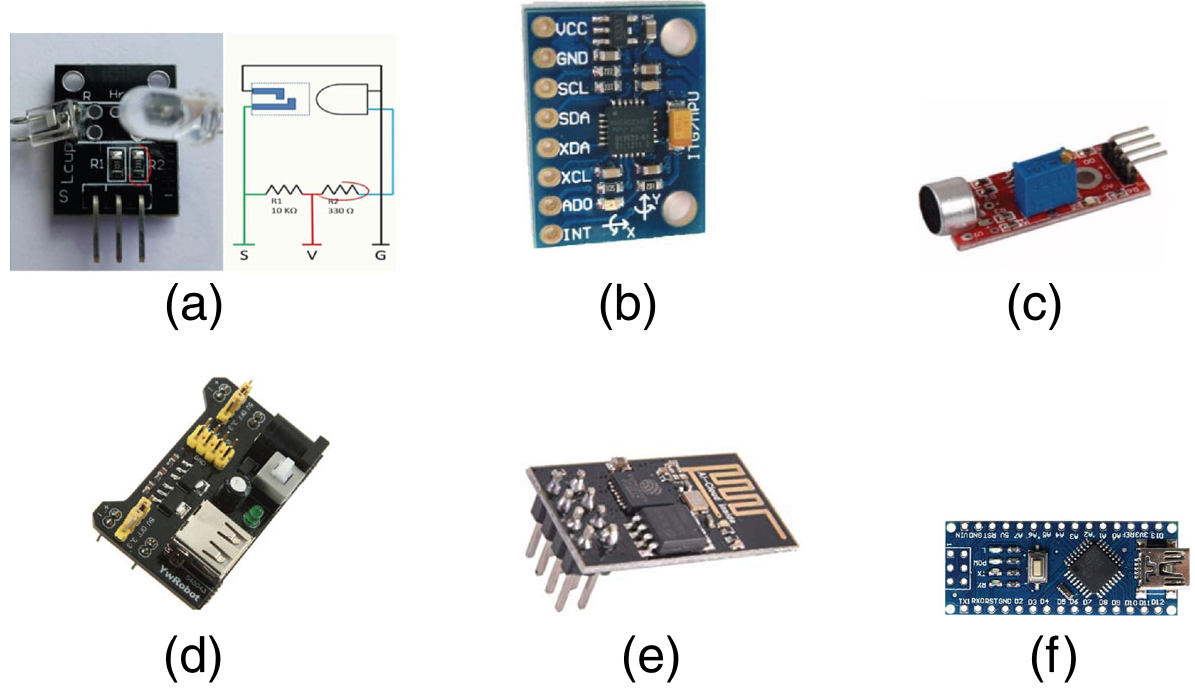
- System Design Cycle: A client-server architecture where Arduino Nano modules collect data, synchronized via temporal windows, and processed through a suite of ML models (MLP, CNN, LSTM, and Decision Trees).
Architecture Overview
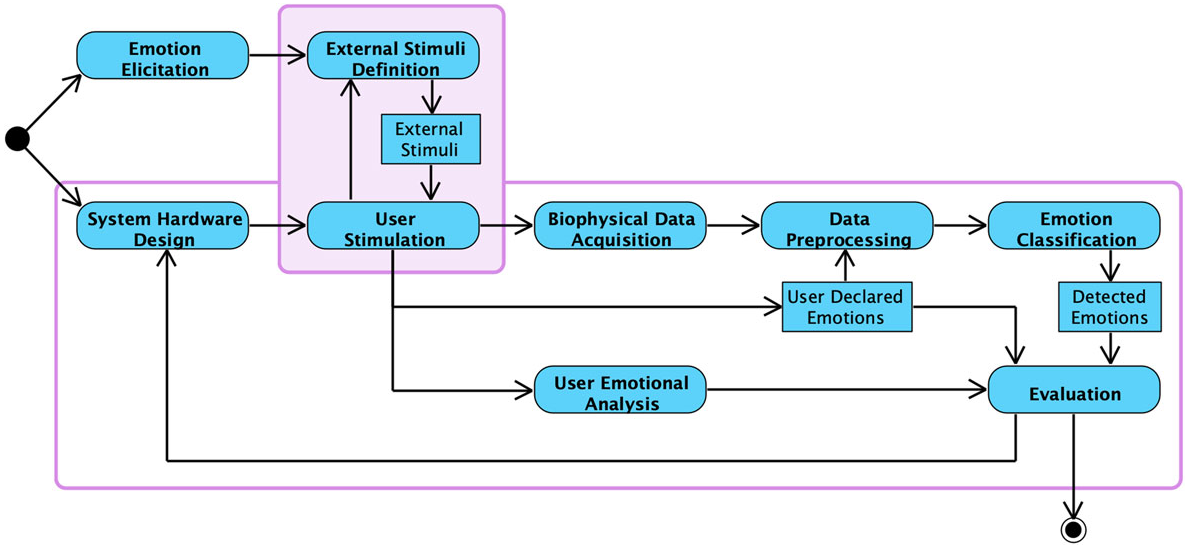
A critical technical challenge was Synchronization. Because heart rate, motion, and audio sensors sample at different speeds, the authors implemented a segmented temporal windowing approach. If a data point was missing, they utilized a "persistence-based prediction" (repeating the last valid value), ensuring a clean, normalized matrix for the classifiers.
Hardware Evolution: From Bulky to Biometric-Ready
The transition between Experiment I and Experiment II was purely ergonomic:
- Version A: Heavy wooden base, bulky power hub, multiple cables.
- Version B: Hub eliminated, 30% weight reduction, 50% size reduction.
Experiments & Results: Why Decision Trees Won
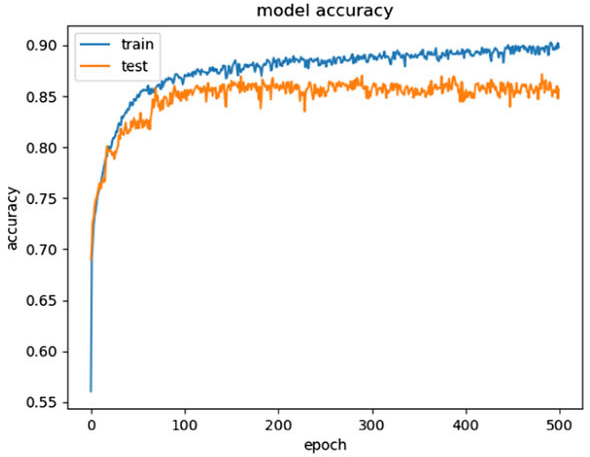
Surprisingly, the Decision Tree outperformed sophisticated Deep Learning architectures like Bidirectional-LSTMs.
| Classifier | Exp I Accuracy (Testing) | Exp II Accuracy (Testing) |
|---|---|---|
| MLP | 80.98% | 87.68% |
| CNN | 80.45% | 85.05% |
| Decision Tree | 84.41% | 91.47% |
The results (detailed below) show that every single model performed better when the device became smaller. This validates the theory that a more comfortable user is a more "vocal" user in terms of biological signals.
Critical Analysis & Conclusion
The most profound takeaway is the Self-Assessment Manikin (SAM) analysis. By tracking Valence (pleasure) and Dominance (control), the authors proved that the hardware itself was a variable in the experiment. When users felt more in control (higher dominance), the data became more distinguishable.
Takeaway: High-performance AI in wearables is not just about the depth of your neural network; it is about the ergonomics of your data source.
Limitations: The study limited itself to four emotions. Moving toward the full Ekman set (6-8 emotions) usually sees a sharp drop in accuracy. Future work will need to see if this "ergonomic boost" holds up as the classification space becomes more crowded.