
UCD in Rural Yemen: Beyond the "Developing World" Stereotype
Exploring the Applicability of User-Centred Design Practices in Rural Yemen
This paper investigates the feasibility of User-Centred Design (UCD) in rural Yemen by developing a School Management System (SMS). It demonstrates that while standard UCD methods require localized appropriation, they are effective when leveraging "key individuals" such as local schoolmasters.
TL;DR
Human-Computer Interaction for Development (HCI4D) often struggles with the "Western-centric" bias of design workflows. This study challenges the notion that rural users can't find value in the design process. By deploying a School Management System (SMS) in rural Yemen, the researchers found that high-fidelity prototyping and local "key individuals" (like a proactive schoolmaster) are the secret ingredients to making User-Centred Design (UCD) work in extreme environments.
Background: The Infrastructure of Crisis
Designing technology for rural Yemen isn't just a matter of translation; it's an exercise in extreme resilience. The study took place at Al-Farouq school, a hub connecting distant villages where:
- Electricity is non-existent due to war (requiring solar-powered solutions).
- Connectivity is a luxury (no fixed lines or mobile coverage in the building).
- Heterogeneity is high: Teachers ranged from tech-savvy enthusiasts to those who had never touched a PC.
The "Toy" Problem: Why Paper Prototyping Failed
A fascinating insight from this work is the rejection of Paper Prototyping. In traditional UX, we value paper for its "low-stakes" feel. However, the Yemeni participants felt insulted by it, calling the paper cards "kids' games."
The Insight: When users have low exposure to technology, they cannot easily bridge the mental gap between a piece of cardboard and a functional tool. They need to see the "real thing" to understand the value of the design.
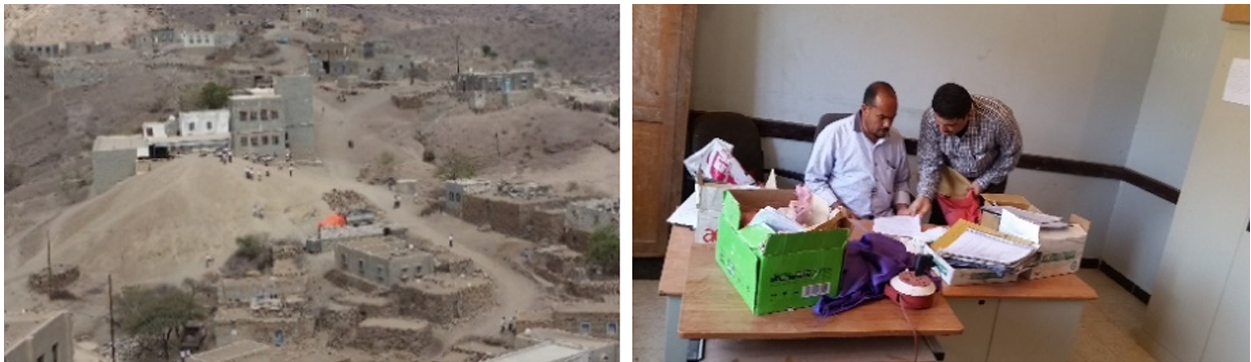 Figure 1: Contextual inquiry and workplace interviews were critical for building rapport and understanding manual grade-tracking workflows.
Methodology: The Power of the "Semi-Insider"
The lead author grew up in the Al-Dhale area, occupying a unique position as a "semi-insider." Unlike outside researchers who spend months building basic trust, he could leverage existing social networks.
Key Strategies:
- Rapid Ethnography: Observing school workflows and grade recording before proposing digital fixes.
- Infrastructure Maintenance: Before designing software, the team had to fix the school's lone PC and install solar panels.
- High-Fidelity Probing: Moving straight to a C#/.SQL software prototype allowed users to see their own sons' photos and names in the system, creating immediate emotional and functional "buy-in."
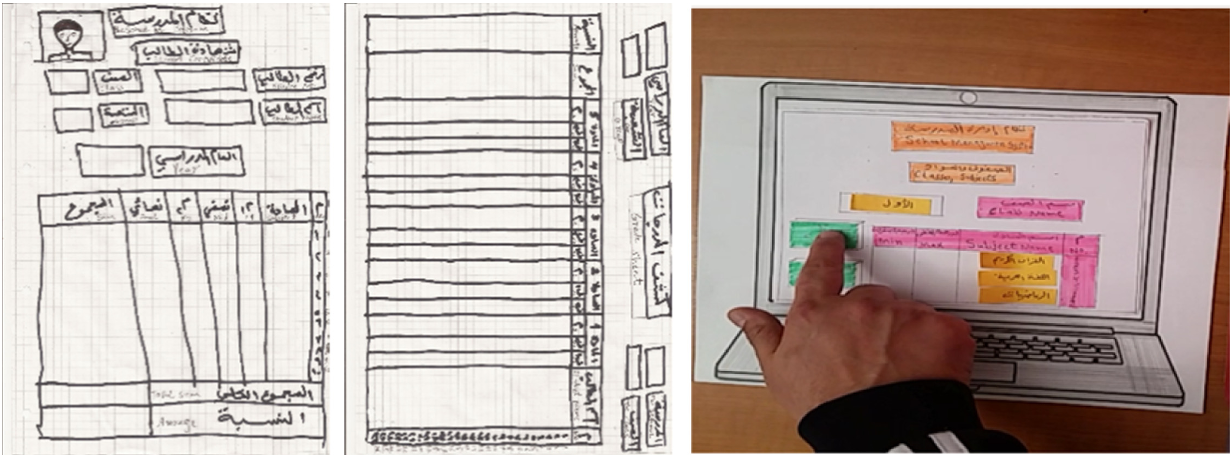 Figure 2: Teachers interacting with the high-fidelity SMS prototype. The shift to a digital artifact enabled meaningful design feedback.
Critical Analysis: Why This Worked
Previous literature (like Maunder et al.) suggested that users in developing regions don't see the benefit of the process of design, only the final product. This study refutes that.
Why the difference?
- Direct Pain-Point Mapping: The SMS replaced a tedious paper-based grading system that required teachers to walk long distances.
- Key Individuals: The schoolmaster acted as a "champion," bridging the gap between the researcher's vision and the teachers' daily reality.
- Abolishing the "Developing World User" Monolith: The authors argue against lumping all "global south" users together. These teachers were educated professionals with high domain expertise, even if their technical literacy was low.
Conclusion & Future Work
The paper concludes that UCD is highly applicable in Yemen, provided designers are willing to abandon "standard" abstract tools (like paper prototypes) in favor of tangible, high-fidelity technology probes.
The Limitation? Sustainability. While the software works, the hardware remains a single point of failure. Future research must address how these systems survive the "long-tail" of maintenance in a region where even ink cartridges are hard to find.