
TWIN: Unlocking the Social Potential of Ad Hoc Proximity Networking
User experience of social ad hoc networking: findings from a large-scale field trial of TWIN
This paper introduces TWIN, a social ad hoc networking system designed for proximity-based communication and multimedia sharing without infrastructure reliance. Through a nine-week field trial with 250 participants, the researchers evaluate the user experience (UX) of peer-to-peer social features like "Radar" views and decentralized content sharing.
TL;DR
In an era dominated by centralized social giants, the TWIN project explores a decentralized alternative: a peer-to-peer (P2P) system that connects people based on physical proximity rather than digital algorithms. Leveraging a large-scale 9-week field trial of 250 users, this research discovers that localized ad hoc networking is less about "utility" and more about the "fun" of discovering the "familiar strangers" around us.
Problem & Motivation: The Gap in Proximity Interaction
We are often surrounded by people with shared interests—classmates in a lecture hall or fans at a concert—yet the digital tools we use (SMS, Facebook, IRC) typically prioritize existing remote connections.
The researchers identified a critical gap:
- Infrastructure Dependence: Most social tools fail when the internet is down or in crowded areas with poor cellular service.
- Missing Social Catalysts: There is a high social threshold to talking to strangers. Current tools don't lower this "entry barrier" effectively in physical spaces.
- UX Neglect: Previous studies focused on technical feasibility (Do the packets arrive?) rather than the human experience (Is it enjoyable to use?).
Methodology: The TWIN Architecture
TWIN was built as a pure P2P system running on Linux-based Nokia N900 devices. Unlike traditional apps, it uses Ad Hoc WLAN, creating a dynamic mesh network where data can hop between devices to extend range.
The Core Features
- Communities: Creating groups based on local interests.
- Content Sharing: High-capacity P2P file transfer.
- Radar View: A visual representation of nearby users, categorized by the number of "radio hops" away they are.
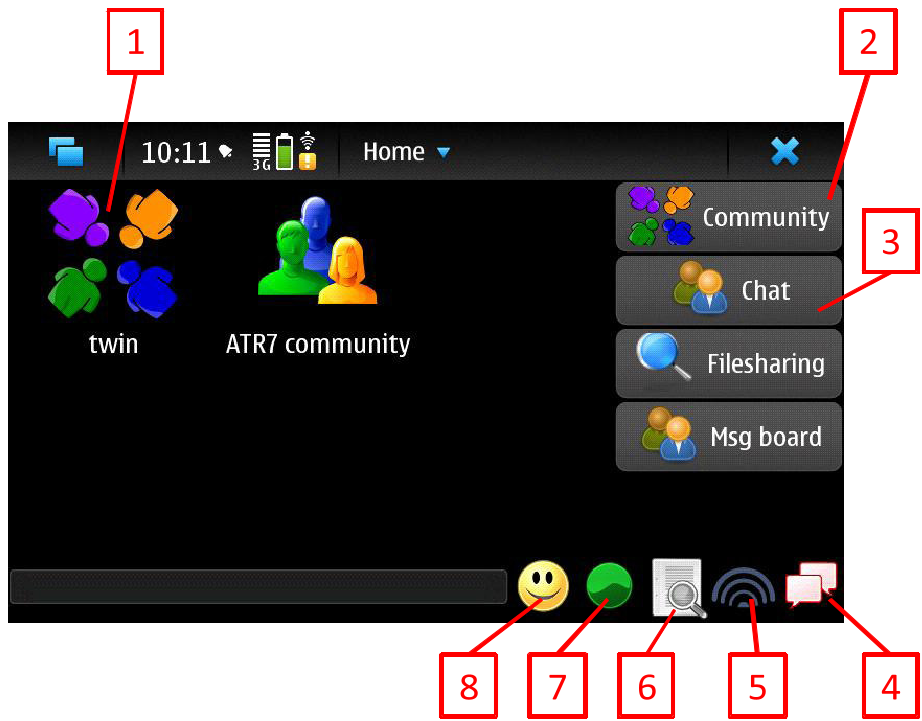 Figure 1: The TWIN application interface featuring the Radar view (5), which visualizes proximity through radio arcs.
The component architecture (Figure 4) utilized a Python-based plug-in pattern, allowing for dynamic extensions like message boards and local chat protocols that operate independently of any central server.
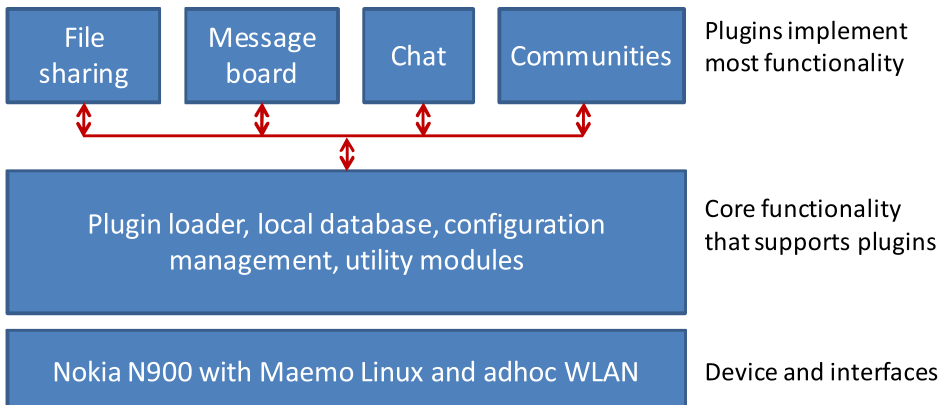 Figure 2: The modular software architecture supporting decentralized discovery and messaging.
Experiments & Results: Real-World Social Dynamics
The study was conducted at Tampere University of Technology, involving 250 students and staff.
Key Findings:
- The "Fun" Factor: Users rated the system higher for "Delightfulness" and "Fun" than for "Usefulness." It was viewed as an entertainment tool for "passing the time" rather than a productivity suite.
- Social Breaking of the Ice: Surprisingly, 22% of users made new friends via TWIN. The app allowed users to check profiles before initiating face-to-face contact, lowering the social anxiety of "cold starts."
- Privacy Paradox: While privacy is often cited as a barrier to location-sharing, TWIN users were largely unconcerned (average concern score of 2.9/10). The localized nature of the network created a "closed community" feel, making users feel safer than on the open internet.
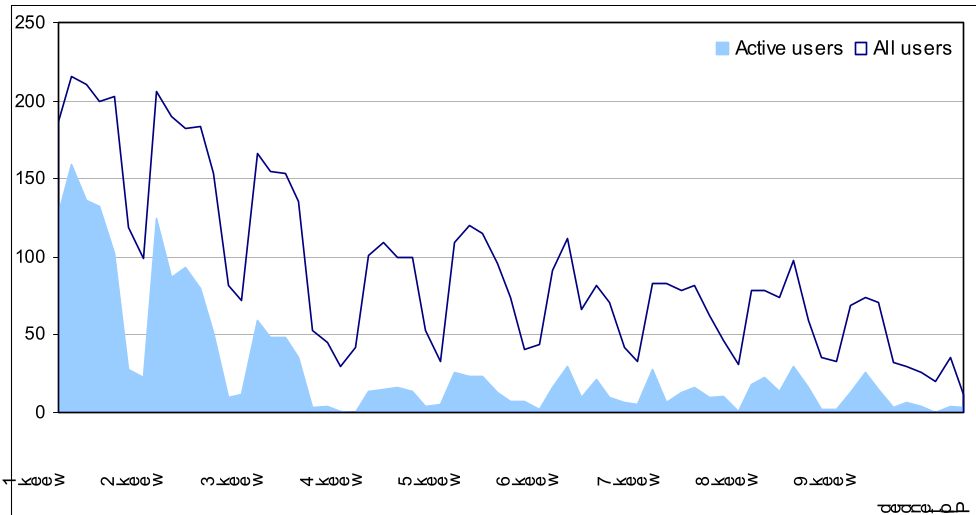 Figure 3: Usage patterns over the 9-week pilot, showing the typical "excitement drop" followed by sustained moderate use.
Technical Hurdles
The study did not shy away from failures. The unreliability of multi-hop delivery was the primary cause of user dissatisfaction. In a dynamic environment where peers are constantly moving, maintaining a stable multi-hop path remains a "nerdy" challenge that modern protocols still struggle to solve perfectly.
Critical Analysis & Conclusion
Takeaway: TWIN proves that proximity is a powerful social filter. By showing us who is nearby, we transform a sea of strangers into a community of potential interactors.
Limitations:
- Critical Mass: The system's value is zero without other users nearby. Even with 250 participants, users felt the density was sometimes too low.
- Battery & Reliability: Ad hoc WLAN is power-hungry, and the dynamic nature of peer movement makes synchronous chat difficult across multiple hops.
Future Work: The authors suggest that proximity systems should run in the background with "customizable alerts," transforming from a manual check-in app to an ambient social sensor. As we move toward 6G and advanced D2D (Device-to-Device) communications, the vision of TWIN—a world where our devices help us navigate the social fabric of our physical surroundings—is closer than ever.