
UserNet: Decoding Digital Identities Through Time-Aware Multi-modal Fingerprinting
User Identity Linkage Across Social Media via Attentive Time-Aware User Modeling
The paper introduces UserNet, an attentive time-aware framework for User Identity Linkage (UIL) across social media platforms like Twitter and Instagram. By leveraging deep learning to process heterogeneous User-Generated Content (UGC), it achieves state-of-the-art accuracy (0.8369) in determining if accounts on different platforms belong to the same individual.
TL;DR
Connecting the dots between a Twitter handle and an Instagram account is a classic "User Identity Linkage" (UIL) problem. UserNet moves beyond static profile matching by analyzing how and when people post. By combining BiLSTM-based text analysis, ResNet image features, and a unique Time-Aware temporal decay factor, it achieves an impressive 83.69% accuracy in linking identities across platforms.
Background: The Limits of Digital Profiles
Most current linkage methods look at usernames, birthdays, or friend circles. However, these are easily faked or hidden for privacy. User-Generated Content (UGC)—the text and images we actually share—is a much richer "digital fingerprint." But UGC is messy: an image might tell a thousand words in one post, while a caption is more revealing in another. Furthermore, users often post about the same life event (like a vacation) on multiple platforms within a short window, creating a temporal pattern that most models ignore.
Methodology: The UserNet Architecture
UserNet treats identity linkage not as a simple classification, but as a deep similarity modeling task.
1. Heterogeneous Feature Extraction
The model uses a dual-stream approach:
- Textual: Employs a Bi-directional Long Short-Term Memory (BiLSTM) network to capture the context of tweets and captions.
- Visual: Uses ResNet-152 to extract high-level semantic features from images, projecting them into a common latent space with the text.
2. Time-Aware Post Correlation
This is the "secret sauce." The authors introduce a time decay factor () based on the log-difference between post timestamps. If you tweet "Off to Paris!" and post a croissant photo on Instagram two hours later, UserNet gives this pair a high weight. If the gap is two years, the weight drops.
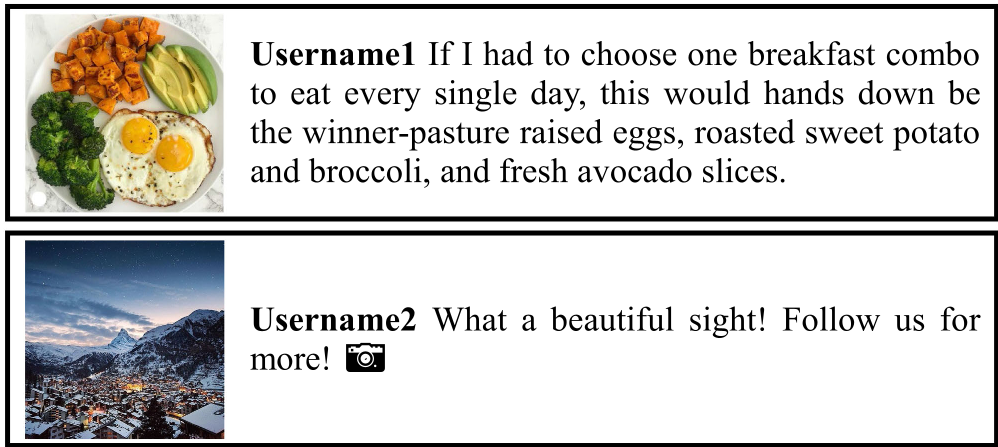 Figure 1: The overall workflow of the UserNet scheme, demonstrating the fusion of temporal and multimodal data.
3. Attentive Fusion
Not all modalities are created equal. UserNet uses an Attention Mechanism to decide whether the image or the text is more descriptive for a specific user. It looks at the global distribution of similarities rather than just local pairs, ensuring the model isn't tripped up by one-off anomaly posts.
Experiments and Results
The researchers built TWIN, a massive dataset of 5,765 matched Twitter-Instagram pairs.
SOTA Comparison
UserNet was tested against several baselines, including writing-style models (WSF-GBDT) and deep auto-encoders (BPR-DAE).
| Model | Accuracy |
|---|---|
| QDA (Doc2Vec/PCA) | 0.5625 |
| WSF-GBDT (Writing Style) | 0.7552 |
| UserNet (Ours) | 0.8369 |
The Power of Timing
The most striking result came from the temporal ablation study. When the time-awareness was removed (UserNet-NoT), accuracy plummeted from 0.8369 to 0.7217 on the full dataset. This proves that the synchronicity of our digital lives is one of our most defining traits.
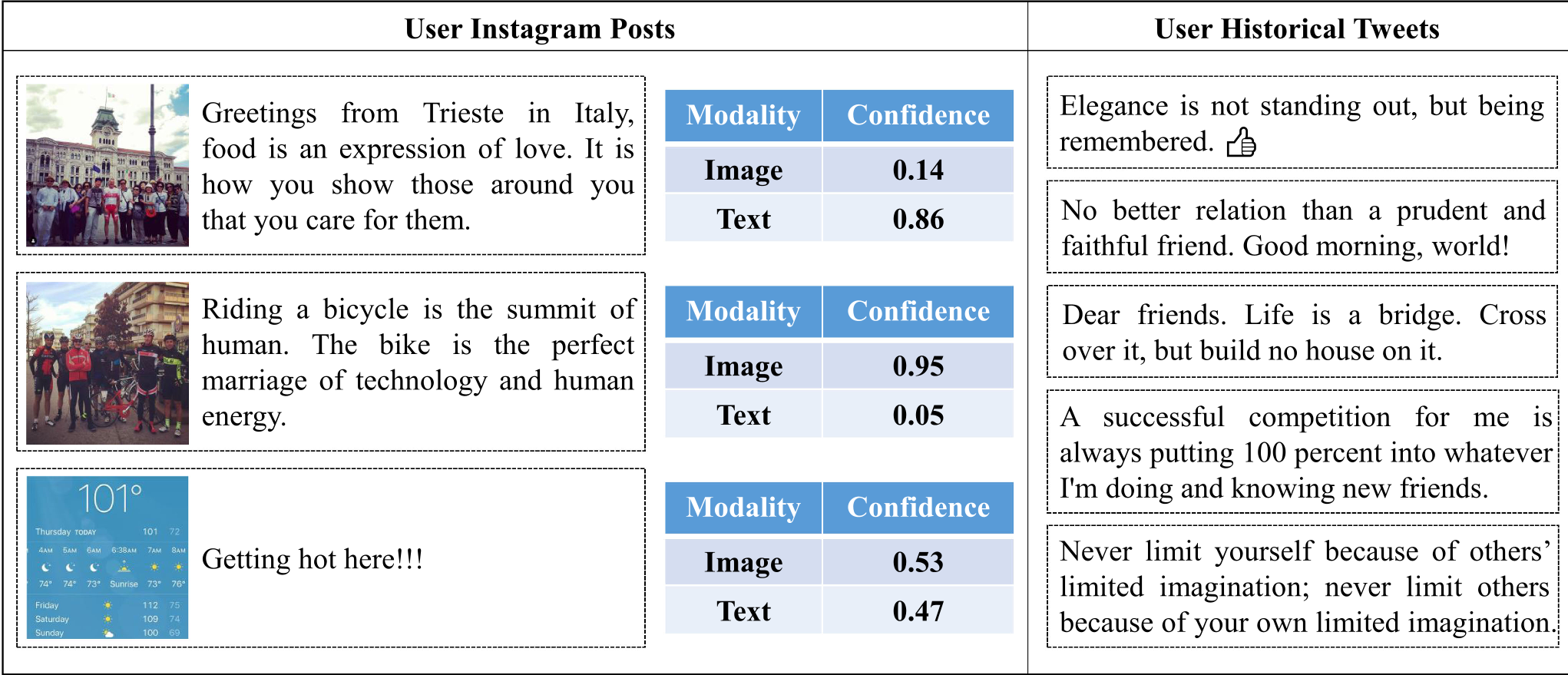 Figure 2: Visualization of how temporal correlation helps link accounts through similar content posted within the same timeframe.
Critical Insight: Why Does It Work?
UserNet succeeds because it captures Inductive Bias specifically tuned for social media behavior.
- Text vs. Image: The study found that text is a stronger signal for linkage than images. This is likely because text contains specific keywords (locations, names, specific grievances) that are easier to match across platforms than abstract visual styles.
- Temporal Proximity: Humans are creatures of habit. If we capture a moment, we tend to broadcast it across all our "channels" near-simultaneously. By mathematically rewarding these clusters of activity, UserNet bypasses the noise of unrelated content.
Conclusion & Future Outlook
UserNet provides a robust, multi-modal framework for UIL that respects the temporal nature of social media. While highly effective for active users, a future challenge remains: how to link "lurkers"—users who consume content but rarely post. The authors suggest that combining this UGC-based model with social graph structures (who you follow) could be the next frontier in achieving a truly universal digital identity map.
Paper Citation: Xiaolin Chen et al., "User Identity Linkage Across Social Media via Attentive Time-Aware User Modeling," IEEE Transactions on Multimedia.