
Predictive task assignment: Improving Mobile Crowdsourcing via Context-Sensitive Trajectory Mining
User Location Prediction in Mobile Crowdsourcing Services
The paper introduces a context-sensitive location prediction approach for mobile crowdsourcing workers by mining historical movement patterns. By integrating temporal contexts (workdays vs. weekends), the method enhances task assignment efficiency, reaching higher success rates and lower travel costs for workers.
TL;DR
To solve the efficiency gap in mobile crowdsourcing, this paper shifts the paradigm from "where the worker is now" to "where the worker will be." By mining historical trajectory data and incorporating temporal context (workday vs. weekend), the proposed approach predicts future worker locations to push tasks proactively, reducing travel costs and increasing task completion rates.
Contextual Motivation: Beyond Proximity
In modern crowdsourcing platforms like Uber or Gigwalk, the default strategy is often Proximity-based Assignment: sending a task to the nearest worker. However, this is fundamentally flawed if the worker is traveling in the opposite direction.
The authors argue that a worker's willingness to accept a task is heavily influenced by their intended path. If a task lies along their predicted route, the "cost" of the task drops significantly. The challenge lies in the fact that human movement isn't just a series of random coordinates; it is a sequence of intent-driven transitions influenced by context—like the difference between a Monday morning commute and a Saturday afternoon outing.
Methodology: From Points to Rules
The approach, titled WMP (Workers' Movement Patterns), follows a rigorous four-step pipeline:
- Region Generation (Spatial Abstraction): Using K-Means clustering, the system converts sparse, discrete GPS pings into meaningful "Regions." This simplifies the problem from continuous coordinate prediction to discrete state transitions.
- Pattern Mining (Apriori-style): The system analyzes historical sequences (e.g., Region 6 -> Region 4 -> Region 2). It uses a support-based threshold to identify recurring sequences that represent habitual behavior.
- Context Integration: This is the "Secret Sauce." Patterns are categorized by context (Workday/Weekend). The logic is that workers have a much higher "predictability" during workdays (routine) than weekends (exploratory).
- Rule Generation & Matching: The system creates "Movement Rules" (e.g.,
If in Region 6 on a Workday, then Next = Region 4).
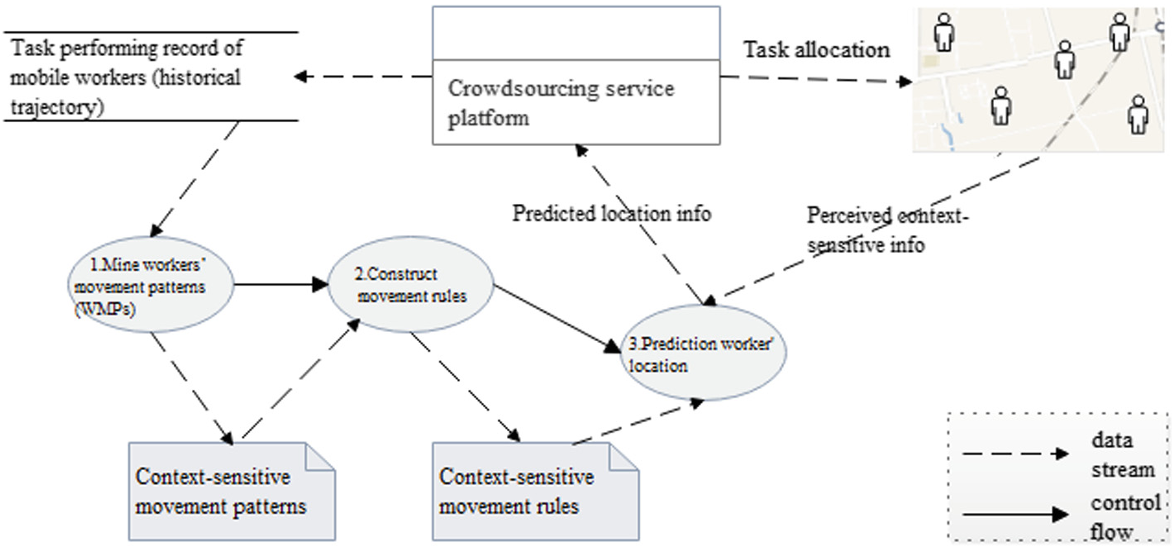 Figure 1: The flow from historical logs to real-time trajectory matching.
Why it Works: The Logic of Longest-Sequence Matching
The prediction algorithm doesn't just look at the last location. It uses a Longest-Sequence Match strategy. When a worker's current path is scanned, the algorithm prioritizes rules that match the longest part of their recent history. If multiple rules match, it falls back to Confidence scores. By filtering rules based on the current context (e.g., "Is it Saturday?"), the system ignores irrelevant workday noise, making the prediction both faster and more accurate.
Experimental Validation
Using the Gowalla dataset (over 1 million check-ins), the authors demonstrated a clear superiority over the UMP (User Movement Pattern) baseline.
- Success of Contextual Splitting: The "Workday" success rate was notably higher than the non-distinguished baseline. This validates the theory that routine-based movements are highly predictable and provide the best opportunities for task pushing.
- Accuracy Improvements: The WMP method showed higher "Hit" rates across various cluster counts compared to methods that only consider the most recent region.
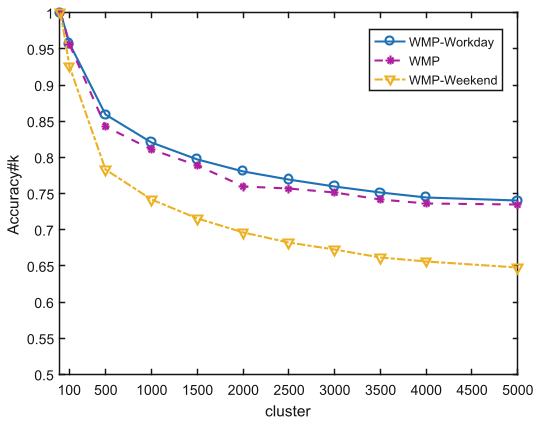 Figure 2: Accuracy of the proposed WMP method vs the traditional UMP approach.
Academic Insight & Future Directions
The core achievement here is the formalization of the "Context-User-Location" triad. While modern LLMs and Transformers are now used for sequence prediction, this paper's reliance on Association Rule Mining offers a transparent and interpretable alternative that is computationally "light" enough to run on mobile edge platforms.
Limitations: The current model relies heavily on the "Support" of historical data. For "Cold Start" users (new workers with no history), the system would struggle. Future iterations might benefit from "Social-based" prediction—inferring a new worker's path based on the patterns of similar users in the same demographic.
Conclusion
This work demonstrates that "Context is King" in mobility AI. By understanding that a worker is a human with a schedule, rather than just a moving dot on a map, crowdsourcing platforms can optimize their logistics to be more "human-centric," reducing worker fatigue and increasing platform efficiency.