
PPEM: Personalizing the Heartbeat of Human-Robot Interaction
3790_A User-Modeling Approach to Build User's Psycho-Physiological Maps of Emotions using Bio-Sensors.
The paper introduces a user-modeling framework to construct Psycho-Physiological Emotional Maps (PPEM), enabling near real-time emotion recognition for HCI and HRI. By mapping physiological signals (Heart Rate and Skin Conductance) onto a psychological Valence-Arousal space, it creates a personalized system that outperforms generic models.
TL;DR
Researchers Olivier Villon and Christine Lisetti propose a method to build Psycho-Physiological Emotional Maps (PPEM). By fusing subjective self-reports (1st person) with objective bio-sensor data (3rd person), the system creates a tailored "emotional dictionary" for each user. This allows computers and robots to sense a user's feelings—specifically their Valence and Arousal—in near real-time without ever needing to ask, "How do you feel?"
The Problem: The "Interruption Paradox" in Affective Computing
For a robot to be a useful companion or an intelligent tutor, it needs to understand the user's emotional state. However, if the robot frequently interrupts the user to ask for feedback, it destroys the very emotional state it is trying to measure.
Current "3rd person" approaches—which use sensors to guess emotions—often fall into the trap of assuming everyone's body reacts the same way. In reality, a spike in heart rate might mean "excitement" for one person but "anxiety" for another. Furthermore, your physical response on Monday morning (caffeine-driven) might differ from Friday night (exhaustion-driven).
Methodology: Mapping Physiology to the Mind
The core innovation of this paper is the Psycho-Physiological Emotional Map (PPEM). It moves away from "black-box" machine learning and toward a descriptive, parametric model.
1. The Parametric Model
The authors define the emotional state through a sophisticated formula that accounts for three layers of human experience:
- Average Population: The general physiological trends found in literature.
- User Delta: The "Personality" factor—how this specific individual's baseline differs.
- Mood Delta: The "Day-dependence" factor—how the same person reacts differently based on their current state.
2. The Bio-Sensor Stack
The system focuses on two primary signals from the Autonomic Nervous System (ANS):
- Skin Conductance (SC): Using a Bodymedia Armband on the palmar region to detect Arousal (calm vs. excited).
- Heart Rate Variability (HRV): Using a modified Polar T31 transmitter to perform frequency-domain analysis.
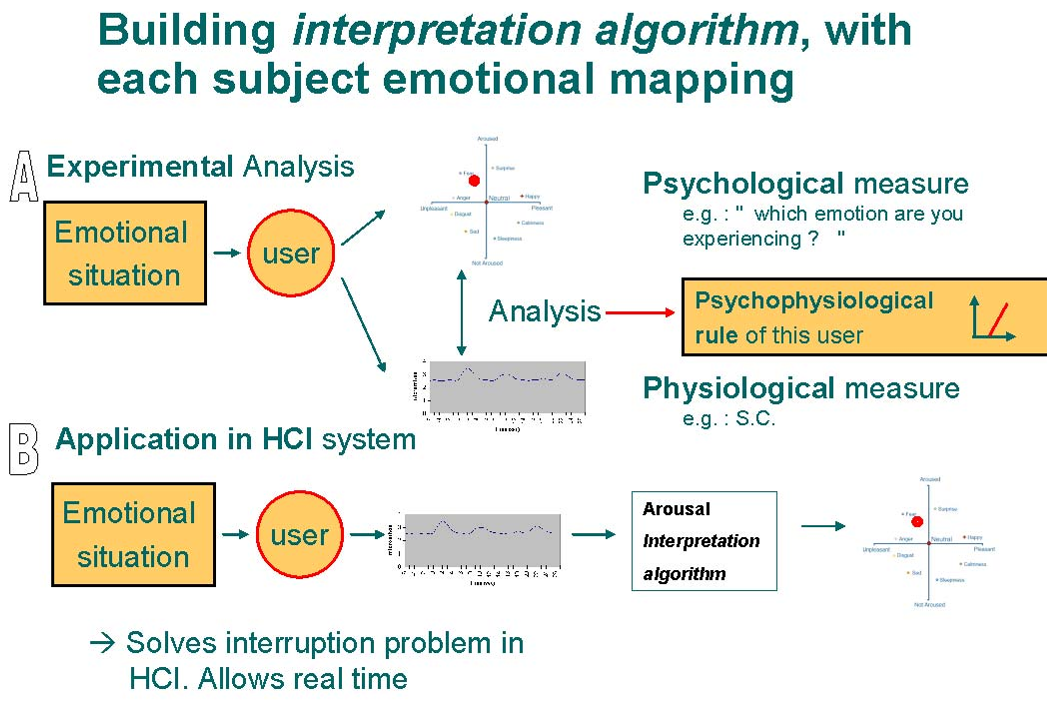 Fig 1: The two-step methodology: (1) Experimental learning to build the PPEM, and (2) Continuous real-time application.
Technical Deep Dive: From R-R Intervals to Emotions
To extract meaning from a heartbeat, the authors don't just look at the rate; they look at the intervals between beats (IBI). By applying a Short-Time Fast Fourier Transform (STFT), they decompose the signal into three frequency bands:
- LF (Low Frequency): Often linked to sympathetic activity.
- MF (Medium Frequency): Linked to appreciation and relaxation.
- HF (High Frequency): Linked to parasympathetic modulation.
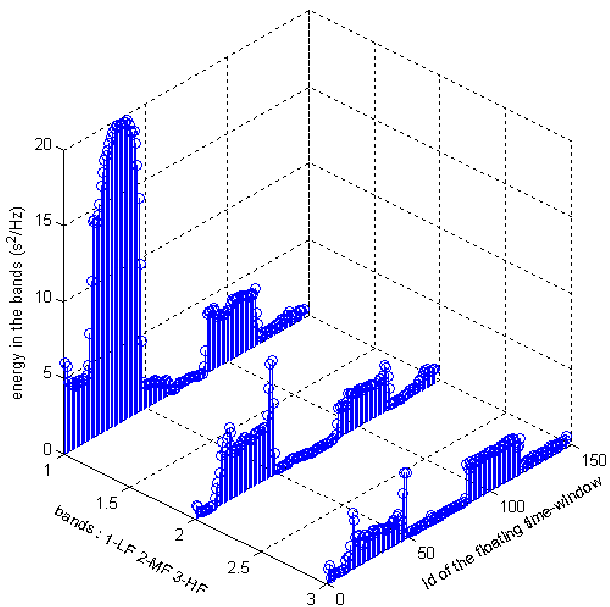 Fig 2: The pipeline for real-time HRV extraction in the frequency domain.
Experiments and Results
The paper emphasizes that user-independent models are limited. By utilizing the Circumplex Model, they map physiological cues to a coordinate system of Valence and Arousal.
While many contemporary systems struggle with "Day-dependence" (the fact that your physiological signal shifts daily), the PPEM framework explicitly models this as a variable. This allows the system to reach an accuracy of 74% for discrete emotion recognition, a significant benchmark for its time, especially considering the emphasis on continuous, real-time monitoring.
Critical Insight: Why This Matters
The shift from What (detecting an emotion) to Who (modeling the specific person) is the real takeaway here. The authors argue that psychophysiology shouldn't just be about building a better classifier; it should be about building a User Model.
Limitations & Future Work
- Hardware Constraint: Using hand-based sensors is intrusive for certain tasks (like typing).
- Static vs. Dynamic: While the system excels at detecting state shifts, the authors admit that measuring "1st person accurate dynamic measures" (how a user feels while something is happening) remains an experimental challenge.
Conclusion
Villon and Lisetti have provided a blueprint for more empathetic machines. By treating emotion as a personalized map rather than a universal constant, they pave the way for robots and computers that truly understand the nuances of the human heart—literally and figuratively.