
Unmasking the Digital Twin: Advanced Methods for Cross-Platform User Profiling
Methods for User Profiling across Social Networks
The paper presents a comprehensive methodology for user profiling by linking individual identities across multiple Online Social Networks (OSNs). It introduces five distinct data collection methods—ASO, SA, CPS, SD, and FFF—resulting in a benchmark dataset of 208,120 linked identities across 43 different OSNs.
TL;DR
Researchers have developed a robust framework to solve the "Identity Resolution" problem—linking the same human being across different social media handles. By deploying five clever data-harvesting strategies, they mapped over 200,000 individuals across 43 platforms, creating a definitive benchmark for social media analytics and privacy research.
The Fragmentation Problem: Why Your Social Data is Scattered
In the modern digital ecosystem, users don't live on a single platform. We use LinkedIn for our careers, Twitter for news, and Instagram for personal memories. For researchers and marketers, this creates a fragmented "User Profile" where no single platform holds the full truth.
The core challenge—Identity Linkage—is difficult because users often change handles, use different emails, or omit information. While previous studies focused on small-scale experiments, this paper addresses the need for a massive, multi-platform ground-truth dataset.
Methodology: Five Paths to Linkage
The authors move beyond simple API calls (which are increasingly restricted) by leveraging how users naturally interact with the web.
1. Advanced Search Operator (ASO)
Using "Google Dorking," researchers searched for public files (like .xlsx or .csv) that accidentally or intentionally list multiple social handles for groups of users.
2. Social Aggregator (SA)
Websites like About.me act as digital business cards. Users explicitly list all their social links here, providing a high-validity source for "ground truth" data.
3. Cross-Platform Sharing (CPS)
This is the most powerful method identified. When a user shares an Instagram photo to Twitter, the resulting tweet contains a specific URL pattern (instagram.com/p/...). By parsing these patterns, the researchers can link a Twitter ID to an Instagram ID with near 100% certainty.
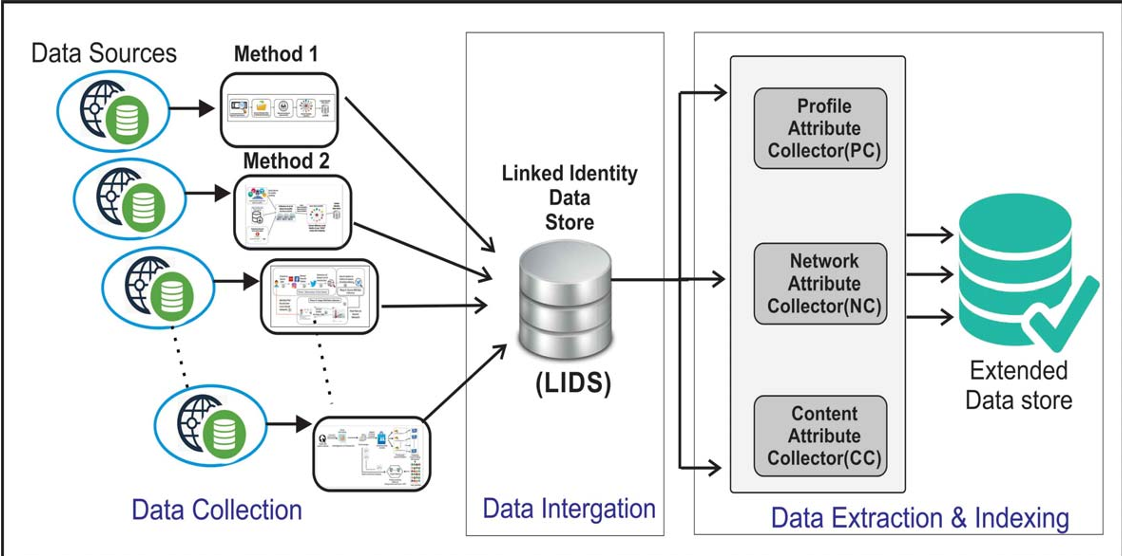 Fig 1: The Generic Framework for User Profiling, moving from raw collection to an integrated identity store.
4. Self-Disclosure (SD)
The "Bio" field is a goldmine. Many users write "Follow me on IG: @username." The authors used pattern matching and tokenization to extract these mentions from millions of profiles.
5. Friend Finding Feature (FFF)
By using publicly available emails and the "Find Friends" sync features of various OSNs, the researchers could identify accounts linked to the same contact information.
Performance Benchmarks: Which Method Wins?
The study provides a fascinating look at the efficiency of these different "hacking" methods:
| Method | Linked Identities | Key Strength |
|---|---|---|
| CPS | 104,233 | Highest Volume |
| SA | 53,692 | Widest Platform Coverage (43 OSNs) |
| SD | 40,000 | Good for Twitter-specific links |
| ASO | 9,695 | Targets specific file-based leaks |
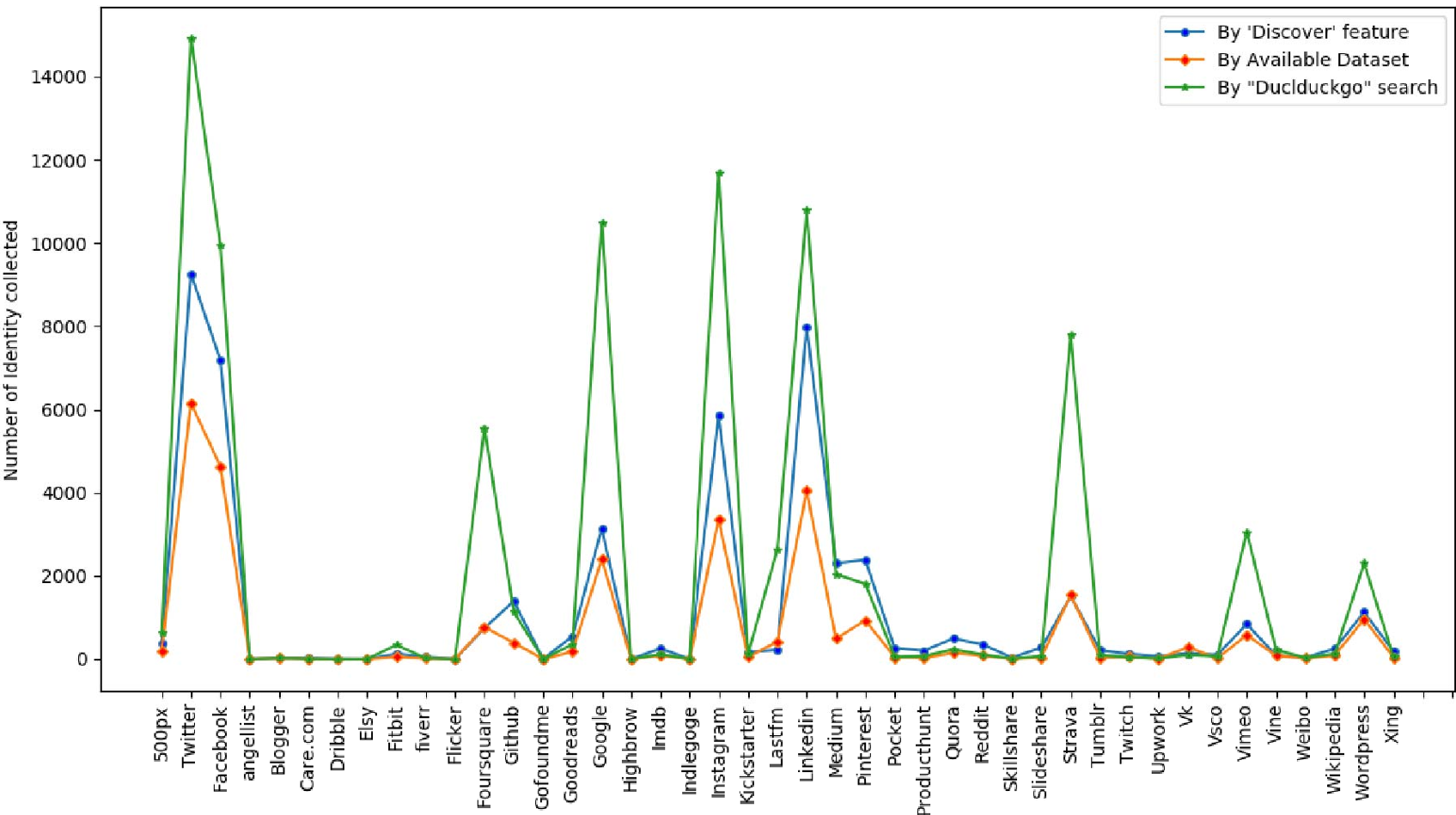 Fig 2: Distribution of social networks covered by the Social Aggregator method—visualizing the massive diversity of platforms captured.
Critical Insights: Privacy and the "Digital Footprint"
The paper isn't just a technical manual for data collection; it's a wake-up call for privacy.
- The Power of Implicit Consent: Most users don't realize that "Cross-Posting" a photo effectively links their distinct personas across the web for anyone to scrape.
- Data Consistency: The researchers found that while profiles are generally accurate, the "timeliness" of data is a challenge—if a user changes their handle on Twitter but doesn't update their About.me page, the link becomes "stale."
Conclusion & Future Outlook
This work provides the largest publicly available dataset for Identity Resolution. For future researchers, the takeaway is clear: don't rely on APIs alone. The most valuable data lies in the "interstices"—the bridges users build between platforms through sharing, bios, and aggregators.
As OSNs tighten their walls (e.g., the post-Cambridge Analytica era), these forensic "Digital Footprint" techniques will become the primary way we understand the multi-faceted nature of online human behavior.