
Social Sensing: Reimagining User Profiling for the New Era of Tourism
User Profiling for Tourist Trip Recommendations using Social Sensing
This paper introduces a social sensing-based user profiling module for Point of Interest (POI) and tourist trip recommendation systems. By utilizing the Yelp dataset and Doc2Vec word embeddings, the system infers user interests through semantic similarity between a user's historical reviews and business descriptions, achieving high alignment in both fine-grained and coarse-grained category labels.
TL;DR
This research addresses the challenge of accurately profiling tourist preferences by mining the "hidden" signals in social media reviews. Using the Yelp Open Dataset and advanced Doc2Vec embeddings, the authors demonstrate that semantic similarity can effectively map unstructured text to a structured taxonomy of interests, achieving a 0.93 similarity score in broad interest categories.
Motivation: Why Social Sensing Matters Post-Pandemic
The tourism sector is facing a dual challenge: recovering from the COVID-19 pandemic and adapting to new user behaviors. Modern travelers are no longer just looking for the most popular spot; they are balancing their personal preferences against "health consciousness"—avoiding crowds and identifying safe POIs (Points of Interest).
The core insight of this paper is that Social Sensing—the act of using users as "sensors" through their digital footprints—is more powerful than traditional collaborative filtering. By analyzing the semantic content of reviews rather than just star ratings, we can build a much richer profile of what a user actually values.
Methodology: From Text to Taxonomy
The researchers developed a precise workflow to transform raw Yelp reviews into a ranked list of user interests.
- Semantic Embedding: Using Doc2Vec, the system converts text into high-dimensional vectors. This allows the model to understand that a review about "vibrant nightlife" is semantically close to "cocktail bars," even if the exact words differ.
- Taxonomy Mapping: The system uses the Yelp taxonomy, which consists of 22 "Root" categories (e.g., Food, Nightlife) and 1,330 "Leaf" categories (specific business types).
- Similarity Retrieval: For any given user review, the system retrieves the top 10 most similar reviews from a massive training set and extracts their associated labels to build the user's profile.
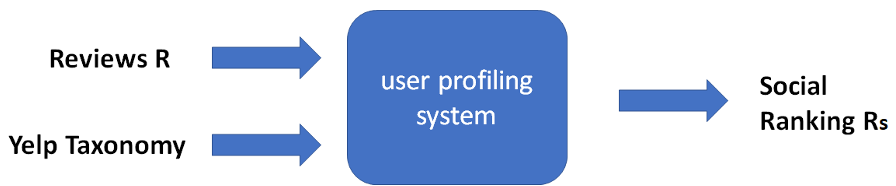 Figure 1: The social sensing workflow showing the transition from raw reviews to a ranked interest list.
Experimental Insights & SOTA Results
The study conducted an exhaustive ablation study, testing 32 distinct model configurations (altering vector sizes, window distances, and training algorithms).
Key Findings:
- Optimal Configuration: The PV-DBOW (Distributed Bag of Words) architecture combined with a vector size of 300 proved most effective.
- Precision vs. Recall: While performance naturally peaks at the high-level "Root" categories (0.93 Cosine Similarity), the model remains remarkably accurate at the "Leaf" level (0.81), proving it can capture niche interests.
- Efficiency: The use of a similarity threshold (75% of max similarity) ensures that only highly relevant noise-free labels are used for profiling.
 Table 1: Performance metrics across different Doc2Vec hyperparameter settings.
Future Outlook: Beyond Static Recommendations
This module isn't meant to stand alone. The authors envision it as a critical component of a larger "Orienteering" system that combines:
- User Preferences (derived from the social sensing module described here).
- Real-time Crowdedness (to avoid contagion risks).
- Itinerary Optimization (using algorithms like Ant Colony Optimization or TSP solvers).
The integration of social sensing with health-aware constraints marks a significant shift in how we design "smart tourism" applications.
Conclusion
By moving from "what the user clicked" to "what the user meant," this paper provides a robust framework for implicit user profiling. While currently focused on Yelp, the methodology is highly extensible to other platforms like Twitter or TripAdvisor, offering a versatile tool for the next generation of personalized travel assistants.