
Trustpilot: Bridging the Gap Between Big Data and Sociolinguistics
User Review Sites as a Resource for Large-Scale Sociolinguistic Studies
This paper introduces the Trustpilot Corpus, a massive multi-lingual dataset derived from user review sites for large-scale sociolinguistic research. By leveraging user profiles across 24 countries and 13 languages, the study demonstrates how review data provides a superior balance of broad linguistic variety and granular socio-economic metadata (age, gender, location).
TL;DR
Sociolinguistics has long been caught between a rock and a hard place: the precision of small, hand-curated interviews versus the massive but "identity-blind" data of the web. This paper introduces the Trustpilot Corpus, a massive resource covering 13 languages and millions of users. By using the profile data users provide when reviewing businesses, the researchers have created a dataset that includes age, gender, and location—allowing for statistically powerful studies on how our identity shapes our language.
The Problem: The Statistical Power Crisis
For decades, sociologists studying language (how gender, age, or class affects speech) had to do it the hard way: transcribing interviews. This results in tiny samples, sometimes fewer than five people. In the era of "Big Data," researchers turned to Twitter, but Twitter users rarely state their age or gender. We were left guessing who was behind the text.
Methodology: Turning Reviews into Research
The authors identified Trustpilot as a unique source. Unlike Twitter, Trustpilot users often provide:
- Birth Year: Allowing for precise age-grading studies.
- Gender: Either explicitly stated or inferable via high-confidence name analysis.
- Location: Geocodable to specific cities and regions.
Data Augmentation
To boost the dataset's utility, the team:
- Gender Inference: Used names (e.g., "Simone" in Italy vs. Germany) with a 95% confidence threshold to double the pool of gendered data.
- Geocoding: Cleaned town names and mapped them to latitude/longitude to study regional dialects.
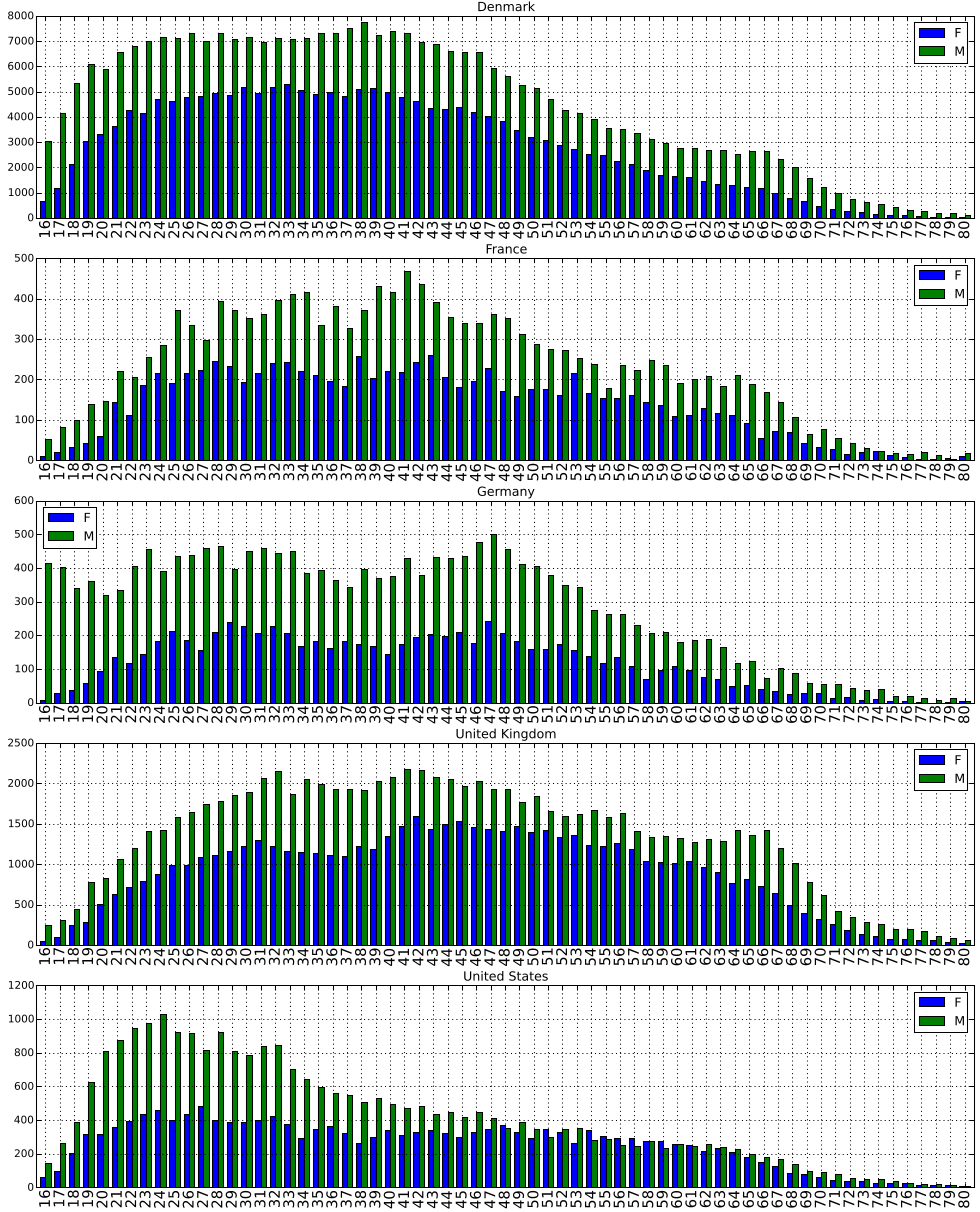 The study validated the data's representativeness by comparing it to official census data, showing an impressively close match in age distribution.
Key Pilot Studies & Insights
1. The Death of the "Nose" Emoticon
One of the most striking findings is the evolution of the emoticon. The team found a near-perfect anti-correlation (ρ = -0.99) between age and emoticon frequency. Furthermore, there is a "generational divide" regarding the use of "noses" in smileys (e.g., :-) vs :)). Users over 34 are significantly more likely to include the hyphen "nose," while younger users have almost entirely abandoned it.
2. Gendered Lexicons
Using tf-idf to find salient words, the researchers found that:
- Women tend to express satisfaction (e.g., "loved", "pleased", "satisfaite").
- Men focus on technicality and problems (e.g., "problems", "parts", "conforme").
3. Regional Dialects in Action
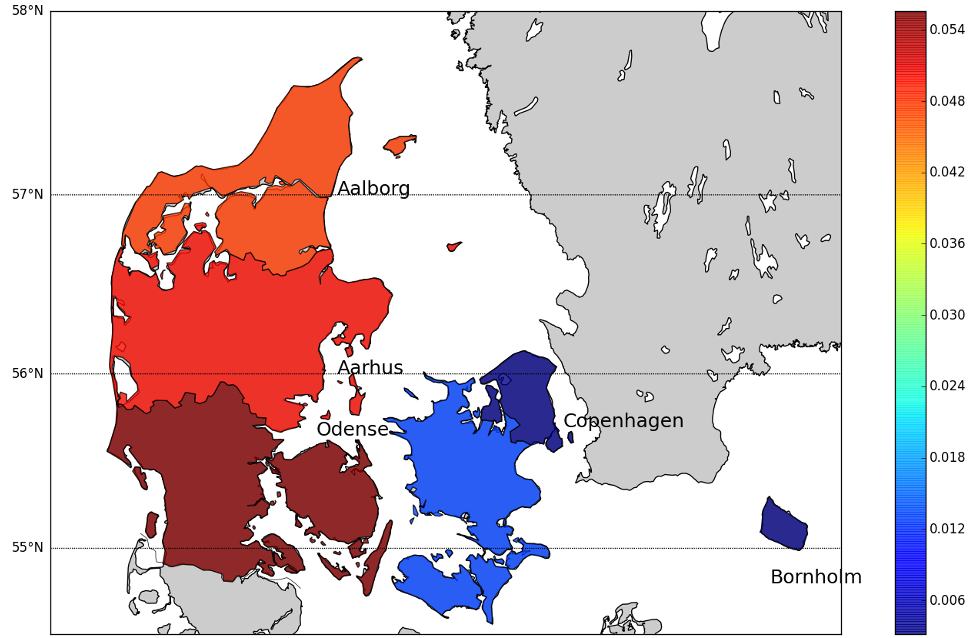
The study looked at the Danish word "træls" (meaning unpleasant/annoying), a hallmark of the Jutland dialect. By mapping reviews, they proved that 84% of its usage remains west of the "Great Belt" divide, confirming that even in a globalized internet, regional identity remains digitally sticky.
Scientific Impact: Why This Matters
This work isn't just about smileys or Danish slang. It provides a roadmap for Fairness in NLP. Most AI models are trained on newswire or general web crawls, which skew towards specific demographics. By using the Trustpilot Corpus, researchers can now test if a sentiment analyzer works as well for a 70-year-old woman in rural France as it does for a 20-year-old man in London.
Conclusion
The Trustpilot Corpus represents a significant leap forward. It proves that the "noise" of the internet isn't just trash—it's a rich, structured signal of human identity. The authors have released their harvesting and preprocessing scripts, inviting the community to explore how demographics continue to drive the evolution of global languages.
Takeaway: Your online reviews are more than just a complaint about a late delivery; they are a digital fingerprint of your sociolinguistic background.