
EURIP: Mapping the "Company Behind the Charts" through ESN Analytics
Identification of User Roles in Enterprise Social Networks: Method Development and Application
This paper introduces the Enterprise Social Network User Role Identification Process (EURIP), a systematic methodology based on the CRISP-DM framework for identifying employee communication roles. By applying cluster analysis to large-scale digital trace data from Deloitte Australia, the authors identified nine distinct user roles, bridging the gap between traditional social network analysis and automated data mining.
TL;DR
Researchers have developed EURIP (ESN User Role Identification Process), a rigorous methodology to decode the informal fabric of organizations. By transforming digital traces from platforms like Yammer or Jive into behavioral profiles, the method identified nine distinct roles—ranging from "Power Users" to "Offline Experts"—providing managers with a data-driven map of how knowledge actually flows within a firm.
Motivation: The Invisibility of Informal Networks
In every organization, the formal org chart is often a poor reflection of how work actually gets done. The real "action" happens in informal networks of advice and collaboration—the so-called "company behind the charts."
Historically, uncovering these networks required tedious surveys ("Who do you go to for help?"). This approach is not only subjective but impossible to scale. The rise of Enterprise Social Networks (ESN) has solved the data problem by providing a goldmine of digital traces (posts, likes, tags). However, the industry lacked a systematic process to turn this raw data into meaningful employee roles. This is where EURIP steps in.
Methodology: The EURIP Framework
The researchers built EURIP by instantiating the CRISP-DM (Cross-Industry Standard Process for Data Mining) model. Unlike generic data mining, EURIP is specifically tailored for the social and organizational context of ESNs.
The Metrics Trifecta
To capture the nuance of human interaction, the study utilized three categories of metrics:
- Activity Metrics: The "What" and "How much" (e.g., total messages, thread initiations).
- Social Network Metrics: The "Where" in the web (e.g., Centrality, Clustering Coefficient).
- Intrapersonal Metrics: The "Preference" (e.g., the ratio of replies to initial posts, or % of messages sent to other business units).
Architecture of the Analysis
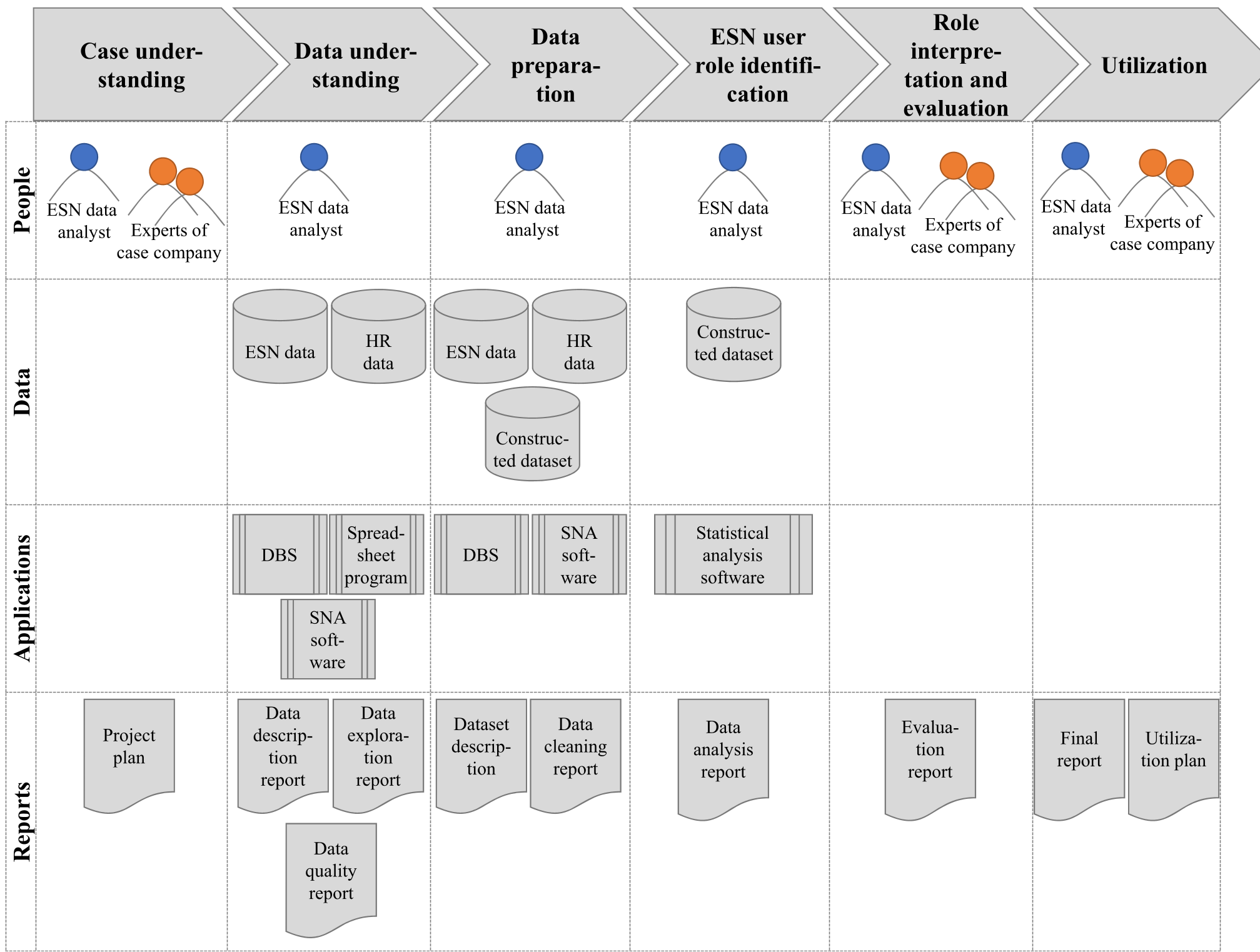 The EURIP process ensures that the analysis isn't just a "black box" but involves stakeholders at every stage—from case understanding to result utilization.
Case Study: Decoding Deloitte Australia
The method was tested on a massive dataset from Deloitte Australia, comprising over 61,000 messages. Using a combination of Principal Component Analysis (PCA) and Cluster Analysis, the study surfaced nine archetypal roles:
- The Power Users: Highly connected, rapid responders, and the lifeblood of the general stream.
- The Offline Experts: Users who post rarely but are frequently "tagged" or "thanked" by others. They represent a crucial bridge between digital and physical expertise.
- The Focused Information Sharers: Group-centric users who push technical content (attachments) but engage less in broad conversations.
- The Task Coordinators: The "project managers" of the ESN, primarily working within private groups to get work done.
Performance Evidence
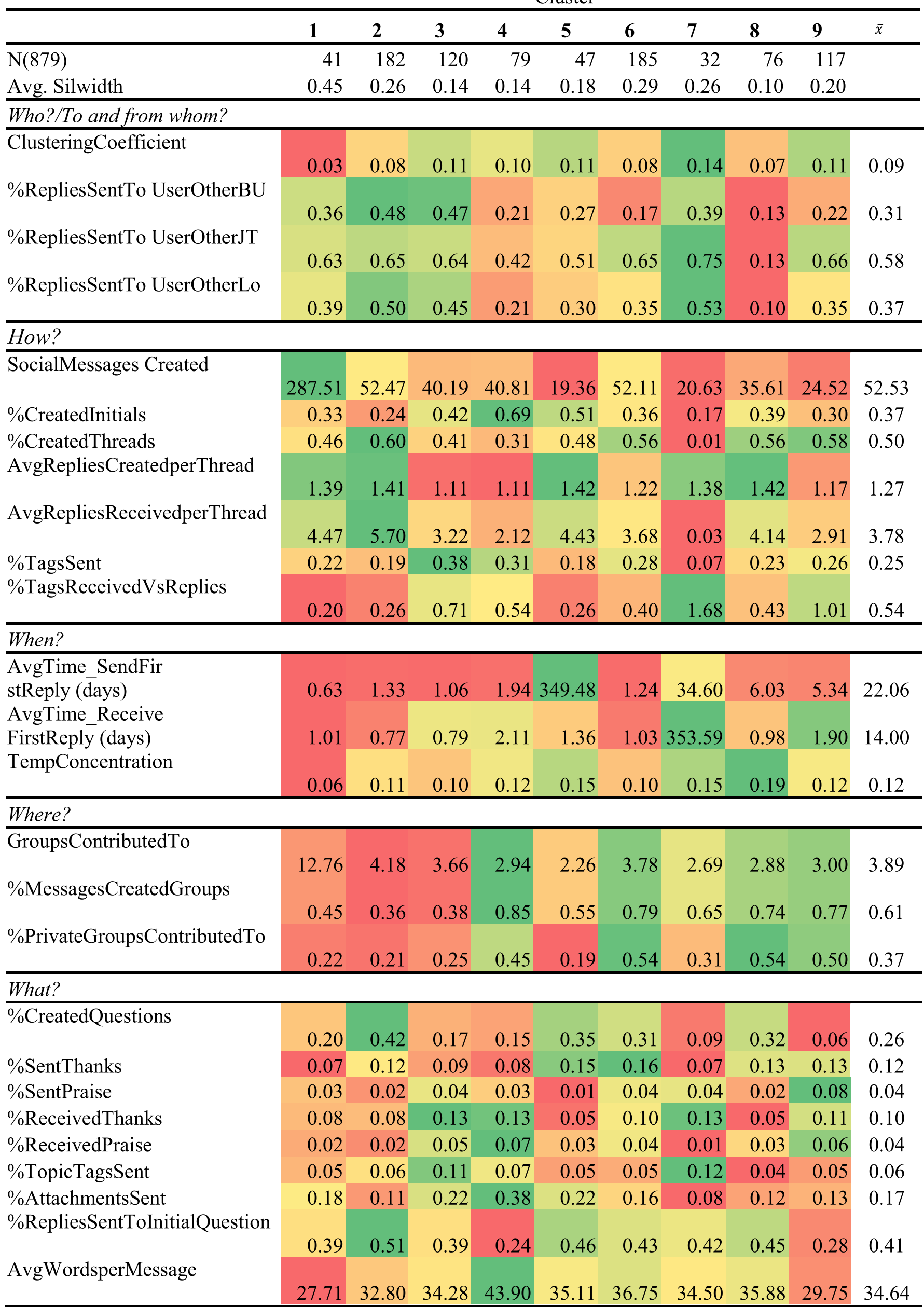 The heatmap above demonstrates the statistical distinctness of the identified roles across various behavioral dimensions.
Deep Insights: Why This Matters for Management
The real value of EURIP isn't just in the clusters—it’s in the strategic application. The study highlights several key use cases for leadership:
- Retention Management: If an "Offline Expert" or "Boundary Spanner" (Well-connected helper) is identified as being at risk of leaving, management can intervene to prevent a "knowledge-loss crisis."
- Breaking Silos: By analyzing "Task Coordinators" and "Focused Information Sharers," firms can spot if groups are becoming too insular, failing to share knowledge across business units.
- Change Champions: "Power Users" and "Conversation Starters" can be identified and recruited as catalysts for corporate change initiatives.
Limitations & The Human Element
While powerful, the study acknowledges a "Lurker Gap"—it primarily analyzes active contributors. Passive users (those who read but don't post) remain invisible in this specific trace data. Furthermore, as the world moves toward People Analytics, the authors warn of the ethical need to balance data-driven insights with employee privacy and the involvement of workers' councils.
Conclusion
The EURIP method represents a shift from "gut-feeling" management to "evidence-based" organizational design. It proves that the "digital exhaust" of our daily work lives can be recycled into a high-resolution map of organizational intelligence.