
FAMUS: Solving the IoT Tug-of-War Between Green Energy and Human Comfort
16379_Toward Achieving a Balance Between the User Satisfaction and the Power Conservation in the Internet of Things.
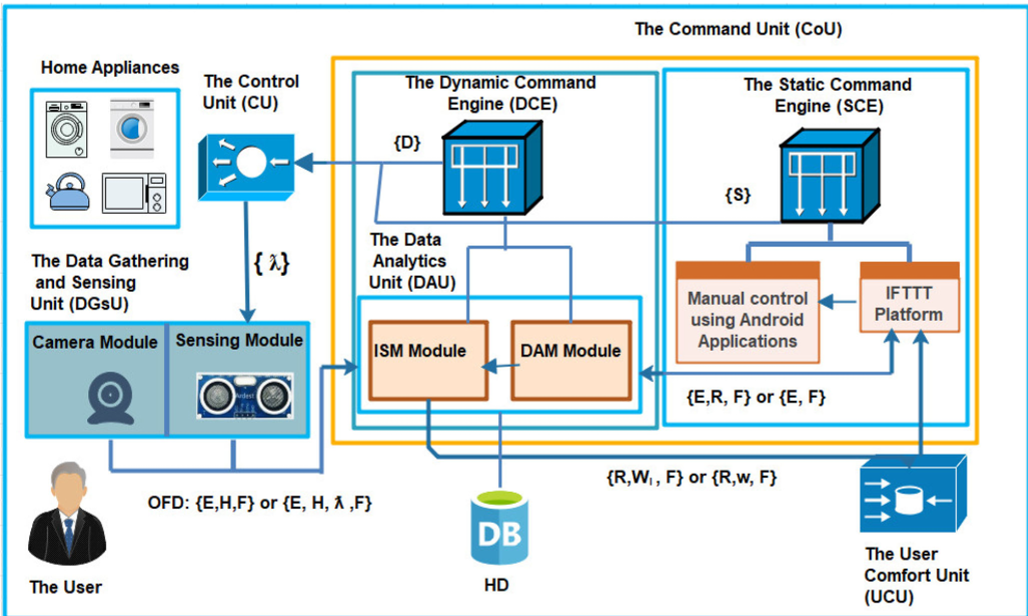
This paper introduces FAMUS (Framework for Automeasuring of the User Satisfaction), an integrated IoT architecture designed to balance energy efficiency with personalization. It utilizes a novel "User Comfort Unit" to automatically quantify user satisfaction via behavioral cues (e.g., facial expressions) and dynamically adjust power-management rules.
TL;DR
The Internet of Things (IoT) promises "Smart Homes," but often delivers a trade-off: you either save electricity and feel uncomfortable, or stay comfortable and waste power. This paper introduces FAMUS, a framework that uses computer vision and automated rule weighting to measure how "happy" you are with your smart home's decisions, automatically adjusting itself to find the perfect middle ground.
The "Satisfaction Gap" in Smart Cities
Modern buildings account for nearly 40% of total global energy consumption. While we have thousands of sensors to detect motion or temperature, we lack a robust way to detect frustration.
Current SOTA (State of the Art) suffers from three flaws:
- Lack of Integrity: Systems are fragmented and don't talk to each other.
- Manual Measurement: We still use 1990s-style questionnaires to ask users if they are comfortable.
- The Peak Hour Problem: Systems struggle to balance user needs when the grid is under heavy load.
Methodology: The "User Comfort Unit"
The heart of the paper is the FAMUS architecture. Unlike traditional systems that just turn lights off when a room is empty, FAMUS treats user satisfaction as a dynamic variable (weight ) that is updated in real-time.
The User-Identity Vector (UIV)
The author proposes a novel identity vector that follows you everywhere: By storing this on the cloud, a hotel in a different country could recognize your face and automatically set the A/C to your "satisfied" temperature without you touching a button.
The Balance Factor (BF)
One of the most mathematically intuitive contributions is the Balance Factor. To manage energy during "Peak Time," the system calculates: Where:
- : Current User Satisfaction weight.
- RLF: Rated Load Factor (how much of the capacity the building is currently using).
If your satisfaction with a rule is high, but the grid is at its limit (high RLF), the BF tells the system whether to keep the appliance running or switch to a lower-power alternative (e.g., switching from A/C to a Fan).
Critical Analysis: Why This Matters
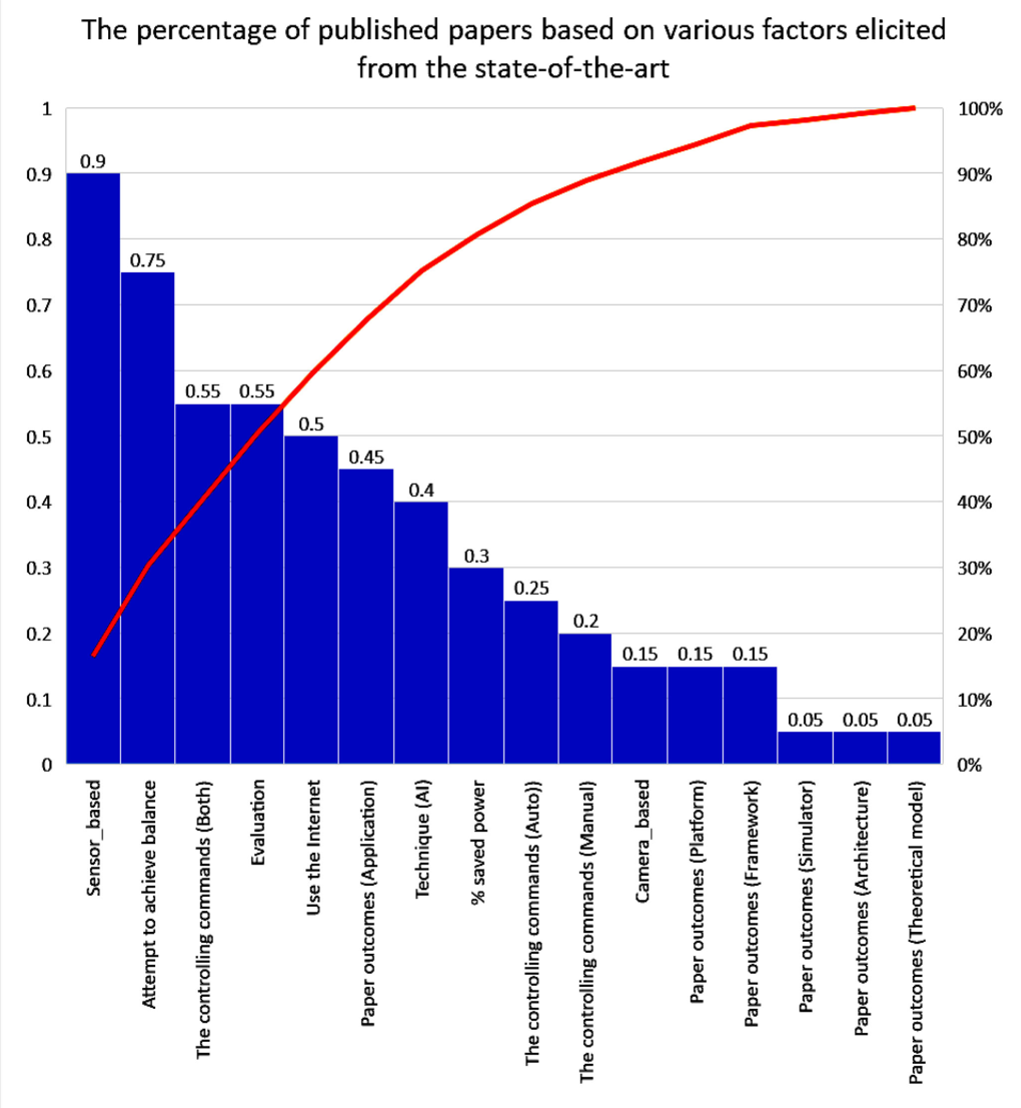
The survey included in the paper (ranking 20 significant works) reveals a startling trend: 45% of research focuses on top-level apps, while only 5% focuses on the actual underlying architecture.
The author's emphasis on Behavior-Based Sensing (BBS) over simple Non-Behavior Sensing (NBBS) is a necessary evolution. By using cameras to detect "happy" or "sad" facial impressions following an automated action (like dimming lights), the system creates a true physiological feedback loop.
Takeaway & Future Outlook
This work moves IoT from being "reactive" (responding to a sensor) to "empathetic" (responding to a human).
Limitations: The paper is primarily a framework and survey; real-world implementation faces significant privacy hurdles (the "Identity Vector" includes facial features). However, if encrypted using the proposed "Identity-based private keys," this could be the blueprint for the next generation of Green-IoT.
Future Directions:
- Refining the satisfaction thresholds ().
- Integrating Blockchain to secure the User Identity Vector.
- Standardizing energy-saving metrics to allow fair comparison between different IoT platforms.