
Hybrid SIoT: Revolutionizing Smart Campus Recommendations through Trajectory Deep-Dive
User Trajectory Analysis within Intelligent Social Internet-of-things (SIoT)
This paper proposes a personalized Social Internet-of-Things (SIoT) architecture that leverages user movement trajectories and social relationships for intelligent service discovery. By integrating trajectory analysis with contextualized data from external services, the "Hybrid" recommendation system achieves superior precision (0.43) and recall (0.62) in a smart campus environment.
TL;DR
Researchers have developed a new Social Internet-of-Things (SIoT) architecture that moves beyond static GPS data to understand why and how users move. By combining personal trajectory patterns with social network contexts, the proposed "Hybrid" system significantly boosts recommendation precision in smart campus settings, outperforming traditional frequency-based or link-analysis methods.
The Bottleneck in Intelligent Service Discovery
While the Internet of Things (IoT) has connected billions of devices, the "Social" aspect (SIoT) remains a complex frontier. Current recommendation systems in smart environments are often "shallow"—they suggest services based on your current coordinate and a fixed list of nearby spots.
The Problem: This ignores the human element. A freshman's needs are different from a senior's, even if they are standing in the same hallway. Existing solutions fail to leverage the rich behavioral overlap between users within a social community, leading to recommendations that feel generic and unhelpful.
Methodology: The Fusion of Social Ties and Physical Movement
The paper introduces a framework that treats IoT devices not just as sensors, but as social agents acting on behalf of users.
The Layered Architecture
The architecture is structured into a multi-tier pipeline:
- Sensing Layer: Captures movement through indoor/outdoor positioning.
- Social Network Service (SNS) Interface: Acts as the bridge where users interact with the system.
- Recommender Engine: The "brain" that computes the similarity between different users' trajectories and beliefs.
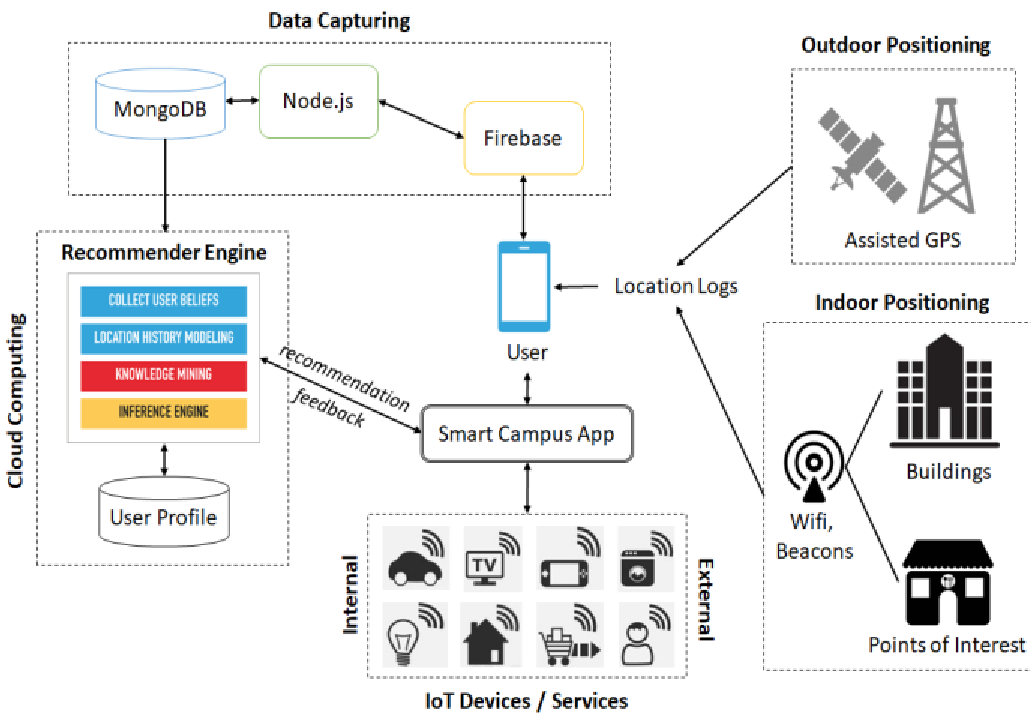 Fig 2. The data flow from sensing inputs to the recommender engine and external services.
The core innovation lies in Trajectory Analysis. Instead of just looking at where you are, it looks at where you've been and finds "social peers" who exhibit similar movement patterns. If a senior student with similar habits frequently visits a specific study lounge or restaurant, the system proactively recommends it to a newcomer like Michael (the paper's case study).
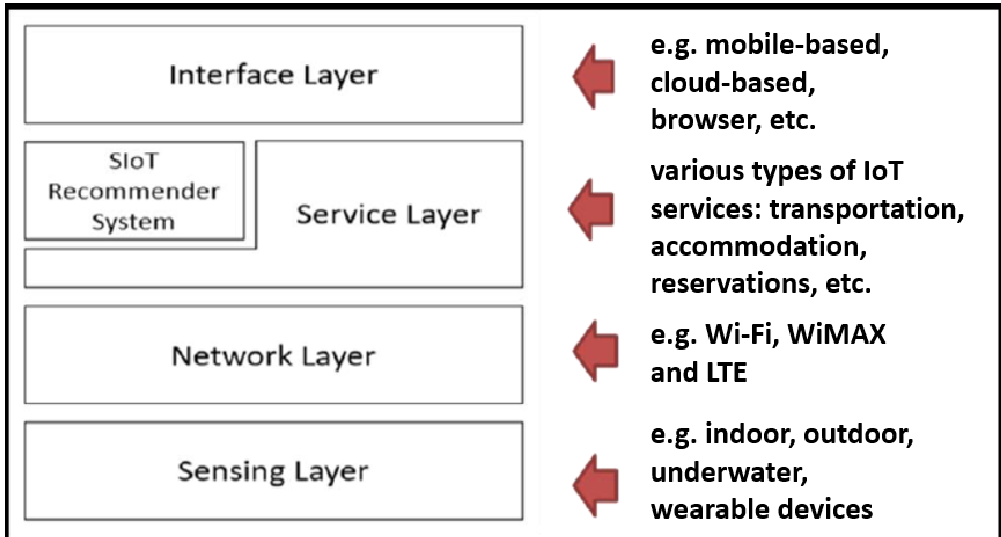 Fig 1. High-level architecture showing the integration of SNS and the Recommender System.
Experimental Validation: Setting the Bar
To prove their "Hybrid" approach works, the authors tested it against two common baselines:
- Link Analysis (LA): Recommends based on social network connections.
- Rank by Frequency (RF): Recommends the most popular spots overall.
Using the UniCAT and Weeplaces datasets, the results were definitive. The Hybrid model achieved a Precision of 0.43 and a Recall of 0.62, proving that the combination of social links and trajectory data is more powerful than either one alone.
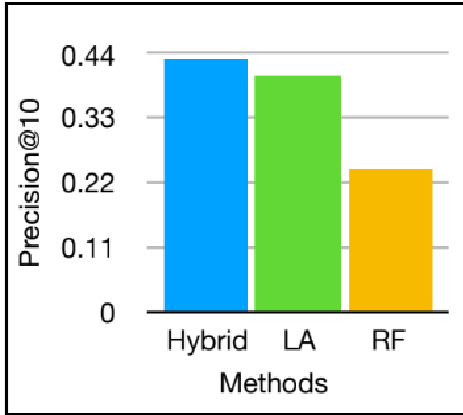 Fig 3. Precision-Recall performance demonstrating the Hybrid model's superiority.
Critical Insight & Future Outlook
The success of this work highlights a key shift in AI-driven IoT: Context is King. By treating a campus as a social ecosystem rather than just a collection of buildings, the system achieves a form of "collective intelligence."
Limitations:
- Scalability: The current model was tested in a campus environment. Whether it can maintain high precision in a massive urban sprawl with millions of nodes remains to be seen.
- Privacy: High-resolution trajectory tracking raises significant privacy concerns that require robust encryption/anonymization techniques not deeply explored here.
The Takeaway: This paper provides a blueprint for the next generation of "Intelligent Campus" apps. By moving toward a hybrid analysis of social and physical data, SIoT can finally deliver the "intelligent discovery" it has promised for a decade.